SKU: SENS-1935
📋 GST Invoice Available

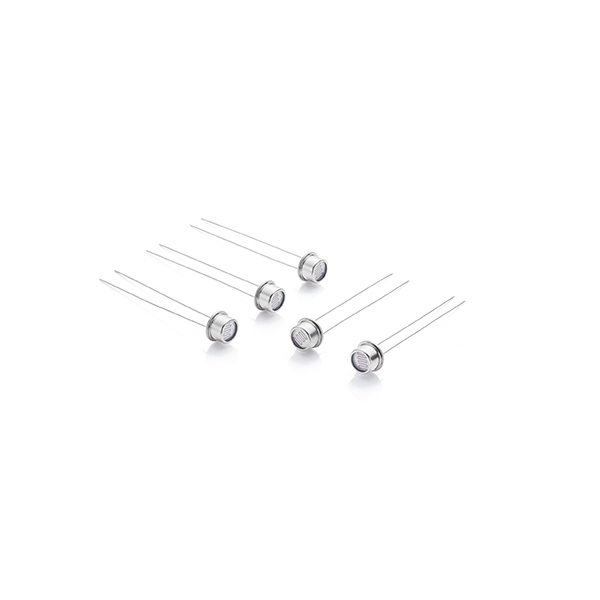
Senba D57 5mm LDR Light Sensor with Metal Casing

₹82.00 (Inclusive of all taxes)
Out of Stock

The Senba D57 is a 5mm light-dependent resistor (LDR) housed in a durable metal casing, featuring a 2-pin radial lead configuration. Its resistance varies inversely with light intensity, making it a fundamental component for light-sensing circuits in Arduino, Raspberry Pi, and other microcontroller-based projects requiring ambient light detection or automatic lighting control.

Features

  • 5mm diameter cadmium sulfide (CdS) photoconductive cell in a robust metal housing.
  • Wide resistance range from ~1 kΩ (bright light) to ~20 MΩ (darkness) for versatile light-level detection.
  • Two-pin radial lead design for easy through-hole PCB mounting or breadboard prototyping.
  • Durable metal casing provides mechanical protection and shields the semiconductor element.
  • Core component for building light-activated switches, dusk-to-dawn controllers, and exposure meters.

Out of stock

Description

The Senba D57 Light-Dependent Resistor (LDR) operates on the principle of photoconductivity, where incident photons increase the charge carriers in its cadmium sulfide (CdS) semiconductor material, thereby lowering its electrical resistance. This inverse logarithmic relationship between light intensity (illuminance) and resistance allows it to function as a simple, analog light sensor.

Housed in a compact 5mm metal can, the sensor offers improved durability and thermal stability compared to plastic-bodied variants. The 2-pin leads provide a straightforward interface for voltage divider circuits, which can be read by an analog-to-digital converter (ADC) on microcontrollers like Arduino, ESP32, or STM32 to quantify ambient light levels for automated control systems.

Key Features

  • Metal-Housed Photoconductor: Features a cadmium sulfide (CdS) photoconductive cell sealed within a protective metal casing for consistent performance and physical robustness.
  • Wide Dynamic Resistance Range: Offers a broad resistance span from approximately 1 kΩ under bright light to 20 MΩ in complete darkness, enabling detection across varied lighting conditions.
  • Simple Two-Terminal Interface: Radial 2-pin design allows for direct integration into voltage divider networks or analog input circuits without complex wiring.
  • Fundamental Light Sensing Element: Serves as the core sensing component for educational projects, DIY electronics, and industrial light-control applications.
  • Durable Construction: The metal body provides shielding against physical damage and helps maintain stable operating characteristics.

Applications

  • Automatic streetlight or garden lighting control systems that activate at dusk.
  • Camera exposure meters and automatic brightness adjustment for displays and backlights.
  • Security lighting and occupancy-simulating circuits for home automation.
  • Educational kits for teaching basic analog sensor principles and voltage divider circuits.
  • Light intensity data logging in environmental monitoring stations.

Technical Specifications

BrandSenba
Model / Part NumberD57
Sensor TypeLight-Dependent Resistor (LDR / Photoconductor)
Housing MaterialMetal Casing
Diameter5 mm
Pin Configuration2-Pin Radial Leads
Resistance Range~1 kΩ (Light) to ~20 MΩ (Dark)
Operating PrincipleCadmium Sulfide (CdS) Photoconductivity

Frequently Asked Questions

What is the operating principle of the Senba D57 LDR?

The Senba D57 is a cadmium sulfide (CdS) photoconductive cell. Its electrical resistance decreases non-linearly as the intensity of incident light increases. In darkness, resistance is very high (up to ~20 MΩ), and under bright light, it drops significantly (to ~1 kΩ). This property allows it to act as a variable resistor in a voltage divider circuit to produce an analog voltage proportional to light level.

How do I interface this 2-pin LDR with an Arduino or Raspberry Pi?

Connect one LDR pin to your board's logic voltage (e.g., 3.3V or 5V) through a fixed-value resistor (e.g., 10 kΩ), forming a voltage divider. Connect the junction between the LDR and the fixed resistor to an analog input pin (e.g., Arduino A0). The other LDR pin connects to ground. The analogRead() value will vary with light intensity. The Raspberry Pi requires an external ADC for analog readings.

What are the advantages of the metal casing compared to plastic?

The metal casing provides superior mechanical durability and offers better shielding against external physical damage. It can also contribute to more stable thermal characteristics, potentially reducing resistance drift caused by ambient temperature changes compared to some plastic-housed LDRs, making it suitable for more demanding environments.

Package Includes

  • 1 x Senba D57 5mm LDR Light Sensor with Metal Casing

Additional Information

Weight 0.01 kg
Dimensions 6 × 3 × 1 cm