
Generic 8051 Quick Starter Development Board | Integrated Peripherals | USB Programmable
₹45.00₹80.00 (price_including_tax) (-44%)
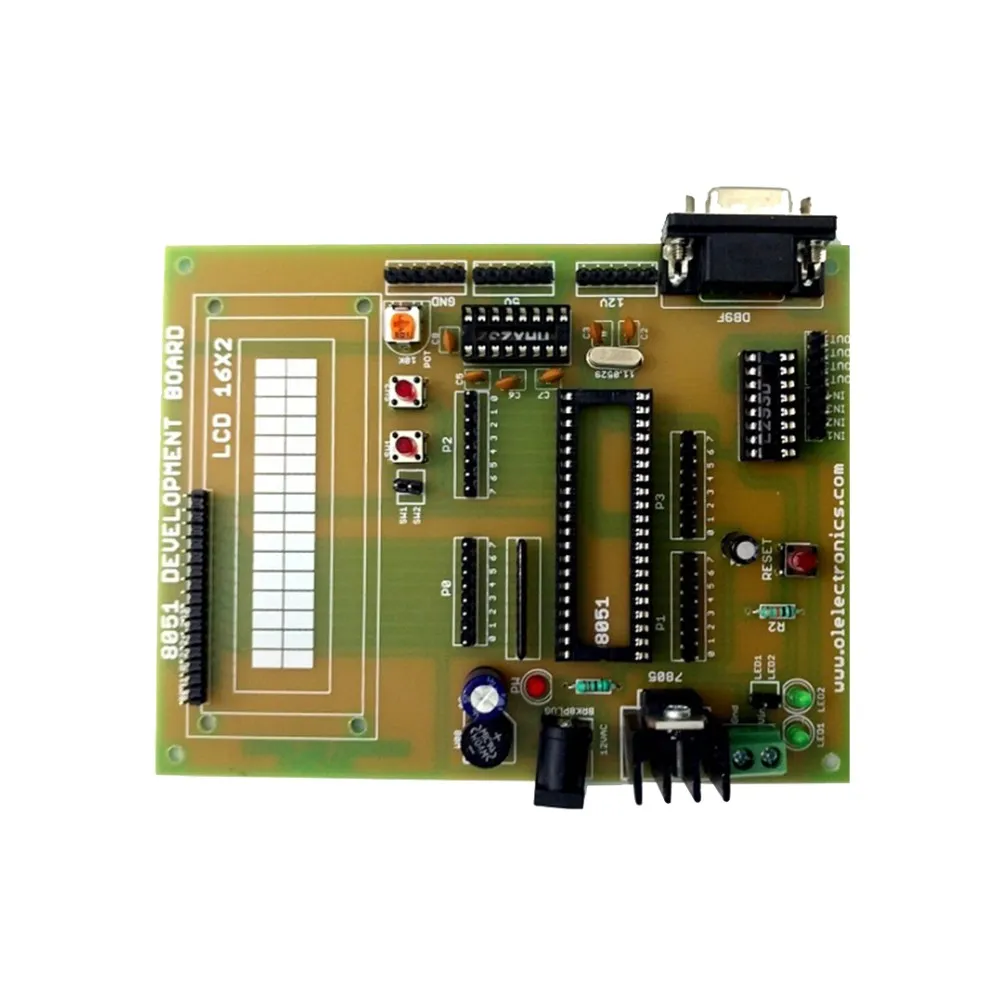
Accelerate your embedded systems journey with the 8051 Quick Starter Development Board. This platform provides all essential peripherals for immediate hands-on learning and project prototyping. Engineered for robust performance and reliable educational use, it ensures a seamless introduction to microcontroller programming.
Master 8051 embedded systems swiftly with this comprehensive, feature-rich quick-start development platform.
Instantly begin project development with pre-integrated peripherals, streamlining your workflow efficiently.
Build a solid understanding of embedded systems through practical, hands-on 8051 microcontroller experience.
Program and debug effortlessly via integrated USB-to-serial, enhancing user convenience significantly.
The Engineering Behind the 8051 Quick Starter Development Board
The 8051 Quick Starter Development Board serves as an essential platform for delving into the classic 8-bit MCS-51 microcontroller architecture. Centered around a robust 8051-compatible microcontroller, typically an AT89C51 or AT89S52, this board integrates fundamental components to facilitate rapid prototyping and learning. Its architecture supports a myriad of embedded applications, enabling users to understand core CPU operations, memory management, and I/O interfacing through practical experimentation.
Designed with educational integrity and practical utility in mind, the board features a high-quality PCB layout, clearly labeled components, and standard interfacing options. The inclusion of common peripherals directly on the board minimizes external wiring, allowing students and engineers to focus on code development and conceptual understanding rather than complex hardware setup. This thoughtful integration ensures durability and a streamlined learning experience for foundational embedded systems.
Integrated Peripheral Ecosystem
The board is populated with a rich array of onboard peripherals, including LED arrays, 7-segment displays, push buttons, keypads, and a UART interface for serial communication. This comprehensive integration removes the need for sourcing and wiring individual components, drastically reducing setup time and potential errors. It allows immediate access to practical examples, from basic I/O control to complex human-machine interface (HMI) development, making learning highly efficient and engaging.
Flexible Programming & Debugging
Equipped with an In-System Programming (ISP) header and often a USB-to-serial converter, the 8051 development board offers multiple avenues for code flashing and debugging. This structural choice resolves traditional operational pain points associated with older 8051 programming methods, providing a modern, convenient, and reliable pathway for uploading firmware and monitoring real-time data without needing dedicated external programmers or complex cabling.
Optimized for Performance & Integration
- Microcontroller: 8051-compatible (e.g., AT89C51/AT89S52)
- Operating Voltage: 5V DC
- Onboard Peripherals: LEDs, 7-segment display, push buttons, keypad, UART
- Programming Interface: ISP header, USB-to-Serial (e.g., CH340/CP2102)
- Clock Frequency: External Crystal Oscillator (e.g., 11.0592 MHz)
- Connectivity: Standard header pins for expansion
- Power Input: DC Barrel Jack and USB
- Dimensions: Designed for desktop prototyping
Features & Benefits
- Integrated Peripherals: Expedites project development and learning by providing essential components directly on the board.
- USB-to-Serial Connectivity: Simplifies programming and communication with the host computer, removing complex cabling needs.
- ISP Programming Support: Allows direct in-system firmware updates without requiring external chip removal.
- Expandable I/O Headers: Facilitates easy integration with external sensors, modules, and custom circuits.
- Robust Power Management: Ensures stable and reliable operation for all onboard components and connected peripherals.
- Clear Component Labeling: Aids in quick identification and understanding of the board’s architecture and pinouts.
Pro-Grade Advantages
- Excellent platform for learning foundational microcontroller concepts and assembly/C programming.
- Integrated peripherals significantly reduce initial setup time and component sourcing efforts for beginners.
- Stable 5V operation with clear power regulation for reliable circuit experimentation.
- Comprehensive documentation and community support available for 8051 architecture.
Technical Considerations
- 8051 architecture has limited modern peripheral support compared to newer microcontrollers.
- Debugging capabilities are typically more primitive than advanced ARM-based development boards.
What microcontroller is typically found on the 8051 Quick Starter Development Board?
These boards commonly feature an AT89C51, AT89S52, or other compatible MCS-51 architecture microcontrollers, providing robust 8-bit processing capabilities.
How is the 8051 Quick Starter Development Board programmed?
It is primarily programmed via an In-System Programming (ISP) header, often facilitated by an onboard USB-to-serial converter, allowing direct firmware uploads from your computer.
What is the operating voltage of this 8051 development board?
The board typically operates at a stable 5V DC, supplied either through its DC barrel jack or the integrated USB port, ensuring compatibility with most common 8051 peripherals.
Can I expand the I/O capabilities beyond the onboard peripherals?
Yes, the board includes dedicated header pins that break out the microcontroller’s I/O ports, enabling seamless integration with external sensors, modules, and custom circuits.
What software development environment (IDE) is recommended for 8051 programming?
Popular IDEs include Keil uVision, SDCC (Small Device C Compiler) with a suitable editor, or online simulators, supporting C and assembly language programming for the 8051.
Is this board suitable for commercial embedded projects?
While excellent for learning and prototyping, for commercial projects, specific 8051 derivatives or more modern microcontrollers with advanced features and power efficiency might be preferred.
What kind of onboard peripherals does the board typically include?
Commonly integrated peripherals feature LED arrays, 7-segment displays, push buttons, keypads, and a UART (RS232/USB-to-Serial) interface for diverse experimental capabilities.
| Specification | Value |
|---|---|
| Microcontroller Core | 8-bit MCS-51 Architecture |
| Onboard MCU (Typical) | AT89C51 / AT89S52 |
| Operating Voltage | 5V DC (USB or Barrel Jack) |
| Crystal Oscillator | 11.0592 MHz (Typical) |
| Programming Method | In-System Programming (ISP) |
| Serial Communication | UART (RS232/USB-to-Serial) |
| Onboard Displays | LED Array, 7-Segment Display |
| User Inputs | Push Buttons, 4×4 Keypad Interface |
| Expansion Headers | All I/O ports broken out |
| Power Indicator | Power LED |
| Reset Circuit | Dedicated Reset Button |
Additional information
| Brand | Generic |
|---|---|
| Technology | 8051 Microcontroller |
| Operating Voltage | 5V DC |
| Main Controller | 8051-compatible (e.g., AT89C51) |
| Control Interface | ISP, Serial (UART) |
| Difficulty Level | Beginner/Intermediate |
Reviews
There are no reviews yet.