SKU: IOWC-1888
📋 GST Invoice Available

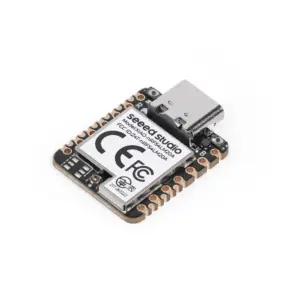
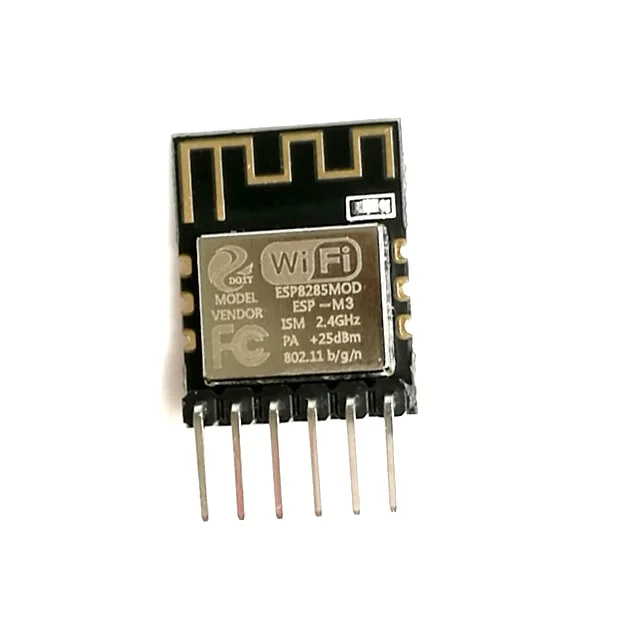
DOIT ESP-M3 Ultra-Small ESP8285 Serial WiFi Module

₹209.00 (Inclusive of all taxes)
Out of Stock

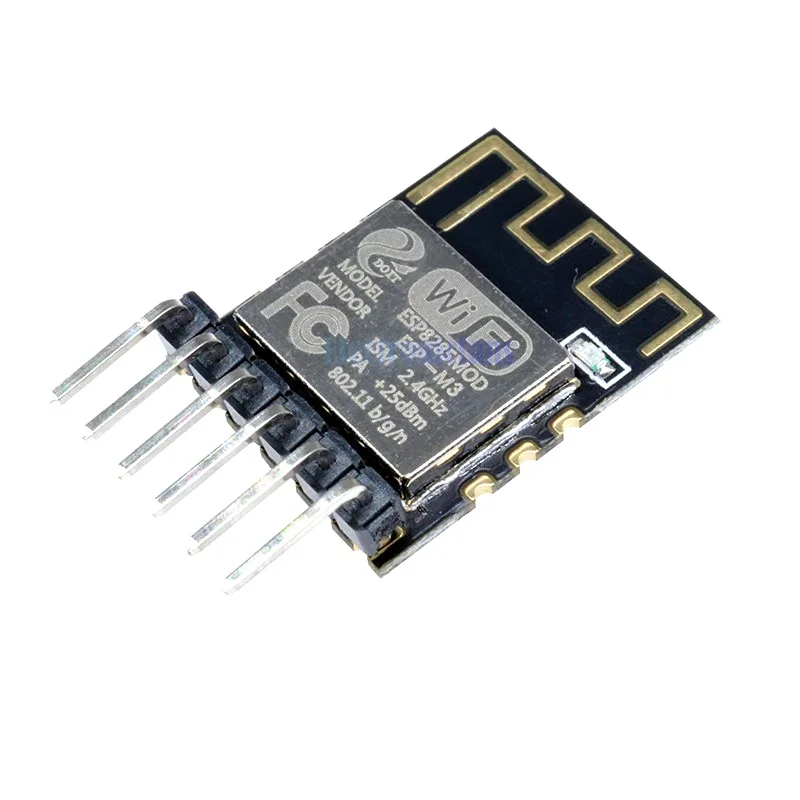
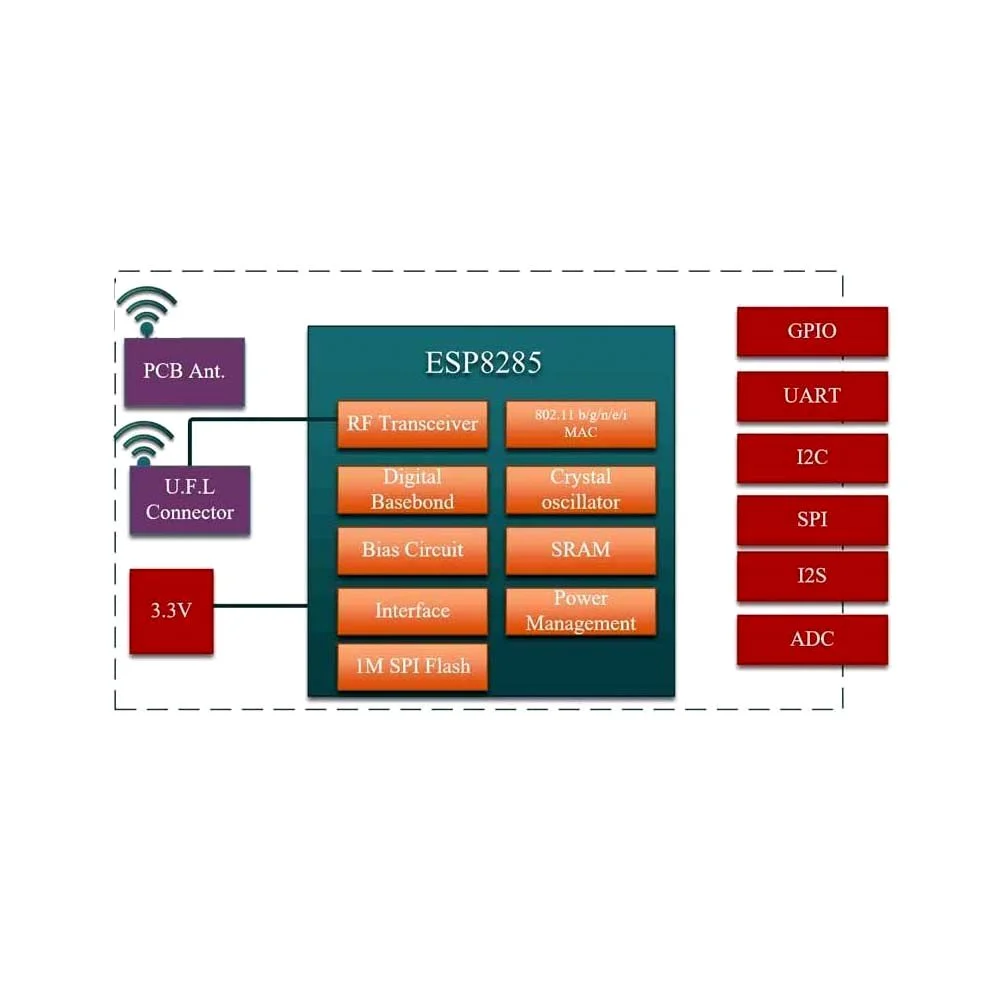
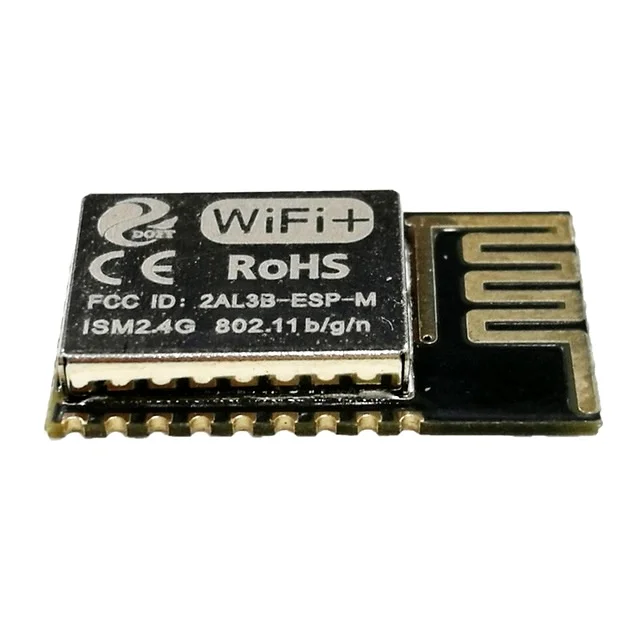
The DOIT ESP-M3 is an ultra-compact serial-to-WiFi module based on the ESP8285 SoC, offering full compatibility with the ESP8266 platform. It operates at 3.3V and is ideal for embedding wireless connectivity into space-constrained IoT projects using AT commands or custom Arduino/ESP-IDF firmware.

Features

  • ESP8285 Core: Features a 32-bit Tensilica L106 CPU with integrated 1MB SPI flash and full 802.11 b/g/n/e/i Wi-Fi support for Station, SoftAP, and SoftAP+STA modes.
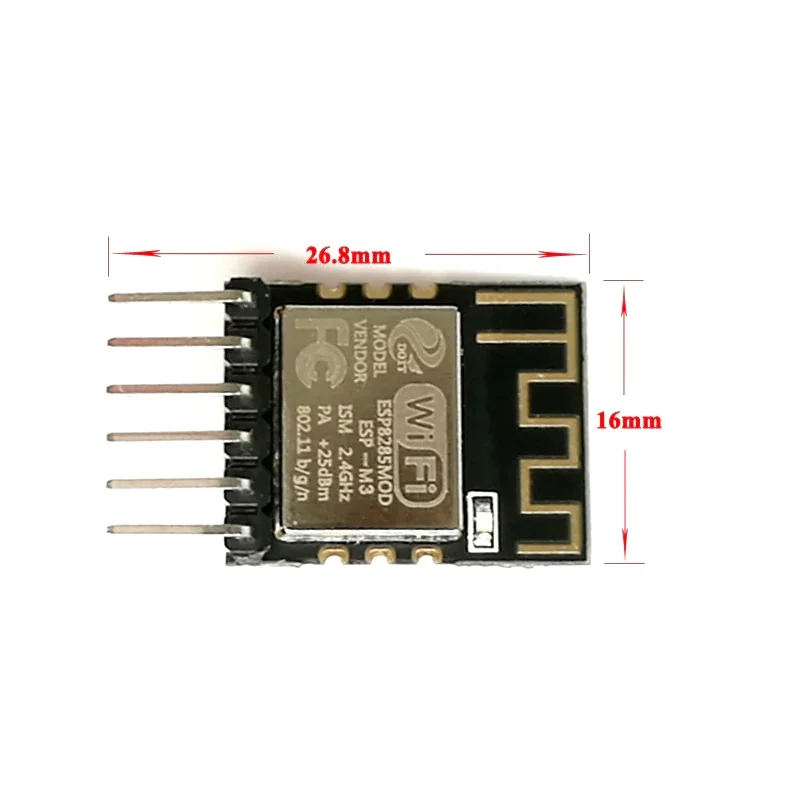
  • Ultra-Compact Form Factor: Measures just 20.5mm x 16mm, making it perfect for miniaturized, portable, or wearable electronics designs.
  • High-Temperature Operation: Rated for an extended industrial temperature range from -40°C to +125°C, exceeding standard ESP8266 modules.
  • Low Power & Fast Wake-Up: Achieves deep sleep currents as low as 10µA and can wake and transmit data packets within 2ms for battery-powered sensing.
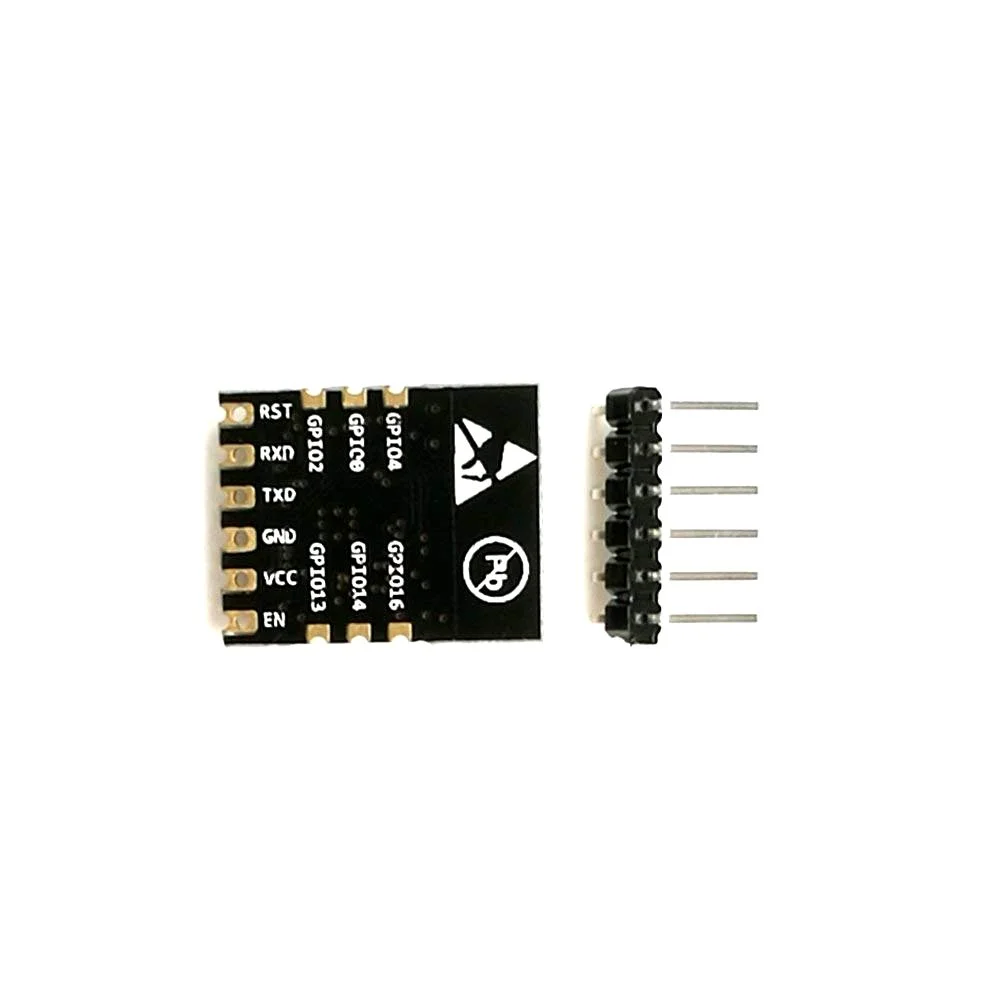
  • Rich Peripheral Set: Provides HSPI, UART, I2C, I2S, PWM, GPIO, and a 10-bit ADC for seamless integration with sensors and actuators.

Out of stock

Description

The DOIT ESP-M3 module leverages the ESP8285 system-on-chip, a derivative of the popular ESP8266 with integrated 1MB flash. This design integrates a 32-bit Tensilica L106 processor capable of running at 80/160MHz, a full TCP/IP network stack, and a robust 2.4GHz Wi-Fi transceiver into a minimal 20.5mm x 16mm footprint. It is engineered for reliable serial data transparent transmission and can operate as a standalone application processor or as a Wi-Fi slave via UART AT commands.

Power management is a key feature, with deep sleep currents around 10µA enabling long-term deployment in field sensors and beacons. The module supports advanced Wi-Fi features including WPA/WPA2 security, SmartConfig for easy network provisioning, and over-the-air (OTA) firmware updates. Its extended -40°C to +125°C operating temperature range ensures stability in harsh industrial environments, automotive applications, or outdoor monitoring systems where thermal resilience is critical.

Key Features

  • Ultra-small form factor (20.5mm x 16mm) for space-constrained PCB designs.
  • Full-featured ESP8285 SoC with integrated 1MB flash, eliminating the need for external memory.
  • Supports Station, SoftAP, and concurrent SoftAP+STA Wi-Fi operating modes for flexible network topologies.
  • Hardware-accelerated security for WEP, TKIP, AES (CCMP), and WPA2 protocols.
  • Advanced power management with fast 2ms wake-up from deep sleep (≈10µA) for battery efficiency.
  • Comprehensive peripheral interfaces: UART, HSPI, I2C, I2S, PWM, GPIO, and a 10-bit ADC.
  • Supports SmartConfig (Android/iOS) and cloud OTA for simplified deployment and remote updates.
  • Extended industrial temperature rating (-40°C to +125°C) for harsh environment reliability.

Applications

  • Serial-to-WiFi Transparent Transmission: Converting legacy UART devices for IoT connectivity.
  • Smart Home Devices: Power plugs, LED lighting, and sensor nodes.
  • Industrial Wireless Control & Sensing: Telemetry in high-temperature environments.
  • Wearable Electronics & Security Beacons: Compact, low-power location tags.
  • Mesh Network Nodes & Sensor Networks: Building distributed wireless monitoring systems.

Technical Specifications

Microcontroller / SoCESP8285 (Tensilica L106 32-bit RISC)
Wireless ProtocolsIEEE 802.11 b/g/n/e/i Wi-Fi (2.4 GHz)
Frequency Range2.4 GHz ISM Band
RF Transmit PowerTypical +20dBm (Software Configurable)
Supply Voltage3.3V DC (±0.3V)
Operating Current≈70mA (Average during RF transmission)
Deep Sleep Current≈10µA
InterfacesUART, HSPI, I2C, I2S, PWM, GPIO, 10-bit ADC
Antenna ConnectorPCB Trace Antenna (Support for external antenna via pad)
Operating Temperature-40°C to +125°C
Dimensions (L x W)20.5mm x 16mm (approx.)

Frequently Asked Questions

How do I program the DOIT ESP-M3 module?

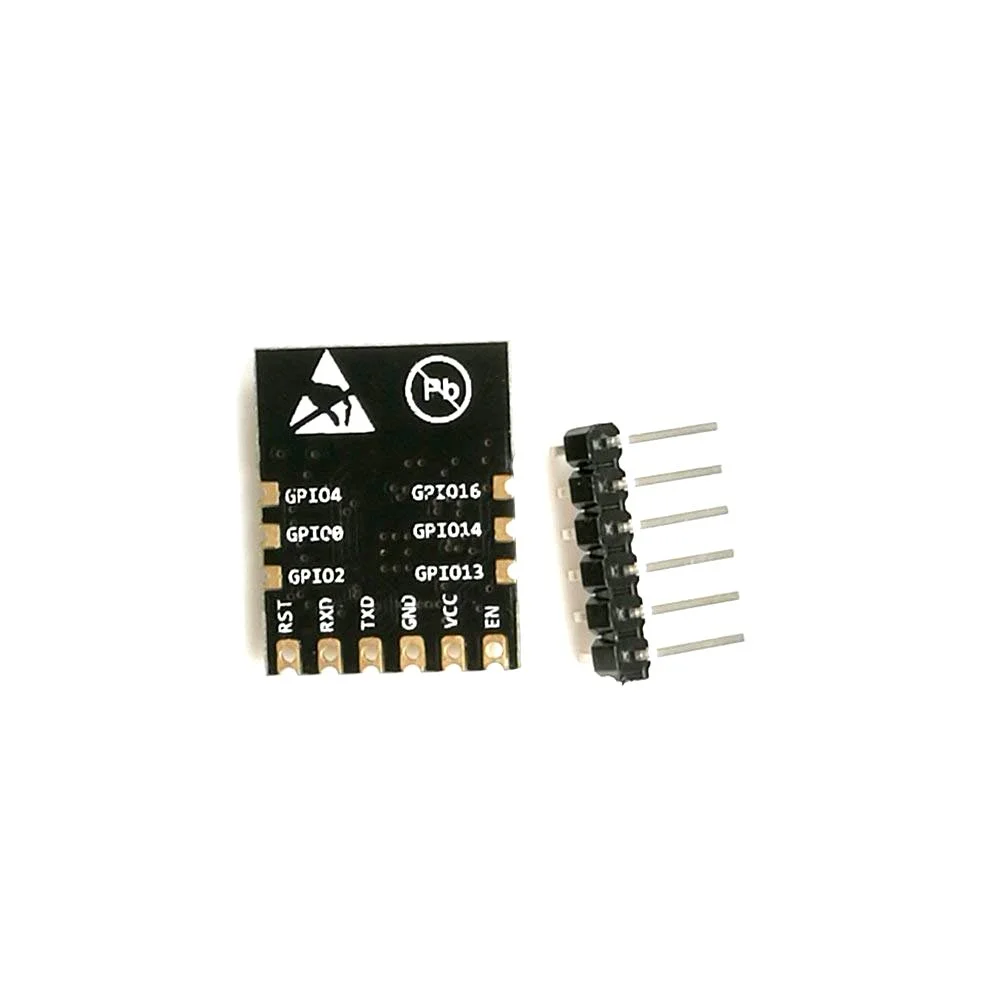
The module can be programmed using the Arduino IDE with the ESP8266 board package or directly with the ESP-IDF framework. Connect the module's UART0 pins (TX/RX) to a USB-to-serial adapter (e.g., FTDI) at 3.3V logic. Use the GPIO0 pin to ground for flashing mode and reset to enter the bootloader. Typical baud rate for upload is 115200.

What is the difference between the ESP8285 in this module and a standard ESP8266?

The ESP8285 integrates 1MB of SPI flash memory directly onto the chip die, whereas the ESP8266 typically requires external flash. Functionally, they are identical, sharing the same CPU, peripherals, and Wi-Fi radio. The ESP8285 also supports a higher maximum operating temperature of 125°C compared to 85°C for many ESP8266 modules.

Can I attach an external antenna to improve Wi-Fi range?

Yes. The module has a PCB trace antenna but includes design pads for connecting an external 2.4GHz antenna via a short coaxial pigtail. You must unsolder or disable the onboard trace antenna and solder a wire (typically to a designated pad) matching 50-ohm impedance for optimal RF performance and range extension.

What power supply is required for stable operation?

A stable 3.3V DC power supply capable of delivering at least 300mA peak current is required. Use a low-noise LDO regulator close to the module's VCC pin. Bypass capacitors (e.g., 10µF and 0.1µF) are recommended on the power rail to mitigate voltage drops during RF transmission bursts.

How do I configure the module using AT commands?

Connect the module's UART (default 115200 baud, 8N1) to a host MCU or PC terminal. Send 'AT' to verify communication. Use commands like AT+CWMODE to set Wi-Fi mode (1=STA, 2=AP, 3=Both), AT+CWJAP to join a network, and AT+CIPSTART to open a TCP/UDP connection. Full AT command sets are available in Espressif's documentation.

Package Includes

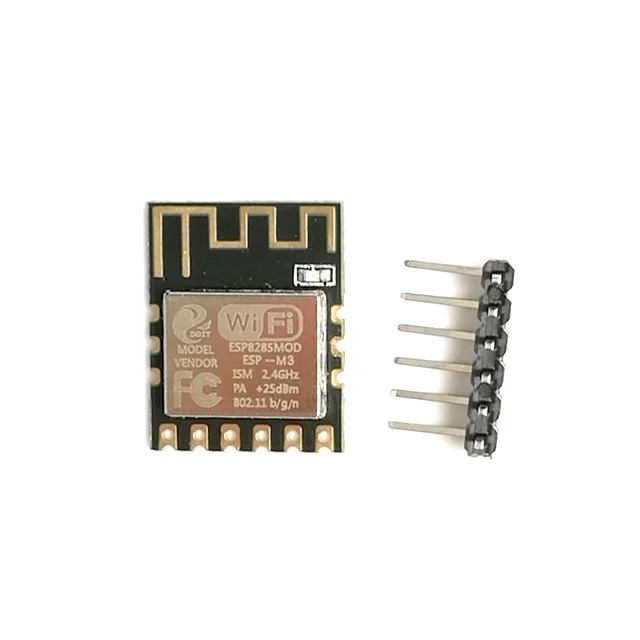
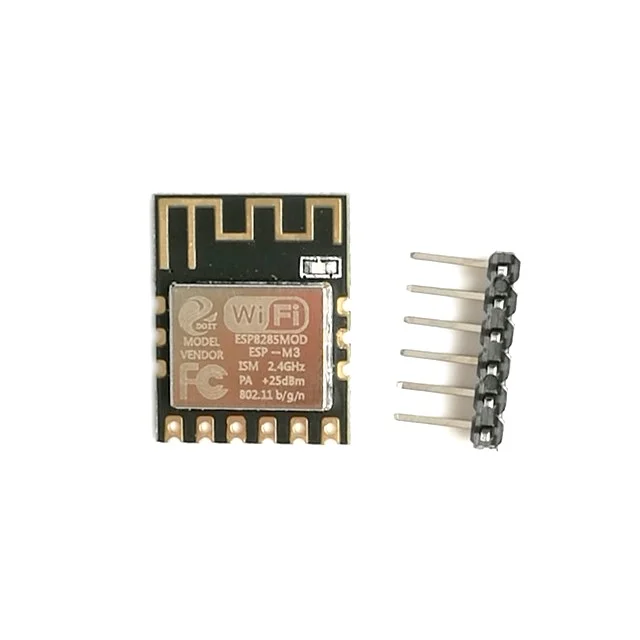
  • 1 x DOIT ESP-M3 Serial WiFi Module
  • 1 x Set of Header Pins

Additional Information

Weight 0.001 kg
Dimensions 2.05 × 1.6 cm