SKU: SENS-2922
📋 GST Invoice Available

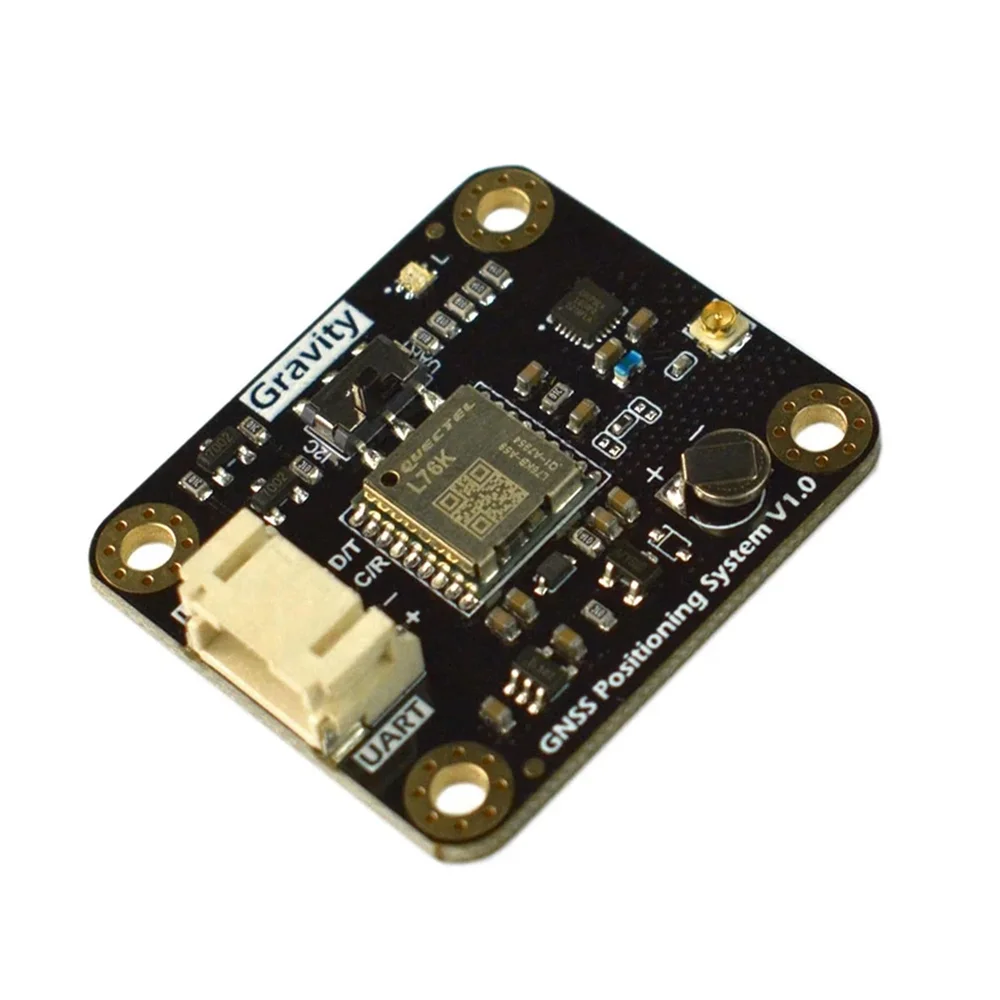
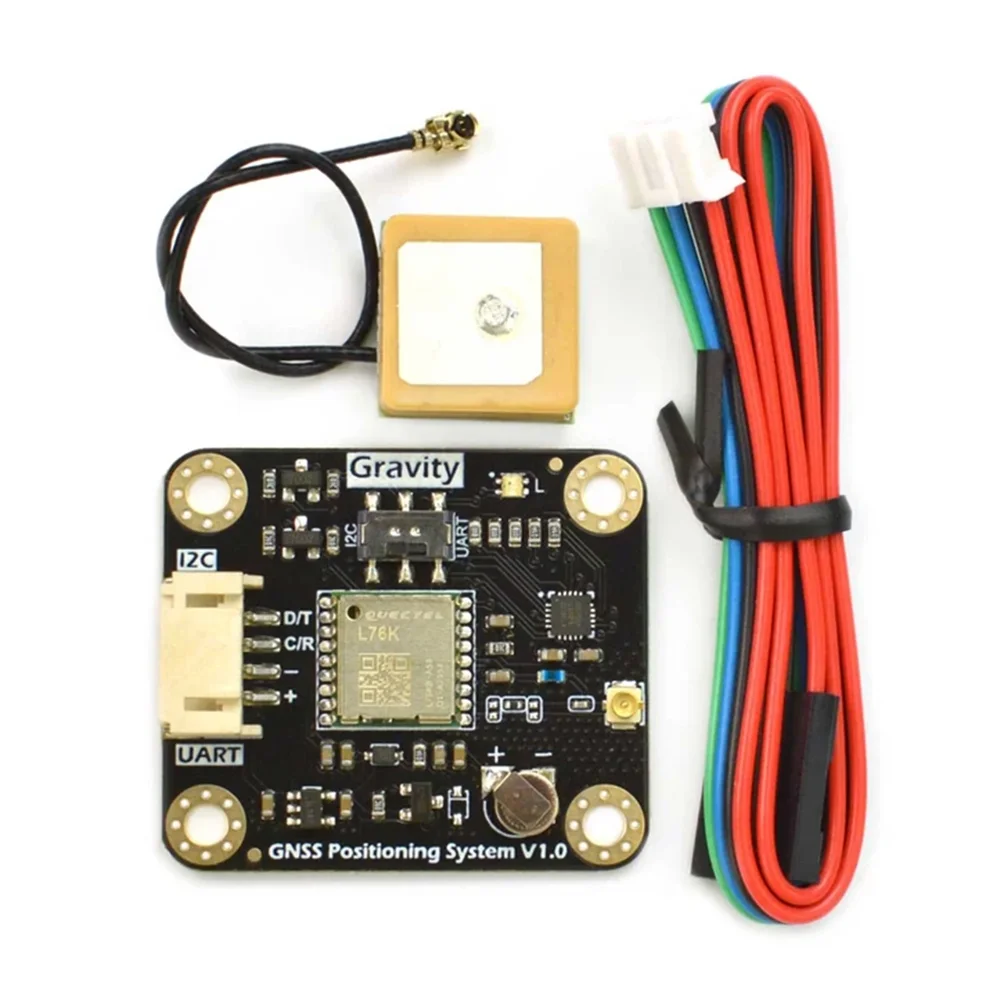
DFRobot Gravity GNSS GPS BeiDou Receiver Module - I2C & UART

₹1,859.00 (Inclusive of all taxes)
Out of Stock

The DFRobot Gravity GNSS GPS BeiDou Receiver Module is a high-precision multi-constellation positioning solution supporting GPS, BeiDou, GLONASS, and QZSS. It provides accurate longitude, latitude, altitude, and time data via I2C or UART interfaces, making it compatible with Arduino, Raspberry Pi, ESP32, and other microcontroller platforms for outdoor IoT and navigation projects.

Features

  • Multi-constellation GNSS support (GPS, BeiDou, GLONASS, QZSS) for enhanced accuracy and reliability.
  • Dual communication interfaces: I2C and UART for flexible integration with various microcontrollers.
  • High positioning accuracy of 2.0m CEP and fast startup times (30s cold, 2s hot).
  • Low power operation at 40mA, suitable for battery-powered outdoor IoT applications.
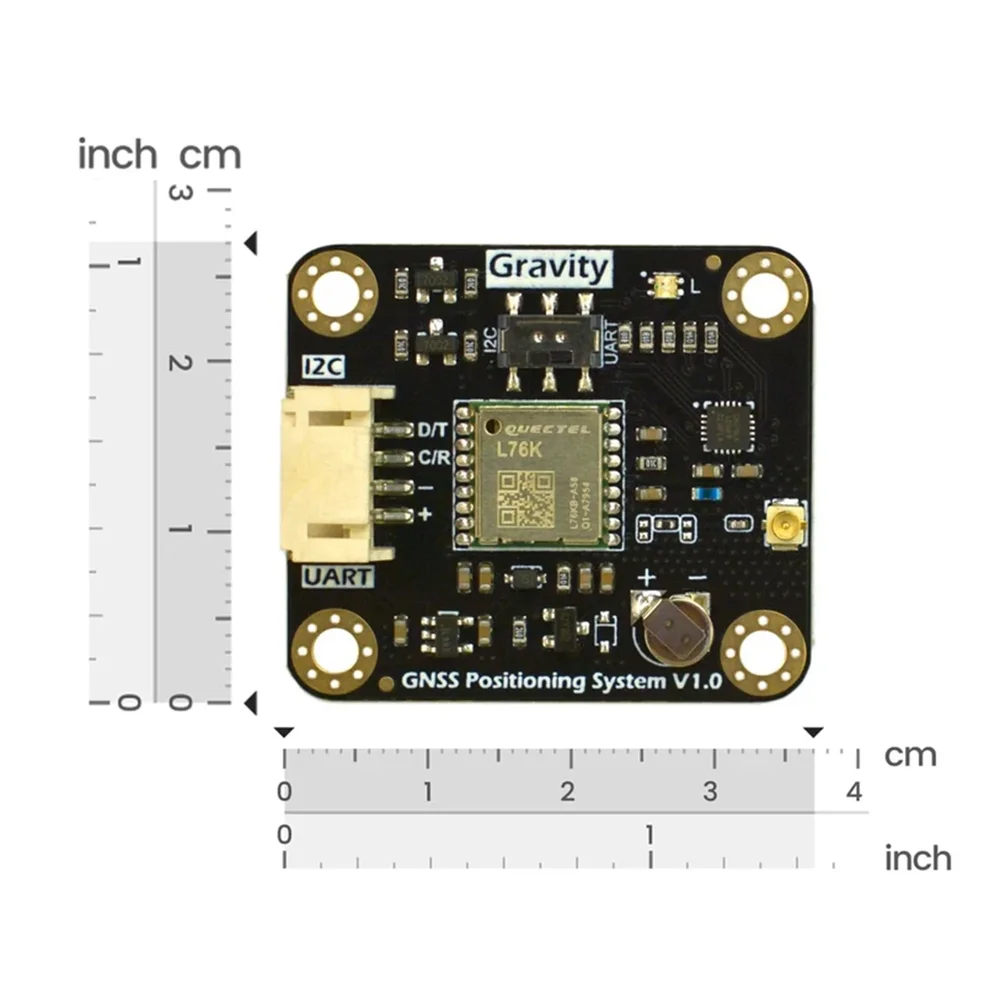
  • Compact design with IPEX antenna interface for stable performance in challenging environments.

Out of stock

Description

The DFRobot Gravity GNSS module leverages simultaneous multi-satellite system tracking to deliver robust and precise positioning data. By combining signals from GPS, BeiDou, GLONASS, and QZSS constellations, it achieves faster time-to-first-fix and maintains higher signal integrity in obstructed environments such as urban canyons, forests, or coastal regions. The module outputs standard NMEA sentences containing longitude, latitude, altitude, speed, and UTC time.

Engineered for seamless integration, the module operates on a 3.3V to 5.5V DC supply and communicates via either I2C or UART serial protocols. This dual-interface design ensures broad compatibility with development platforms like Arduino, ESP32, STM32, and Raspberry Pi. The included active ceramic antenna with an IPEX connector ensures reliable signal reception, making this module a core component for applications demanding dependable geolocation.

Key Features

  • Multi-GNSS receiver supporting GPS L1 C/A, BeiDou B1, GLONASS L1, and QZSS L1 signals.
  • Dual output interface: configurable I2C (address 0x42) and UART (default 9600 bps) communication.
  • High positioning accuracy: 2.0 meters Circular Error Probable (CEP).
  • Optimized startup performance: cold start within 30 seconds, hot start within 2 seconds.
  • Low power consumption design, drawing approximately 40mA during active tracking.
  • Wide operating voltage range from 3.3V to 5.5V DC for flexible system powering.
  • Integrated IPEX connector for external active ceramic antenna to boost signal strength.
  • Compact and lightweight form factor ideal for embedded and portable device integration.

Applications

  • Precision vehicle tracking and fleet management systems for logistics.
  • Remote environmental monitoring and data logging in smart agriculture.
  • Autonomous navigation and positioning for drones and robotic platforms.
  • Portable personal locator beacons and outdoor adventure safety devices.
  • Time synchronization and location tagging for mobile weather stations.

Technical Specifications

BrandDFRobot
Model/SeriesGravity GNSS GPS BeiDou Receiver Module
Supported SystemsGPS, BeiDou, GLONASS, QZSS
Communication InterfaceI2C & UART
Positioning Accuracy2.0m CEP
Cold Start Time≤ 30 seconds
Hot Start Time≤ 2 seconds
Operating Voltage3.3V - 5.5V DC
Power Consumption~40mA
Antenna InterfaceIPEX Connector
Output DataNMEA Protocol (Longitude, Latitude, Altitude, Speed, UTC Time)
Dimensions (LxWxH)Approx. 6 x 5 x 2 cm
WeightApprox. 0.01 kg

Frequently Asked Questions

What is the difference between I2C and UART communication on this module?

The module can be configured to output NMEA data via either I2C (using a default slave address of 0x42) or UART serial (default baud rate 9600). I2C is ideal for sharing a bus with other sensors on microcontrollers with limited pins, while UART provides a straightforward direct serial connection for simpler point-to-point communication with a host.

What is the required operating voltage, and can I power it directly from a 5V Arduino pin?

The module operates from 3.3V to 5.5V DC. You can safely power it from a 5V output pin on an Arduino or similar board. Ensure your power supply can deliver the required ~40mA current during active satellite tracking for stable operation.

Does the module include an antenna, and what type is it?

Yes, the package includes an active ceramic antenna with an IPEX1 (or U.FL) connector. This antenna is pre-connected and provides significantly better signal reception than a passive antenna, which is crucial for achieving the module's stated accuracy and fast startup times, especially in areas with partial sky view.

How accurate is the positioning data, and what factors can affect it?

The module offers a positioning accuracy of 2.0 meters CEP (Circular Error Probable) under open-sky conditions. Accuracy can be degraded by physical obstructions (buildings, trees), atmospheric conditions, and low satellite visibility. Using multiple GNSS constellations (GPS, BeiDou, etc.) simultaneously improves reliability and accuracy in challenging environments.

Is this module compatible with Raspberry Pi and ESP32 development boards?

Yes, it is fully compatible. For Raspberry Pi, use the UART interface (connect to GPIO UART pins) or the I2C interface. For ESP32, you can use either UART or I2C. Libraries and example code are typically provided by DFRobot to facilitate quick integration and data parsing on these platforms.

Package Includes

  • 1 x DFRobot Gravity GNSS GPS BeiDou Receiver Module
  • 1 x GPS/BeiDou Active Ceramic Antenna (IPEX1 Connector)
  • 1 x Gravity 4-Pin Sensor Cable

Additional Information

Weight 0.01 kg
Dimensions 6 × 5 × 2 cm