SKU: SENS-3094
📋 GST Invoice Available

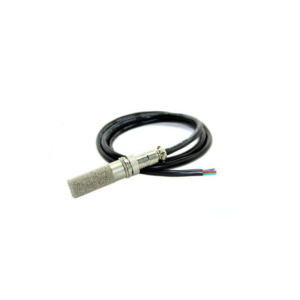
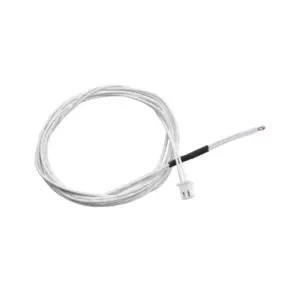
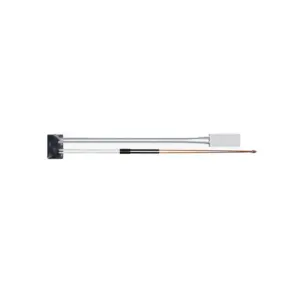
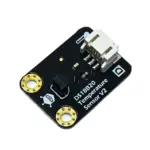
DFRobot Gravity DS18B20 Temperature Sensor (Arduino Compatible) - Digital Single-Bus Interface

₹599.00 (Inclusive of all taxes)
Out of Stock

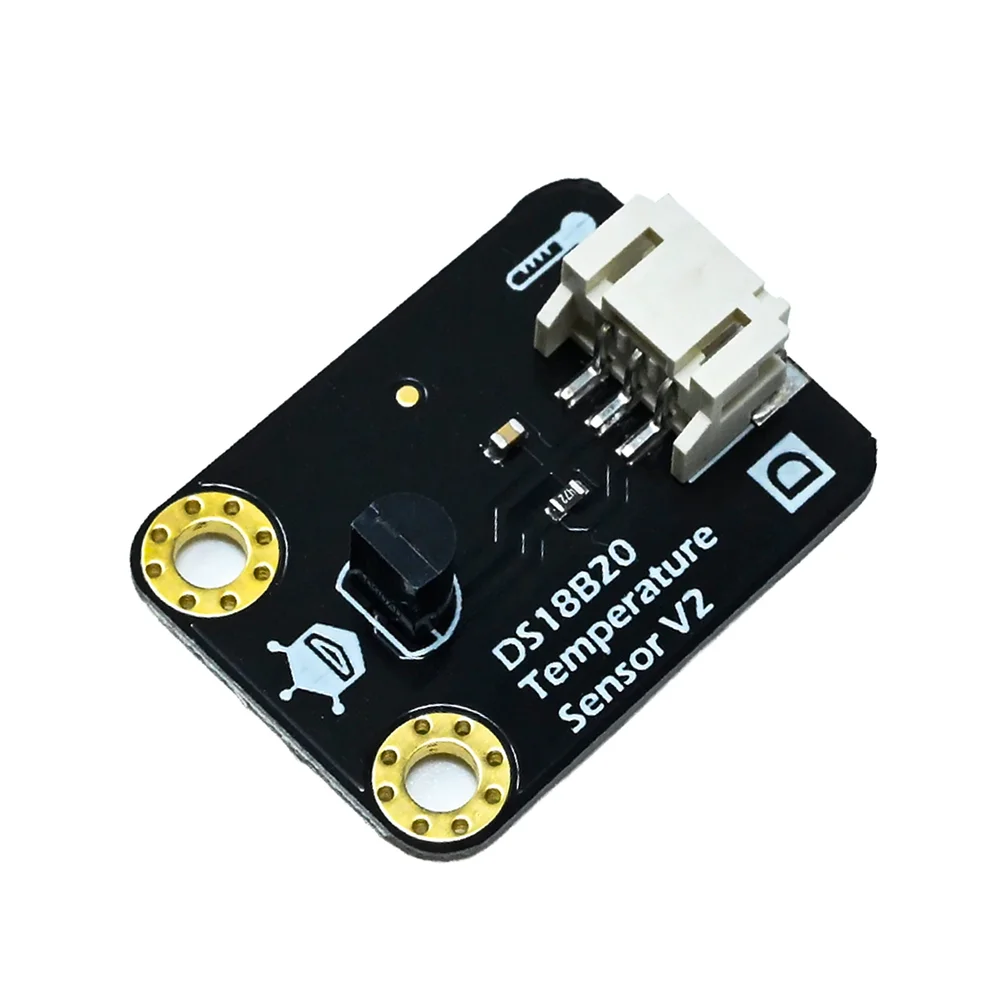
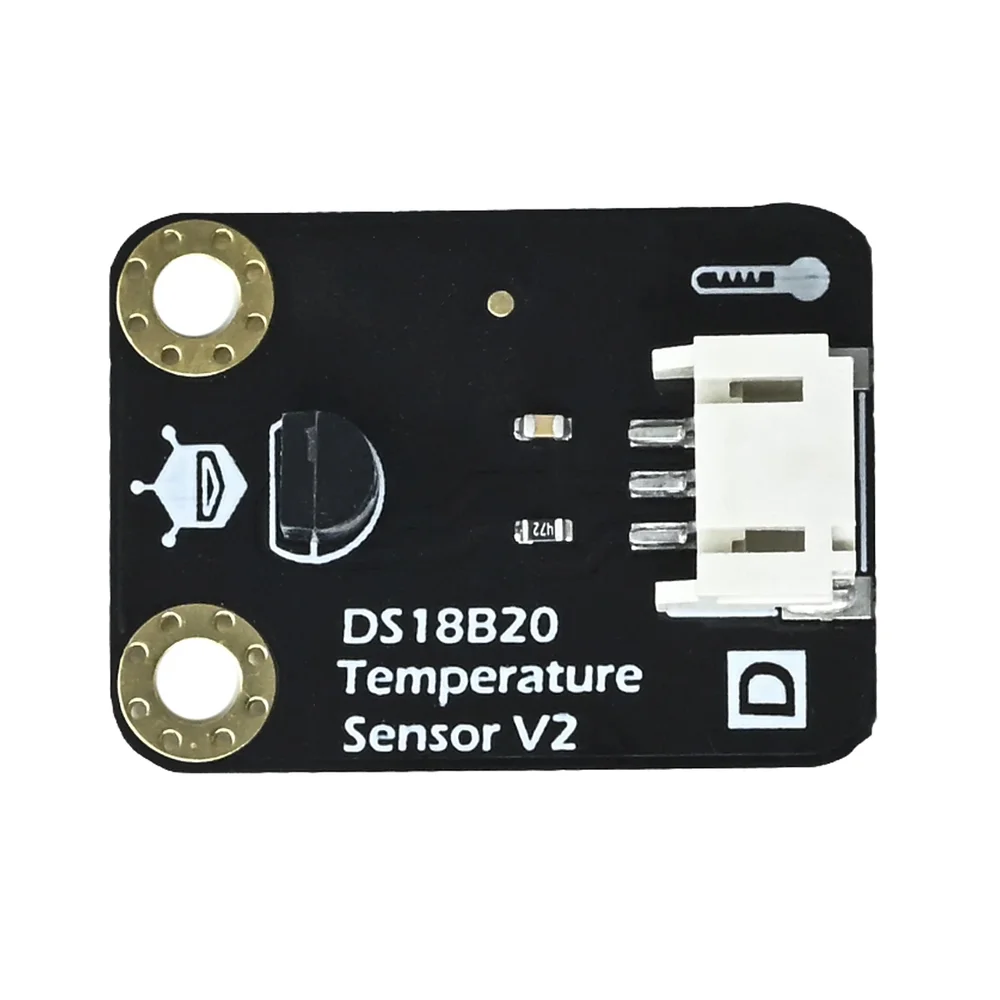
The DFRobot Gravity DS18B20 is a high-accuracy digital temperature sensor module compatible with 3.3V/5V Arduino, Raspberry Pi, ESP32, and other microcontrollers. It provides precise temperature readings via a single-wire digital interface for reliable environmental monitoring.

Features

  • High-precision digital temperature sensor with ±0.5°C accuracy
  • Wide operating range from -55°C to +125°C (-67°F to +257°F)
  • Single-bus digital interface simplifies wiring and reduces hardware overhead
  • Supports parasitic power mode for two-wire operation
  • Gravity-series connector for plug-and-play compatibility with DFRobot shields

Out of stock

Description

The DS18B20 sensor utilizes a 1-Wire digital protocol for temperature measurement and communication, enabling multiple sensors to share a single microcontroller data pin. Its integrated 12-bit ADC provides high-resolution temperature conversion, with data stored in a built-in EEPROM for alarm settings and configuration persistence.

This DFRobot module incorporates signal conditioning and a standard Gravity 3-pin interface, making it ready for immediate integration into prototyping systems without additional pull-up resistors. The robust design ensures stable performance in environments with electrical noise, suitable for industrial monitoring, HVAC systems, and scientific data logging.

Key Features

  • High-Accuracy Digital Output: 12-bit resolution delivers temperature readings with ±0.5°C precision across the full -55°C to +125°C range.
  • Simplified Single-Bus Architecture: 1-Wire interface allows multiple sensors to be daisy-chained on a single digital pin, minimizing wiring complexity.
  • Parasitic Power Mode: Can operate with just two wires (data and ground) by drawing power from the data line, enabling flexible installation.
  • Integrated Non-Volatile Memory: Built-in EEPROM stores user-defined alarm thresholds and configuration settings.
  • Robust Anti-Interference Design: Shielded construction and digital signal processing ensure reliable operation in electrically noisy environments.
  • Gravity Standardized Interface: 3-pin connector (Signal, VCC, GND) ensures plug-and-play compatibility with DFRobot expansion boards and popular microcontroller platforms.

Applications

  • Precision environmental monitoring and data logging systems for laboratories and greenhouses.
  • HVAC and building automation for duct, room, and equipment temperature feedback.
  • Industrial process control and machinery temperature protection in manufacturing.
  • DIY weather stations and home automation projects using Arduino or Raspberry Pi.
  • Temperature compensation in scientific instruments and consumer electronics prototyping.

Technical Specifications

Manufacturer / SeriesDFRobot / Gravity
Sensor ModelDS18B20
Supply Voltage3.3V to 5V DC
InterfaceDigital (1-Wire)
Temperature Range-55°C to +125°C
Accuracy±0.5°C (typical)
ResolutionProgrammable 9 to 12 bits (default 12-bit)
Operating Current~1 mA (active conversion)
Module Dimensions (L x W)32 mm x 22 mm
Package WeightApprox. 0.02 kg

Frequently Asked Questions

What is the wiring diagram for connecting this DS18B20 module to an Arduino?

Connect the module's Gravity 3-pin cable: Red (VCC) to 5V, Black (GND) to GND, and Blue/Yellow (Signal) to any digital pin (e.g., D2). A 4.7kΩ pull-up resistor between the signal and VCC lines is typically integrated on the module, but for long cable runs or parasitic power mode, an external resistor may be required. The 1-Wire library is used for communication.

Can I connect multiple DS18B20 sensors to a single Arduino pin?

Yes, the 1-Wire protocol supports daisy-chaining multiple sensors on a single data line. Each DS18B20 has a unique 64-bit ROM address, allowing the microcontroller to query them individually. Ensure the bus has a proper pull-up resistor (4.7kΩ) and consider power limitations if using parasitic mode for many sensors.

What is the difference between normal and parasitic power modes?

In normal mode, the sensor uses three wires: VCC, GND, and Data. In parasitic mode, it draws power from the data line via an internal capacitor, requiring only two wires (Data and GND). Parasitic mode simplifies wiring but has stricter timing and current draw constraints during temperature conversion.

How do I read the temperature value in my code?

Use Arduino libraries like 'DallasTemperature' and 'OneWire'. Initialize the OneWire bus on your chosen pin, declare a DallasTemperature sensor object, request a temperature reading with `sensors.requestTemperatures()`, and fetch the value for a specific sensor address using `sensors.getTempCByIndex()`. The library handles the 1-Wire communication and conversion.

What is the maximum cable length for reliable operation?

For reliable 1-Wire communication, keep cable lengths under 50 meters in standard mode with proper shielding. Longer distances increase signal degradation and require lower pull-up resistor values (e.g., 1kΩ) and careful bus design to mitigate noise and capacitance issues.

Package Includes

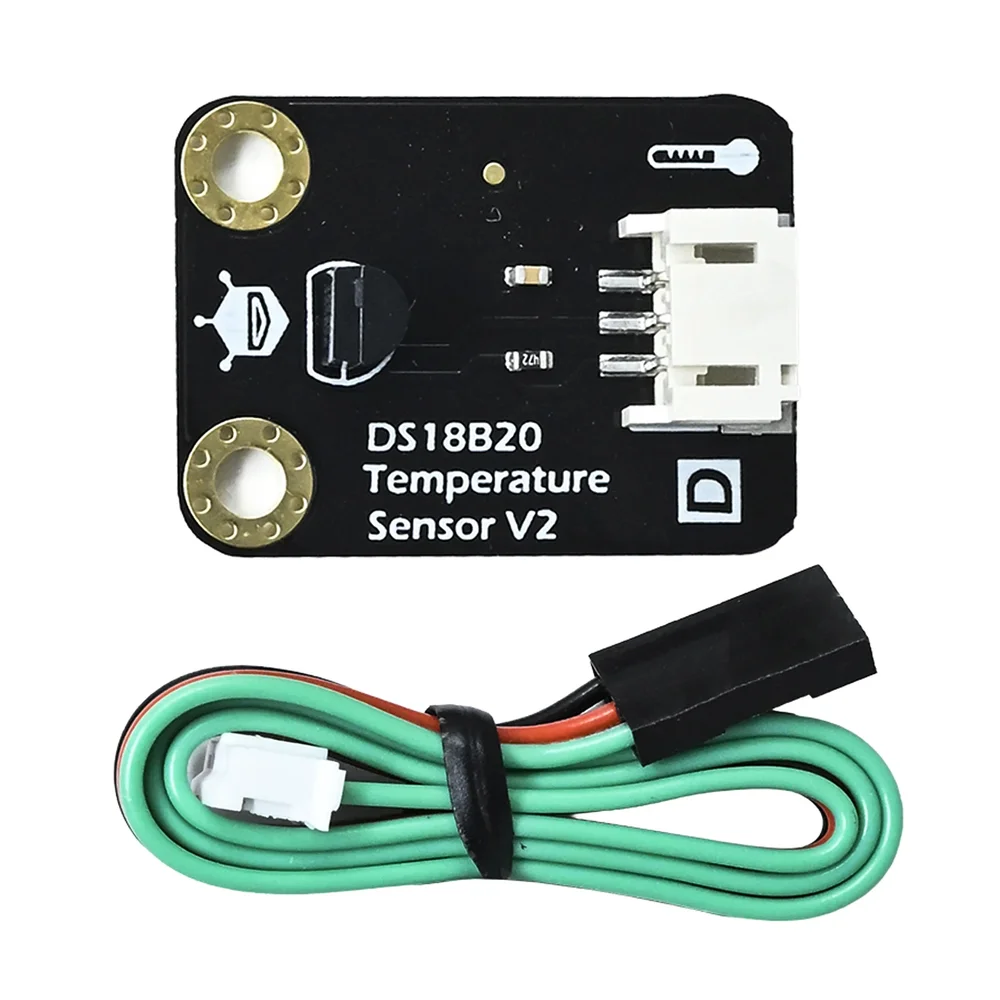
  • 1 x DFRobot Gravity DS18B20 Temperature Sensor Module (V2)
  • 1 x Digital Cable (3-pin Gravity connector)

Additional Information

Weight 0.02 kg
Dimensions 3.2 × 2.2 cm