SKU: SENS-1541
📋 GST Invoice Available

Gyrfalcon HX711-1 Dual-Channel 24-Bit Precision Load Cell Amplifier Module

₹702.00 (Inclusive of all taxes)
Out of Stock

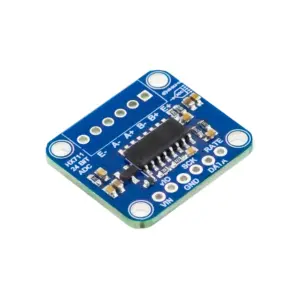
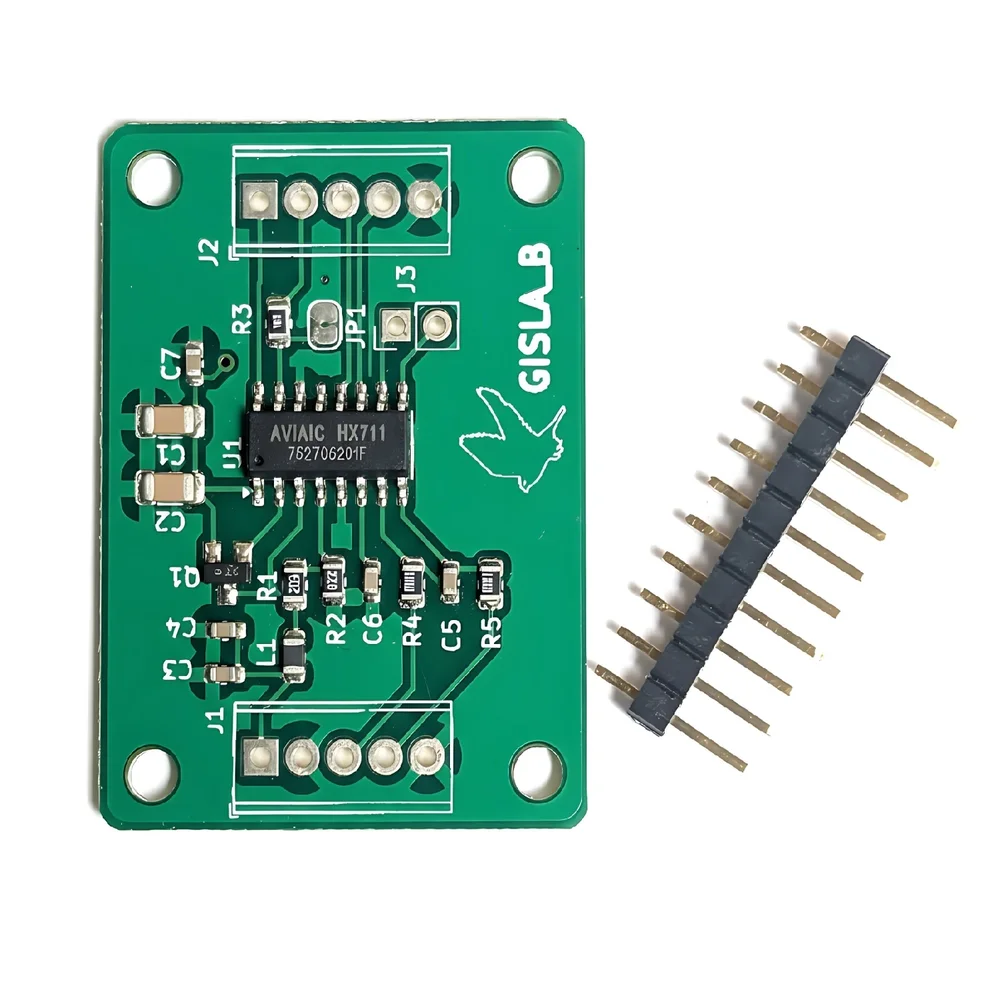
The Gyrfalcon HX711-1 is a dual-channel 24-bit precision ADC amplifier module designed for high-accuracy weight and force measurement systems. It interfaces directly with bridge-type sensors like load cells and strain gauges, offering programmable gain and low-noise performance for Arduino, Raspberry Pi, and industrial embedded applications.

Features

  • Dual-channel 24-bit high-resolution analog-to-digital converter (ADC)
  • Channel A programmable gain of 64 or 128 for ultra-low signal measurement
  • Channel B fixed gain of 32 for secondary sensor input
  • Low-noise on-chip programmable gain amplifier (PGA) and integrated power regulator
  • Selectable 10 SPS or 80 SPS output data rate for speed vs. noise optimization

Out of stock

Description

The Gyrfalcon HX711-1 module is engineered around the HX711 integrated circuit, providing a complete signal conditioning solution for resistive bridge sensors. It amplifies and digitizes the small differential signals from load cells and strain gauges, converting them into a stable digital output via a simple serial interface. The on-chip low-noise PGA, internal oscillator, and power-on reset circuitry ensure precise, drift-free measurements with minimal external components.

Operating from a wide 2.6V to 5.5V supply, the module is compatible with both 3.3V and 5V logic systems, making it suitable for integration into portable scales, industrial process control, and embedded force-sensing projects. Its dual-channel architecture allows for simultaneous monitoring of two sensors or the use of a tare function.

Key Features

  • High-resolution 24-bit dual-channel ADC for precise weight and force measurement
  • Programmable gain on Channel A (64/128) and fixed gain on Channel B (32) for flexible sensor interfacing
  • Integrated low-noise programmable gain amplifier and power supply regulator for stable operation
  • Selectable output data rates (10 SPS or 80 SPS) to balance between speed and noise rejection
  • Internal oscillator with optional external clock input for synchronization
  • Low power consumption design with a power-down mode for battery-operated applications
  • Compact PCB module with pre-soldered header pins for easy prototyping and integration
  • High-value build optimized for industrial and embedded measurement systems requiring reliable data acquisition.

Applications

  • Precision digital weighing scales and balances for laboratory or commercial use
  • Industrial process control and force monitoring in manufacturing automation
  • Embedded systems for robotics, drone payload measurement, and tactile feedback
  • Portable and battery-powered handheld measurement devices
  • Academic projects and prototypes involving strain gauge and load cell signal conditioning

Technical Specifications

Manufacturer Part NumberGYRHX711-1
Core ICHX711
ADC Resolution24-bit
Input Channels2 (Differential)
Channel A Gain64 or 128 (Programmable)
Channel B Gain32 (Fixed)
Operating Voltage2.6V - 5.5V DC
Operating Current< 10 mA
Output Data Rate10 SPS or 80 SPS (Selectable)
Input Voltage Range±40mV (Typical for bridge sensors)
InterfaceSerial (Clock & Data)
Module Dimensions (L x W)41 mm x 31 mm
Module Weight4 g

Frequently Asked Questions

What is the operating voltage range for the HX711-1 module?

The module operates from a wide DC voltage range of 2.6V to 5.5V. This makes it compatible with both 3.3V and 5V microcontroller systems like Arduino, ESP32, and Raspberry Pi without requiring a level shifter.

How do I connect a load cell to the HX711-1 module?

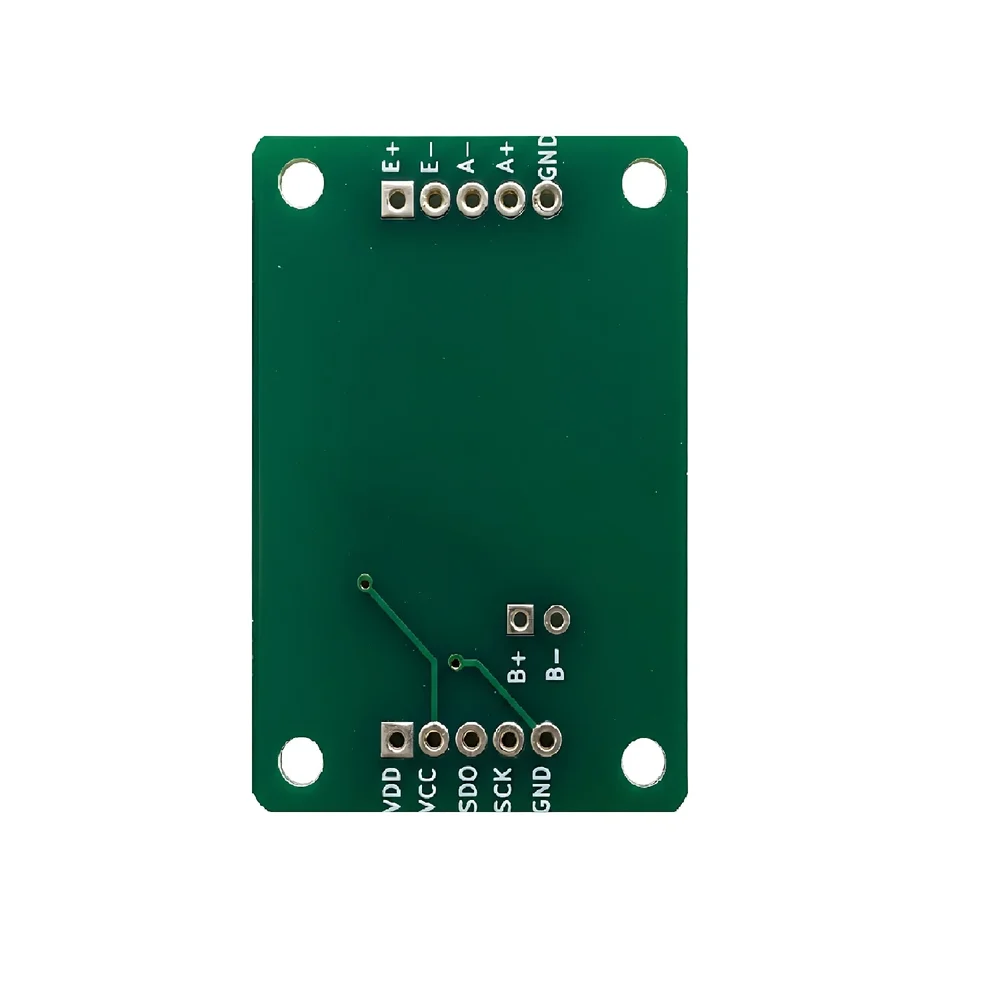
A standard 4-wire load cell connects to the module's screw terminals or pinouts: E+ and E- for excitation voltage (usually from the module), and A+ and A- for the differential signal output. The module provides the regulated bridge excitation and amplifies the resulting millivolt signal.

What is the difference between Channel A and Channel B?

Channel A supports programmable gains of 64 or 128, making it ideal for high-precision measurement of very small signals from primary sensors. Channel B has a fixed gain of 32 and can be used for a secondary sensor or for implementing a tare function with a second load cell.

How do I select the output data rate (10 SPS vs 80 SPS)?

The data rate is selected by controlling the pin state during the power-up sequence or via specific commands in your microcontroller code. The 10 SPS setting offers higher noise rejection for stable readings, while 80 SPS provides faster updates for dynamic measurements.

Does this module require external components to work?

No, the module is a complete signal conditioning solution. It includes an on-chip low-noise PGA, power regulator, and oscillator, requiring no external active components. You only need to connect power, the sensor, and the serial data/clock lines to your microcontroller.

Package Includes

  • 1 x Gyrfalcon HX711-1 Dual-Channel Load Cell Amplifier Module
  • 1 x Header Pin Strip

Additional Information

Weight 0.004 kg
Dimensions 4.1 × 3.1 cm