SKU: SENS-0721
📋 GST Invoice Available

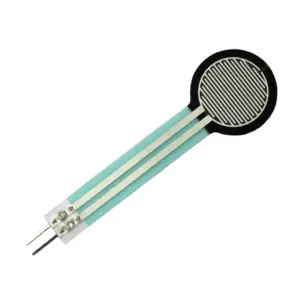
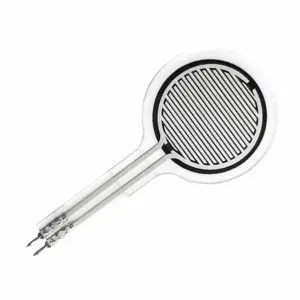
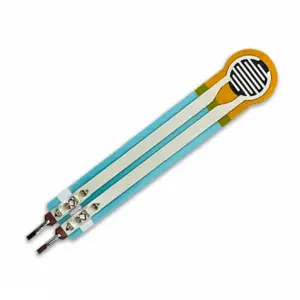
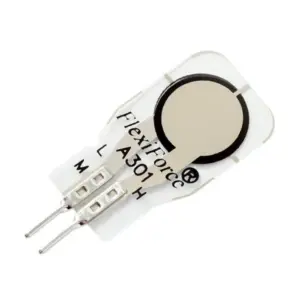
Tekscan FlexiForce A201/1 Flex Sensor - 0-4.4N Force Range, 3-Pin Connector

₹2,429.00 (Inclusive of all taxes)
Out of Stock

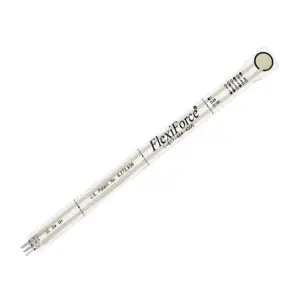
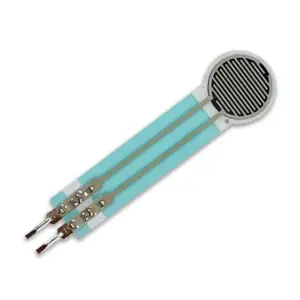
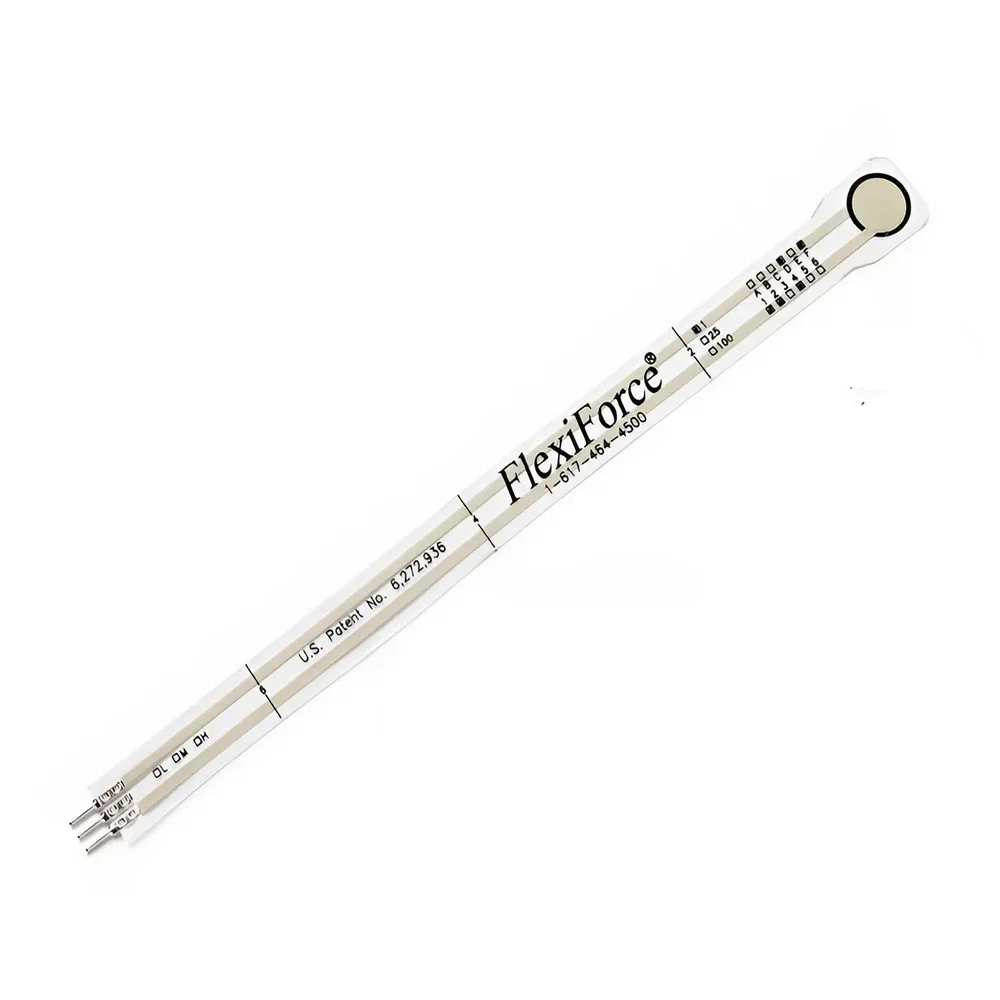
The Tekscan FlexiForce A201/1 is an ultra-thin, flexible piezoresistive force sensor designed for integration into space-constrained applications. It provides a variable resistance output proportional to applied force, compatible with standard op-amp conditioning circuits for use with Arduino, Raspberry Pi, and data acquisition systems.

Features

  • Ultra-thin 0.203 mm flexible polyester film construction for minimal intrusion
  • Measures forces from 0 to 4.4 N (0 to 1 lb) with ±3% linearity
  • Acts as a variable resistor, decreasing from >5 MΩ when unloaded
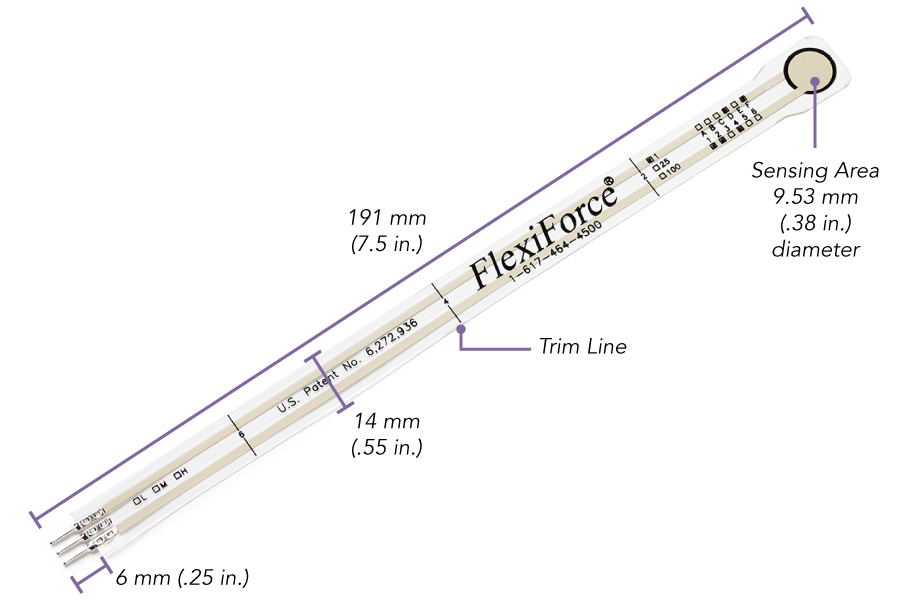
  • Features a 9.53 mm diameter circular active sensing area
  • Terminated with a solderable 3-pin male square pin connector (2.54 mm pitch)

Out of stock

Description

The FlexiForce A201/1 sensor utilizes a patented piezoresistive ink technology printed on a flexible polyester substrate. When force is applied to its 9.53 mm active sensing area, the conductive particles within the ink layer are compressed, creating a decrease in electrical resistance proportional to the applied load. This analog resistance change can be conditioned using a simple inverting op-amp circuit with a reference resistor to produce a stable voltage output suitable for microcontroller ADCs.

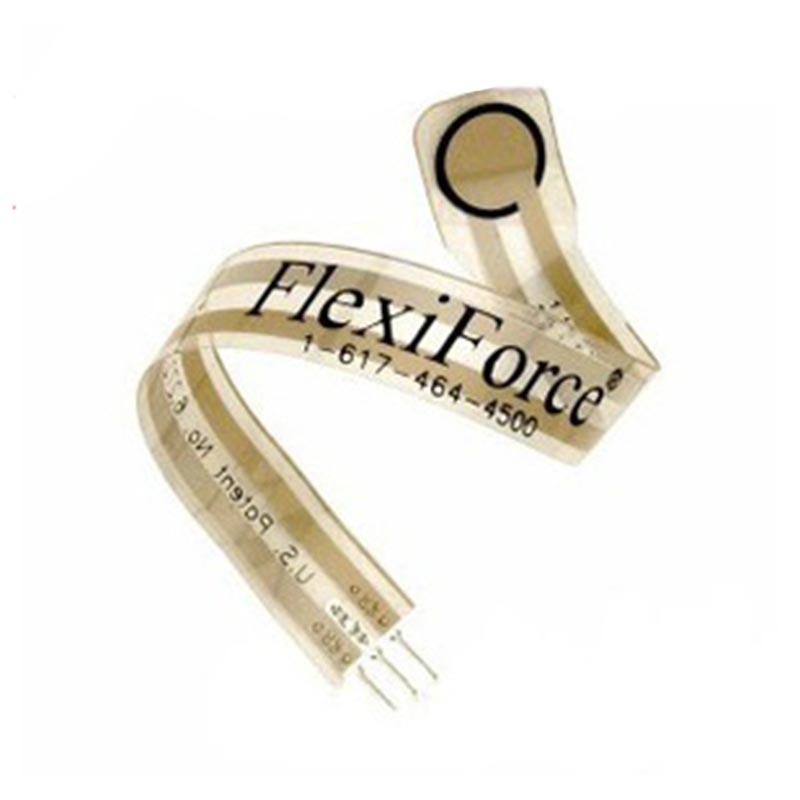
Engineered for durability, the sensor exhibits low hysteresis (<4.5%) and minimal drift (<5% per logarithmic time scale) across an operating temperature range of -9°C to 60°C. Its paper-thin, flexible form factor allows it to conform to curved surfaces and be sandwiched between mating parts without affecting mechanical operation, making it ideal for precise force measurement in tight spaces.

Key Features

  • High-resolution thin-film piezoresistive sensing element
  • Excellent linearity and repeatability for precise force feedback
  • Robust polyester film construction resistant to most environments
  • Fast 5 µs response time for dynamic force measurement
  • Solderable connector enables reliable, permanent circuit integration
  • RoHS compliant construction meets environmental standards
  • Length can be field-trimmed to 2", 4", or 6" for custom installations
  • Optimized performance-to-cost ratio for prototyping and production

Applications

  • Robotic gripper and end-effector tactile force feedback control
  • Medical device pressure monitoring (e.g., compression garments, prosthetic sockets)
  • Biomechanics research and gait analysis insoles
  • Industrial process control for nip roll pressure and laminating force
  • Consumer electronics button and touch interface force sensing

Technical Specifications

Force Range0 - 4.4 N (0 - 1 lb)
Active Sensing Area Diameter9.53 mm (0.375 in)
Thickness0.203 mm
Unloaded Resistance> 5 MΩ
Linearity Error± 3% of full scale
Hysteresis< 4.5% of full scale
Repeatability± 2.5% of full scale
Drift< 5% per logarithmic time scale
Response Time5 µs
Operating Temperature-9°C to 60°C (15°F to 140°F)
Connector Type3-pin male square pin (center pin inactive)
Pin Spacing2.54 mm
Recommended Excitation Voltage5 V DC
Max Current0.2 A
Substrate MaterialPolyester Film
RoHS CompliantYes
Sensor Length203 mm (8 in, trimmable)
Sensor Width14 mm

Frequently Asked Questions

How do I interface the FlexiForce A201/1 sensor with an Arduino or microcontroller?

The sensor acts as a variable resistor. You need a signal conditioning circuit, typically an inverting op-amp configuration. Connect the sensor's two active outer pins in series with a reference resistor (RF) between a negative excitation voltage (e.g., -5V) and the op-amp's inverting input. The op-amp's output will be a positive analog voltage proportional to the applied force, which can be read directly by your microcontroller's ADC pin. The center pin of the connector is inactive.

What is the purpose of the reference resistor (RF) in the conditioning circuit, and how do I choose its value?

The reference resistor sets the sensitivity and force range of the measurement. A lower RF value (e.g., 10kΩ) will make the circuit less sensitive, allowing measurement of higher forces before the output saturates. A higher RF value (e.g., 1MΩ) increases sensitivity for detecting very low forces. Choose RF based on your expected force range and desired output voltage swing, typically between 10kΩ and 1MΩ. The drive voltage (VT) can also be adjusted to fine-tune the range.

Can I trim the sensor to a shorter length, and how do I re-attach the connector?

Yes, the sensor length can be trimmed to predefined lengths of 2", 4", or 6". If you cut the sensor, you must attach a new connector to the freshly cut end. This requires purchasing compatible staked pin connectors and a crimping tool from Tekscan. Alternatively, you can use a conductive epoxy to solder small wires directly to the exposed silver traces on the trimmed end for permanent installation.

What is the difference between the active sensing area and the rest of the sensor?

Force is only detected within the 9.53 mm diameter silver circle at the tip of the sensor. This is the 'active sensing area' where the pressure-sensitive ink is located. The long tail of the sensor contains only the conductive silver traces that connect this area to the pins. Applying force to the tail will not produce a meaningful resistance change. Ensure your mounting applies force directly and evenly over the circular silver pad.

Package Includes

  • 1 x Tekscan FlexiForce A201/1 Flex Sensor

Additional Information

Weight 0.006 kg
Dimensions 20.3 × 1.4 × 0.0203 cm