SKU: SENS-0714
📋 GST Invoice Available

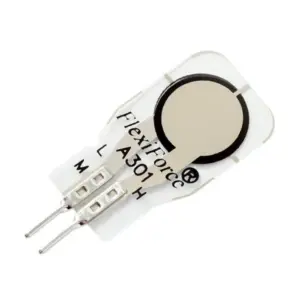
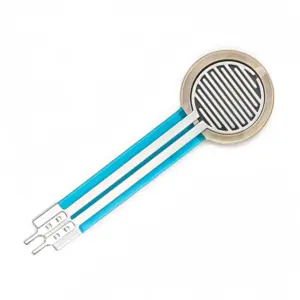
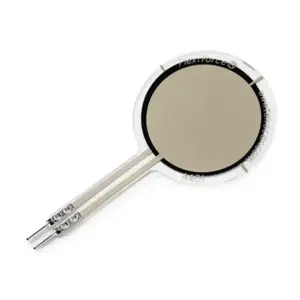
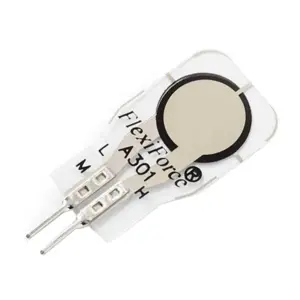
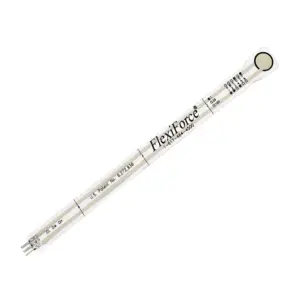
Tekscan FlexiForce A201-25 Force Sensor - 111 N (11kg) Range, 3-Pin Male Square Pin

₹1,939.00 (Inclusive of all taxes)
Out of Stock

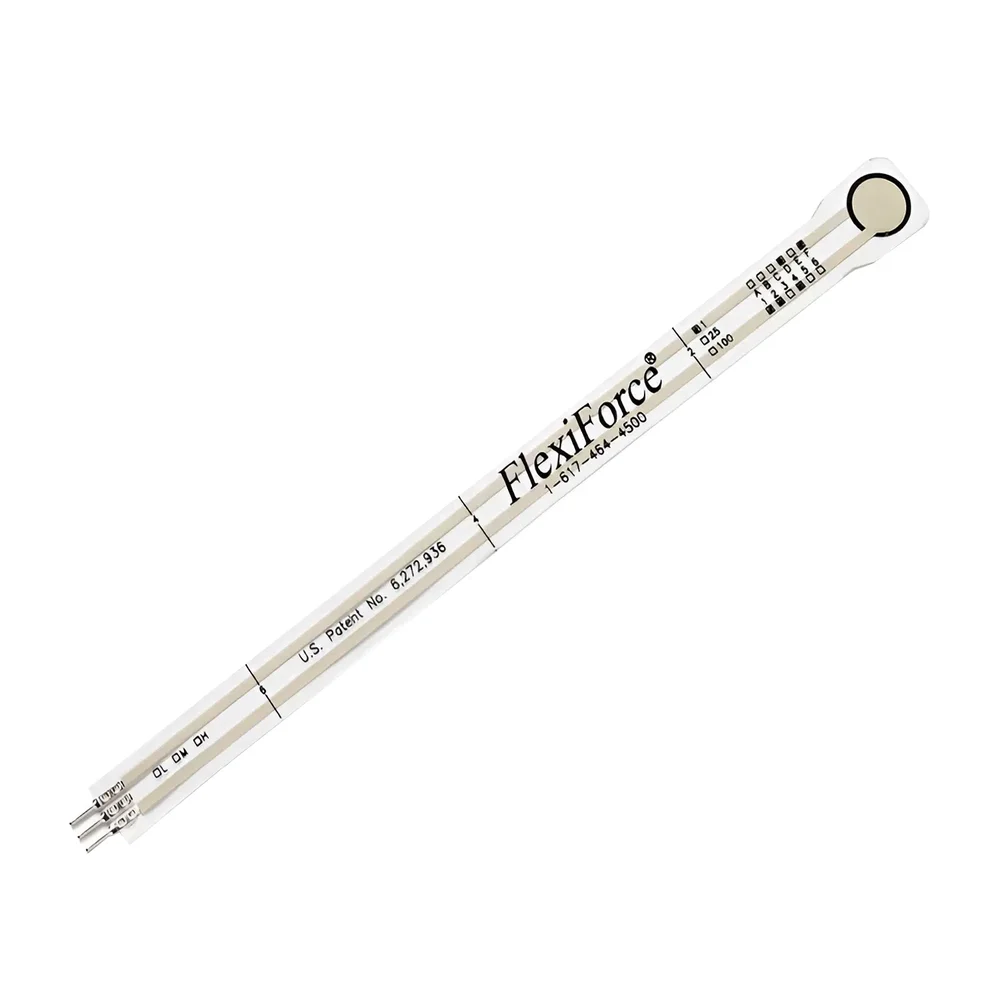
The Tekscan FlexiForce A201-25 is a piezoresistive, thin-film force sensor with a 0-111 N (0-25 lb) measurement range, designed for integration into testing equipment, embedded electronics, and OEM development kits. Its flexible polyester substrate and 3-pin male square pin connector facilitate easy prototyping and system integration.

Features

  • Piezoresistive sensing element provides a linear resistance change proportional to applied force.
  • Standard force range of 0-111 N (approx. 0-25 lb) with a 9.53 mm diameter active sensing area.
  • Ultra-thin and flexible polyester substrate (0.203 mm thick) for non-intrusive mounting.
  • Wide operating temperature range from -40°C to +60°C for robust environmental performance.
  • 3-pin male square pin connector (2.54 mm spacing) for straightforward electrical interface.

Out of stock

Description

The FlexiForce A201-25 operates on a piezoresistive principle, where an applied force to its 9.53 mm circular sensing area causes a predictable decrease in the sensor’s internal resistance. This analog output signal is highly linear and exhibits minimal drift, making it suitable for precise force measurement applications. The sensor’s response is specific to normal pressure; its resistance remains stable during flexing without applied load.

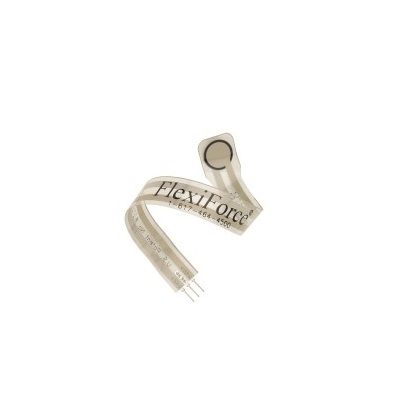
Constructed on a durable, 0.203 mm thick polyester substrate, the sensor is both thin and flexible, allowing it to conform to curved surfaces without affecting measurement accuracy. Its wide operating temperature range supports use in demanding environments. The dynamic range can be tailored for specific applications by adjusting the drive voltage and external feedback resistor in the conditioning circuit.

Key Features

  • High-Linearity Piezoresistive Element: Delivers a consistent and predictable resistance-to-force relationship for accurate measurements.
  • Ultra-Thin, Flexible Profile: 0.203 mm thick polyester construction enables installation in space-constrained or curved assemblies.
  • Configurable Dynamic Range: Sensitivity and maximum detectable force can be optimized by adjusting external circuit parameters.
  • Robust Environmental Tolerance: Operates reliably across a -40°C to +60°C temperature range.
  • Stable Performance: Engineered for low hysteresis and minimal long-term drift compared to many force sensing technologies.
  • Standardized Connector: 3-pin male square pin header with 2.54 mm pitch ensures reliable and solderless connections.

Applications

  • Embedded force feedback in robotic grippers and end-effectors.
  • Precision load monitoring in medical devices and rehabilitation equipment.
  • Tactile force sensing in consumer electronics keypads and interfaces.
  • Process control and quality testing in manufacturing and assembly fixtures.
  • Research and development prototyping for OEM force measurement systems.

Technical Specifications

Manufacturer Part NumberA201-25
Force Range (Standard)0 - 111 N (approx. 0 - 25 lb)
Sensing Area Diameter9.53 mm
Overall Sensor Length190.5 mm
Overall Sensor Width14 mm
Substrate Thickness0.203 mm
Substrate MaterialPolyester
Connector Type3-pin Male Square Pin (center pin inactive)
Pin Spacing2.54 mm
Operating Temperature-40°C to +60°C

Frequently Asked Questions

How do I interface the FlexiForce A201-25 sensor with a microcontroller like Arduino?

The sensor acts as a variable resistor. Create a voltage divider circuit by connecting one sensor pin to your microcontroller's analog input pin and the other to ground, with a pull-up resistor (typically 10kΩ to 1MΩ, chosen based on desired sensitivity) between the analog pin and a voltage reference (3.3V or 5V). The center pin of the 3-pin connector is inactive. The analog reading will decrease as force increases.

What is the purpose of the feedback resistor, and how does it affect the sensor's range?

The feedback resistor (often in a transimpedance amplifier circuit) sets the gain and determines the output voltage range for a given force. A smaller feedback resistor will result in a lower output voltage swing, effectively increasing the maximum measurable force (wider range) but reducing sensitivity. Conversely, a larger resistor increases sensitivity for lower forces but saturates at a lower maximum force.

Can the FlexiForce sensor be used to measure force while bent or flexed?

Yes, but with an important distinction. The sensor's flexible polyester substrate allows it to be bent or conform to a surface without damage. However, its piezoresistive element only responds to force applied normally (perpendicular) to the 9.53 mm circular sensing area at the tip. Bending the sensor without applying pressure to this active area will not produce a significant change in resistance.

What is the recommended drive voltage for the FlexiForce A201-25?

The sensor itself has no inherent voltage requirement; the drive voltage is determined by your conditioning circuit. Common configurations use the microcontroller's logic voltage (3.3V or 5V) as the reference in a voltage divider. For optimal performance and to avoid self-heating, keep the voltage across the sensor below 5V. The dynamic range can be tuned by adjusting this voltage along with the feedback resistor value.

Package Includes

  • 1 x Tekscan FlexiForce A201-25 Force Sensor

Additional Information

Dimensions 19.05 × 1.4 × 0.0203 cm