SKU: IOWC-1745
📋 GST Invoice Available

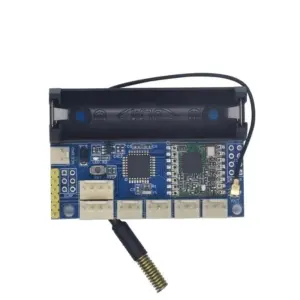
RFM98 LoRa Radio Node v1.0 ATmega328P 915MHz

₹1,289.00 (Inclusive of all taxes)
Out of Stock

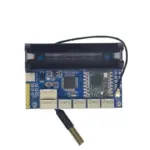
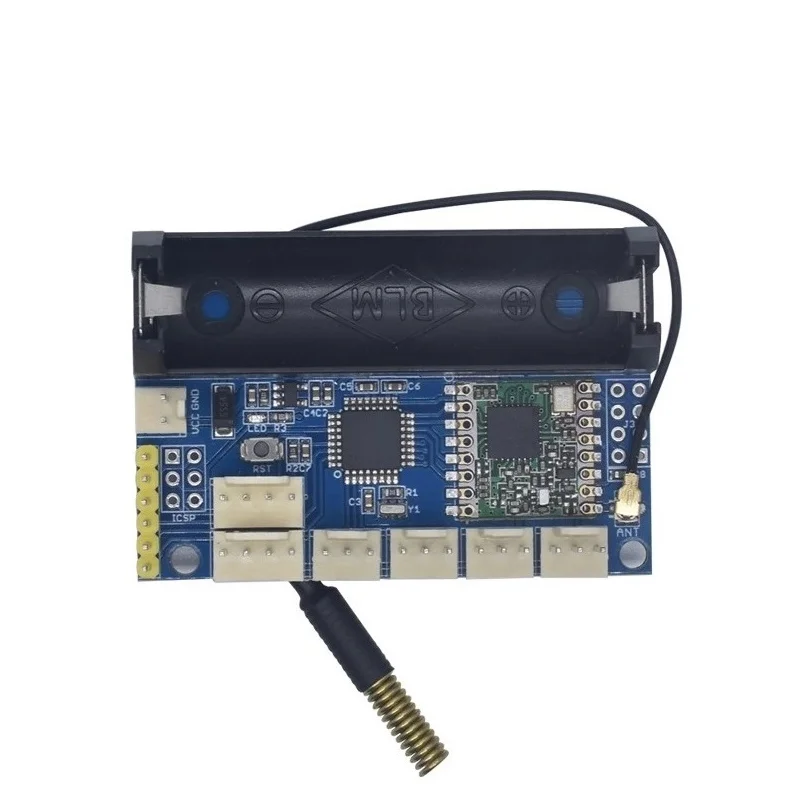
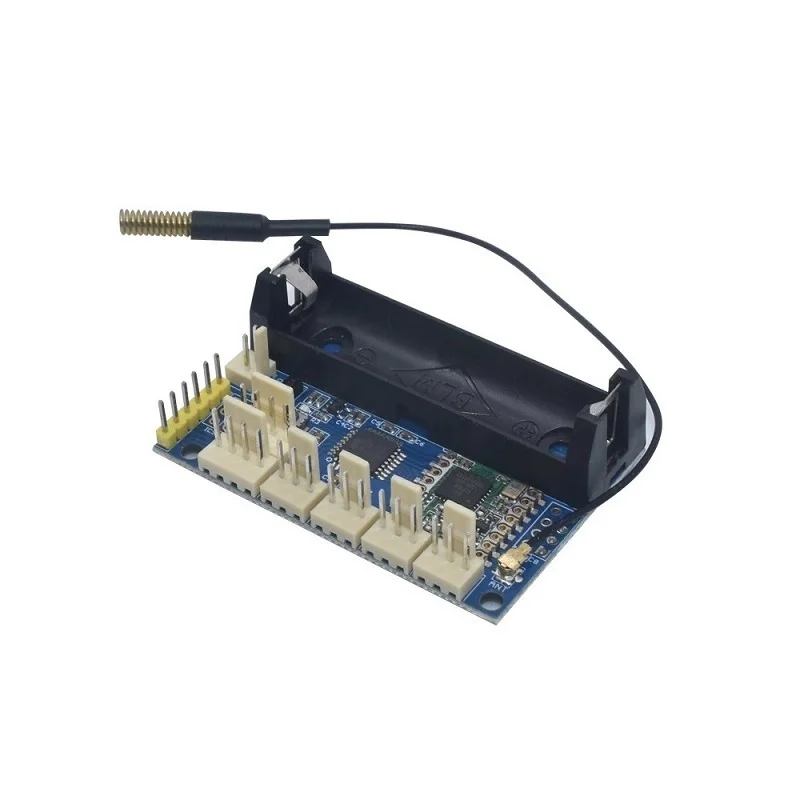
This LoRa Radio Node v1.0 integrates an ATmega328P microcontroller with an RFM95-based 915MHz LoRa transceiver, featuring a built-in 14500 LiPo battery holder for portable, long-range wireless sensor deployments. It is pre-loaded with an Arduino Pro Mini 8MHz 3.3V bootloader for easy programming via the Arduino IDE.

Features

  • 915MHz LoRa RFM95-based transceiver for long-range, low-power data transmission beyond 2.4GHz networks.
  • ATmega328P microcontroller (8MHz, 3.3V) pre-loaded with Arduino bootloader for rapid firmware development.
  • Integrated 14500 LiPo battery holder and 3.3V regulator (500mA peak) for portable, off-grid operation.
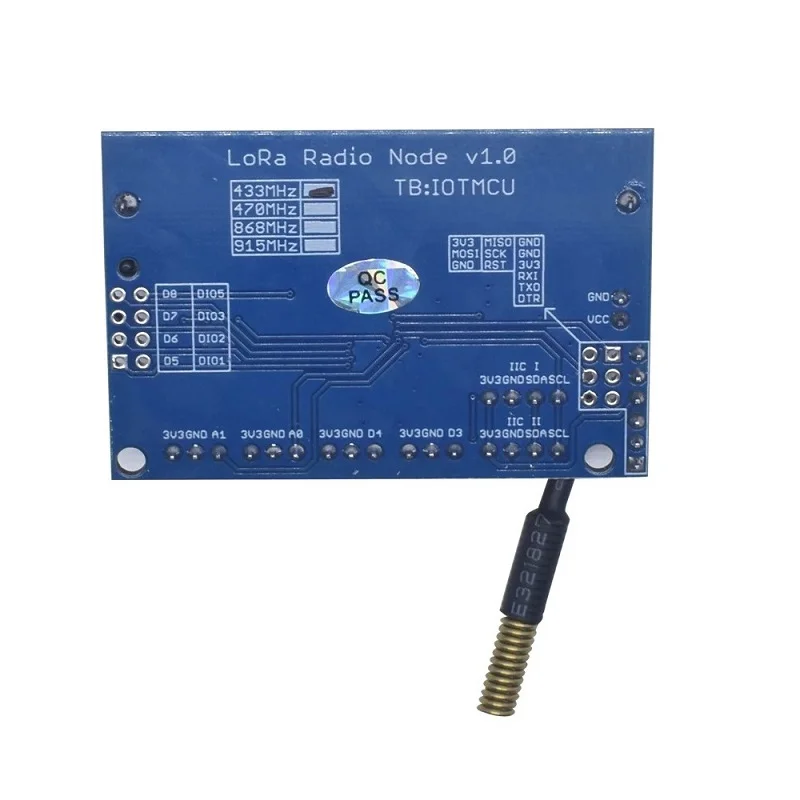
  • Breakout interfaces include hardware I2C (x2), SPI, serial, analog inputs (A0, A1), and digital GPIO (D3, D4).
  • Compact 40mm x 60mm PCB with mounting holes and reset button for robust field deployment.

Out of stock

Description

The LoRa Radio Node v1.0 is a compact, battery-powered wireless module designed for low-data-rate, long-range IoT telemetry. Its core combines an 8MHz ATmega328P microcontroller, compatible with the Arduino Pro Mini ecosystem, with a Semtech SX1278-based RFM95 transceiver optimized for the 915MHz ISM band. This architecture enables reliable communication over several kilometers while maintaining minimal power consumption, ideal for remote sensing.

The board includes a dedicated 3.3V linear regulator capable of supplying 500mA peak current, ensuring stable operation for both the MCU and the radio during transmission bursts. Key physical interfaces are broken out via robust KK-type connectors, providing two I2C ports, two analog inputs, and two digital GPIOs (including one PWM pin) for connecting sensors and peripherals. The integrated 14500 battery holder simplifies deployment in mobile or off-grid applications.

Key Features

  • Long-Range LoRa Connectivity: Utilizes the 915MHz ISM band with the SX1278-based RFM95 chipset for robust communication over several kilometers, ideal for sparse data telemetry.
  • Arduino-Compatible Development: Features an ATmega328P pre-loaded with an 8MHz 3.3V Arduino Pro Mini bootloader, enabling rapid prototyping and firmware uploads via the Arduino IDE.
  • Integrated Power Management: Onboard 3.3V regulator with 500mA peak output supports stable operation from a single 3.7V 14500 LiPo cell, including during high-power RF transmission.
  • Expanded Sensor Interface: Breaks out multiple hardware buses including dual I2C ports, SPI, hardware serial, two analog inputs (A0, A1), and digital GPIOs (D3, D4 with PWM) via durable KK connectors.
  • Field-Ready Design: Compact 40mm x 60mm form factor includes mounting holes, a reset button, and a general-purpose LED on pin 13 for system status indication.

Applications

  • Remote environmental monitoring (temperature, humidity, soil moisture) in agriculture.
  • Asset tracking and low-power GPS-over-LoRa beacon deployments.
  • Industrial telemetry for tank levels, equipment status, or energy metering in remote sites.
  • Smart city infrastructure such as waste bin fill-level sensors or parking space monitors.
  • Wildlife research and conservation tracking using long-range, low-power sensor nodes.

Technical Specifications

Microcontroller/SoCATmega328P (8MHz, 3.3V Logic)
Wireless ProtocolLoRa (Semtech SX1278 / RFM95)
Frequency Range915 MHz (ISM Band)
RF Transmit PowerUp to +20 dBm (Typical for RFM95)
Supply Voltage3.7V via 14500 LiPo Battery
Regulated Output3.3V, 500mA Peak Current
InterfacesHardware I2C (x2), SPI, UART, Analog Inputs (A0, A1), Digital GPIO (D3, D4, PWM on D3)
Antenna ConnectorIntegrated (for supplied 915MHz antenna)
Dimensions40 mm x 60 mm

Frequently Asked Questions

How do I program this LoRa Radio Node?

The board is pre-loaded with an Arduino Pro Mini 8MHz 3.3V bootloader. Connect an FTDI programmer (set to 3.3V) to the hardware serial pins (RX/TX) and select 'Arduino Pro or Pro Mini' with 'ATmega328P (3.3V, 8 MHz)' as the board in the Arduino IDE. You can then upload sketches that utilize the LoRa library, such as the Sandeep Mistry LoRa.h library, to control the RFM95 module.

What is the typical range and data rate of this 915MHz module?

Using the LoRa modulation, this RFM95-based module can achieve ranges of several kilometers line-of-sight, depending on antenna placement and environment. Data rates are configurable via spreading factor (SF) settings, typically from 0.3 kbps to 37.5 kbps. Lower data rates (higher SF) provide greater link budget and range but slower transmission times, making it ideal for small, infrequent sensor data packets in remote monitoring applications.

How should I power the board and what is the expected battery life?

Power the node via the onboard 14500 LiPo battery holder (3.7V). The integrated 3.3V regulator supplies the MCU and radio. Battery life depends heavily on transmission interval and sleep mode usage. For maximum longevity, put the ATmega328P into deep sleep between readings and configure the RFM95 module to sleep. Using a 1200mAh 14500 cell and transmitting once per hour, you can expect several months of operation. Always measure the sleep current of your specific code for accurate estimates.

Package Includes

  • 1 x LoRa Radio Node v1.0 Board with ATmega328P and 14500 Battery Holder
  • 1 x 915MHz LoRa Antenna

Additional Information

Weight 0.05 kg
Dimensions 8 × 6 × 3 cm