SKU: IOWC-1730
📋 GST Invoice Available

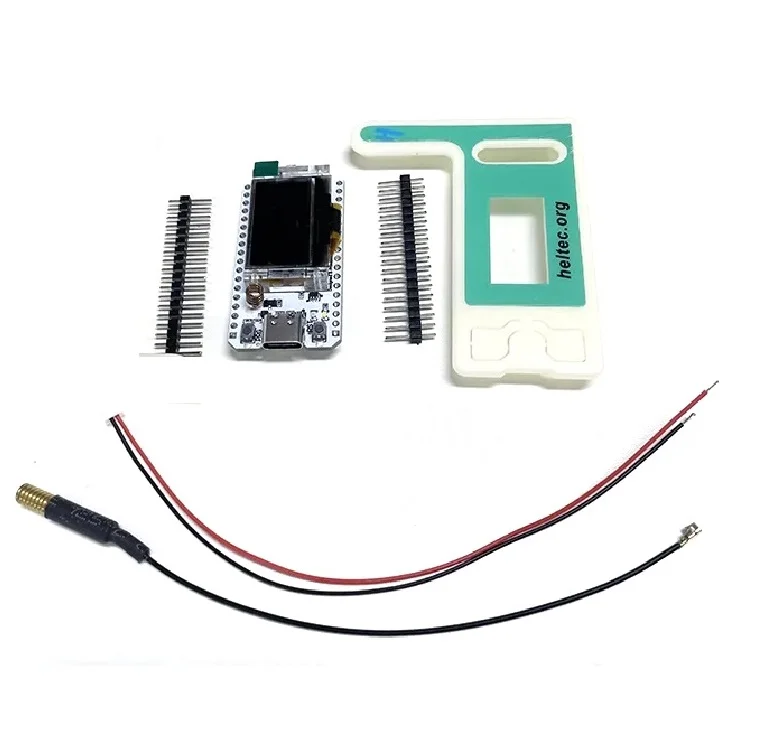
Heltec Automation Automation ESP32-S3 LoRa Development Board V3 w/ SX1262 & OLED (433MHz)

₹2,839.00 (Inclusive of all taxes)
Out of Stock

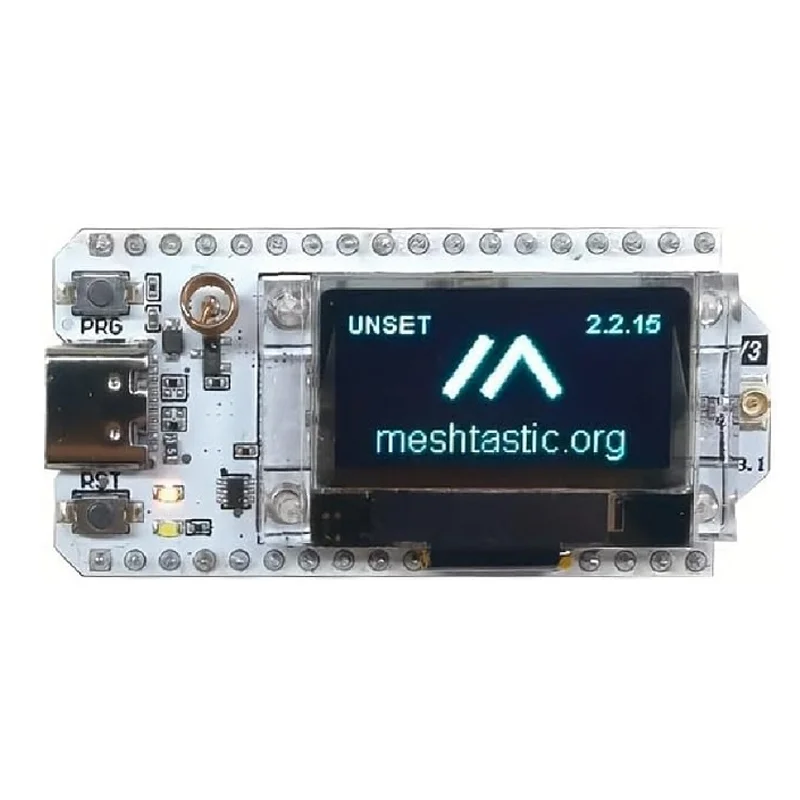
The Heltec Automation ESP32-S3 LoRa 32 (V3) is a feature-rich development board integrating an ESP32-S3 dual-core processor, an SX1262 LoRa transceiver for 433MHz, and a 0.96-inch OLED display. It supports Arduino IDE, ESP-IDF, and MicroPython for building long-range, low-power IoT sensor nodes with Wi-Fi and BLE connectivity.

Features

  • ESP32-S3 & SX1262 Core: Combines a 240MHz dual-core ESP32-S3FN8 processor with an SX1262 LoRa chip for robust wireless sensor node development on the 433MHz ISM band.
  • Triple Wireless Connectivity: Integrates Wi-Fi 802.11 b/g/n, Bluetooth 5.1 (BLE), and LoRa/LoRaWAN into a single board for flexible hybrid network topologies.
  • Integrated OLED Display & Battery Management: Features a 128×64 OLED for system status and a built-in LiPo charge/discharge circuit with automatic USB/battery power switching.
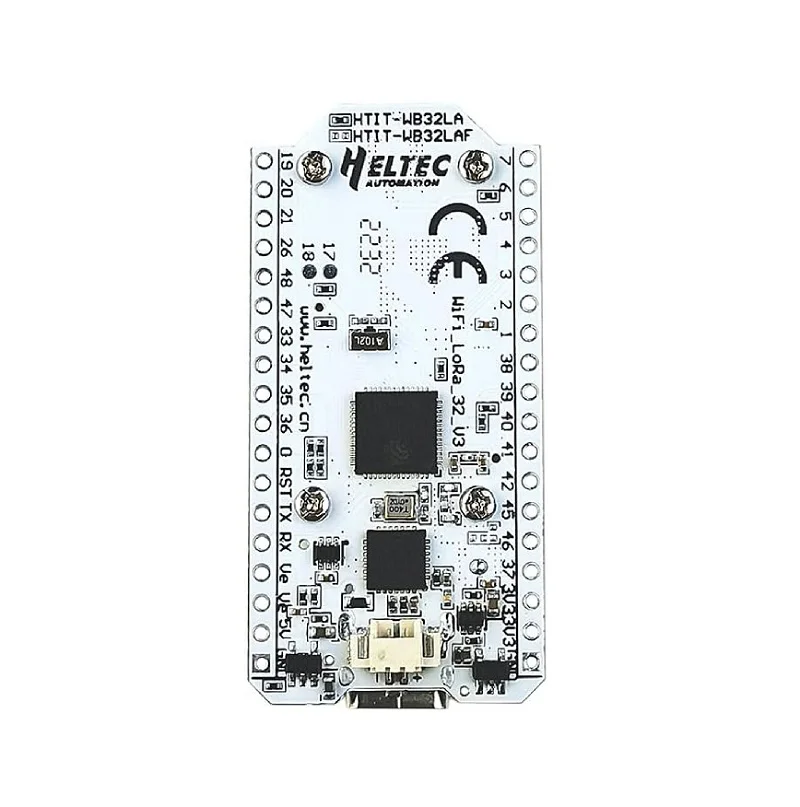
  • Developer-Friendly Design: Includes a CP2102 USB-to-serial chip, Type-C connector, full pin headers, and is fully supported by the Arduino development environment.
  • Optimized RF & Power Design: Incorporates dedicated 2.4GHz antennas for Wi-Fi/BLE, an IPEX connector for an external LoRa antenna, and low-power circuit design for field deployments.

Out of stock

Description

The Heltec Automation WiFi LoRa 32 (V3) is a comprehensive IoT development platform engineered for professional makers and system integrators. It merges Espressif’s powerful ESP32-S3 microcontroller, featuring dual-core 240MHz LX7 processors and 8MB of flash memory, with Semtech’s SX1262 long-range sub-GHz transceiver. This combination provides the processing muscle and wireless range necessary for advanced edge computing applications in smart agriculture, industrial telemetry, and remote environmental monitoring.

The board’s architecture includes robust power management with an integrated lithium battery charger, overcharge protection, and seamless power source switching, making it ideal for portable, battery-operated sensor nodes. Its RF design employs a dedicated metal spring antenna for the 2.4GHz Wi-Fi/Bluetooth stack and a reserved IPEX connector for attaching an external, high-gain antenna to maximize LoRa link budget and range. With full Arduino IDE and ESP-IDF framework support, extensive GPIO breakout, and a built-in OLED for real-time debugging, the V3 is a versatile foundation for prototyping and deploying scalable LoRaWAN end-devices.

Key Features

  • Multi-Protocol Wireless Hub: Unifies LoRa (433MHz), Wi-Fi 802.11 b/g/n, and Bluetooth 5.1 BLE on a single board for hybrid network gateway or endpoint designs.
  • High-Performance ESP32-S3 Core: Leverages a 240MHz dual-core processor with 8MB flash for complex data processing and sensor fusion algorithms at the edge.
  • Onboard Visual Feedback: A 0.96-inch 128x64 OLED screen provides immediate visual output for sensor readings, battery voltage, network status, and debug logs.
  • Field-Ready Power System: Integrated LiPo battery management handles charging, discharging, and automatic switchover between USB and battery input for uninterrupted operation.
  • Enhanced ESD & Circuit Protection: The Type-C USB interface includes voltage regulation, ESD protection, and short-circuit safeguards for reliable field programming and power delivery.
  • Complete Development Ecosystem: Supported by Arduino libraries, PlatformIO, and ESP-IDF, with a CP2102 USB-serial bridge for seamless firmware flashing and serial monitoring.

Applications

  • Smart Agriculture & Environmental Sensing: Deploy as a remote soil moisture, weather, or crop health monitoring node using LoRaWAN for long-range, low-power data backhaul.
  • Industrial IoT (IIoT) Telemetry: Monitor equipment status, tank levels, or energy consumption in factories, transmitting data via LoRa and providing local Wi-Fi configuration.
  • Asset Tracking & Fleet Management: Build GPS-less trackers using LoRa for periodic location pings and Wi-Fi for data offloading in depot areas.
  • Smart City Infrastructure: Implement distributed sensor networks for smart parking, waste management, or streetlight control with hybrid LoRa/Wi-Fi connectivity.
  • Prototyping & Education: An ideal all-in-one platform for teaching wireless IoT concepts, prototyping sensor networks, and developing LoRaWAN end-device firmware.

Technical Specifications

Microcontroller / SoCESP32-S3FN8 (Xtensa 32-bit LX7 Dual-Core, up to 240 MHz)
LoRa TransceiverSemtech SX1262
Wireless ProtocolsLoRa (433MHz), Wi-Fi 802.11 b/g/n, Bluetooth 5.1 (BLE)
Memory512KB SRAM, 384KB ROM, 16KB RTC SRAM, 8MB SPI Flash
Supply VoltageVia USB Type-C or 2-pin 1.25mm LiPo Battery Connector
USB to SerialCP2102
Display0.96-inch OLED, 128x64 pixels
Antenna ConnectorsIntegrated 2.4GHz spring antenna (Wi-Fi/BLE), IPEX connector (LoRa)
InterfacesType-C USB, 2x18-pin 2.54mm headers, LiPo battery interface
Operating Temperature-20°C to 70°C
Dimensions (L x W)50.2mm x 25.5mm

Frequently Asked Questions

How do I program the Heltec Automation ESP32-S3 LoRa V3 board using the Arduino IDE?

First, install the ESP32 board support via Arduino's Board Manager using the Espressif repository URL. Then, install the 'Heltec Automation ESP32 (Dev-Boards)' library from the Library Manager. Select 'Heltec Automation WiFi LoRa 32 (V3)' as your board, choose the correct COM port, and you can begin uploading sketches. The onboard CP2102 USB-to-serial chip handles communication, and the built-in OLED is accessible via the U8g2 or built-in Heltec Automation display library for showing sensor data or status messages.

What type of antenna should I use with the LoRa IPEX connector, and how does it affect range?

For the 433MHz LoRa IPEX connector, use a compatible 433MHz antenna with an IPEX (U.FL) plug, typically a 3dBi or 5dBi whip antenna. The external antenna significantly improves range over the board's internal options by providing better gain and elevation. Ensure the antenna is tuned to the 433MHz ISM band for optimal SWR. Proper antenna selection and placement can extend reliable communication distance to several kilometers in open terrain, which is crucial for LoRaWAN sensor network deployments.

How do I power the board with a battery and monitor its charge level?

Connect a 3.7V LiPo battery to the onboard 2-pin 1.25mm JST connector. The integrated battery management system (BMS) handles charging via USB and provides overcharge protection. To read the battery voltage, use the predefined analog pin (usually connected to a voltage divider). In your code, read the analog value and convert it to volts. The board automatically switches to battery power when USB is disconnected, enabling seamless operation for field-deployed, low-power IoT nodes that require periodic deep sleep to conserve energy.

Package Includes

  • 1 x Heltec Automation WiFi LoRa 32 (V3) Development Board

Additional Information

Weight 0.1 kg
Dimensions 5.02 × 2.55 cm