SKU: IOWC-1351
📋 GST Invoice Available

Seeed Studio Studio SenseCAP Indicator D1S 4-Inch Touch Screen IoT Platform ESP32-S3 & RP2040

₹8,759.00 (Inclusive of all taxes)
Out of Stock

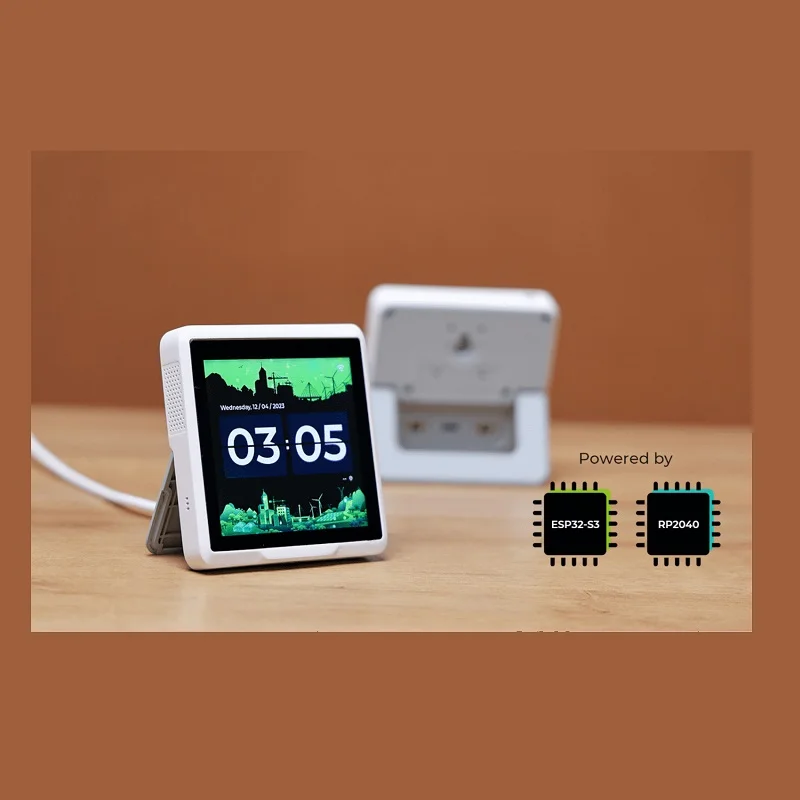
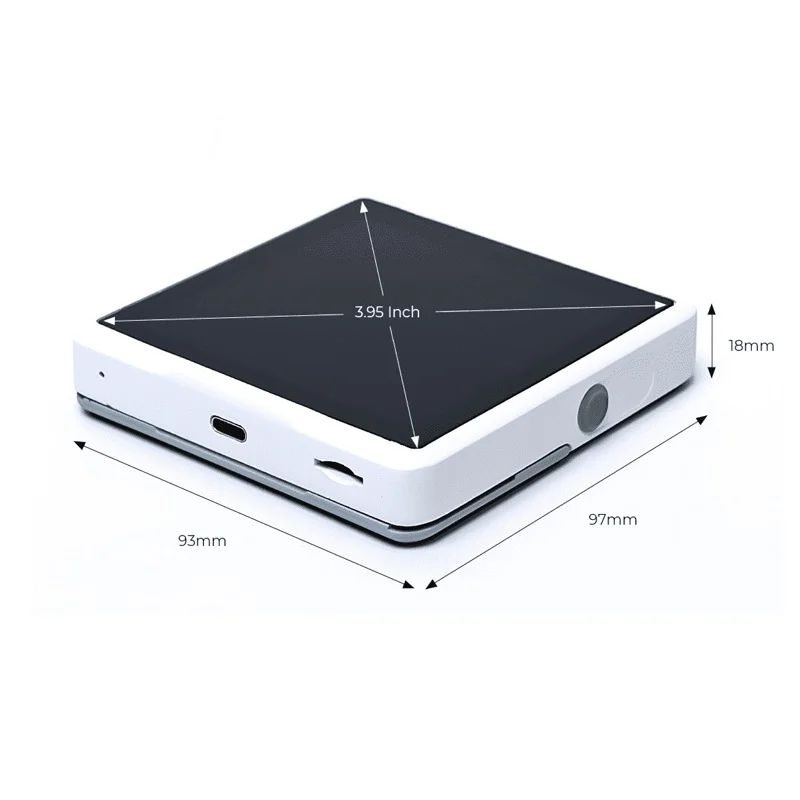
The SenseCAP Indicator D1S is a dual-MCU IoT development platform featuring a 4-inch capacitive touch screen, powered by an ESP32-S3 for Wi-Fi/BLE connectivity and an RP2040 for co-processing, designed for building interactive air quality monitors and custom IoT dashboards.

Features

  • Dual-MCU Architecture: Combines an ESP32-S3 (240MHz, Wi-Fi/BLE) and an RP2040 (133MHz) for flexible task distribution between connectivity and UI/control logic.
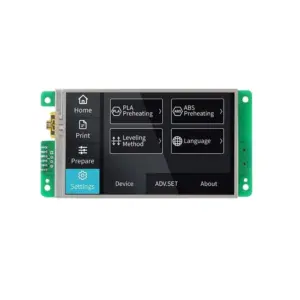
  • 4-Inch Capacitive Touch Display: High-resolution 480×480 RGB screen enables intuitive GUI development for dashboards, monitors, and control panels.
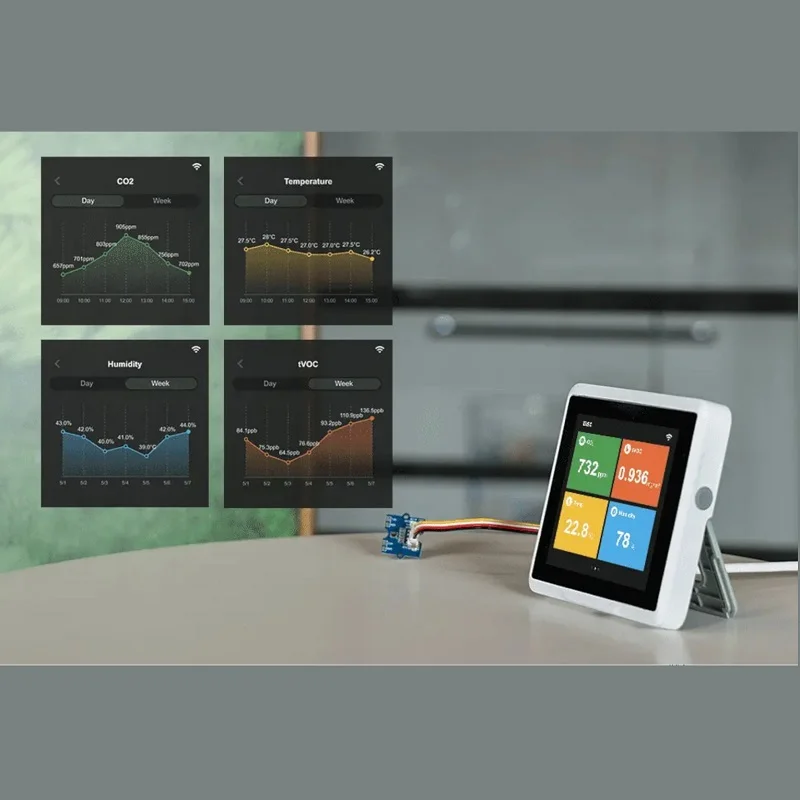
  • Integrated Environmental Sensing: Features built-in tVOC and CO2 sensors, plus an external Grove AHT20 sensor for accurate, heat-isolated temperature and humidity readings.
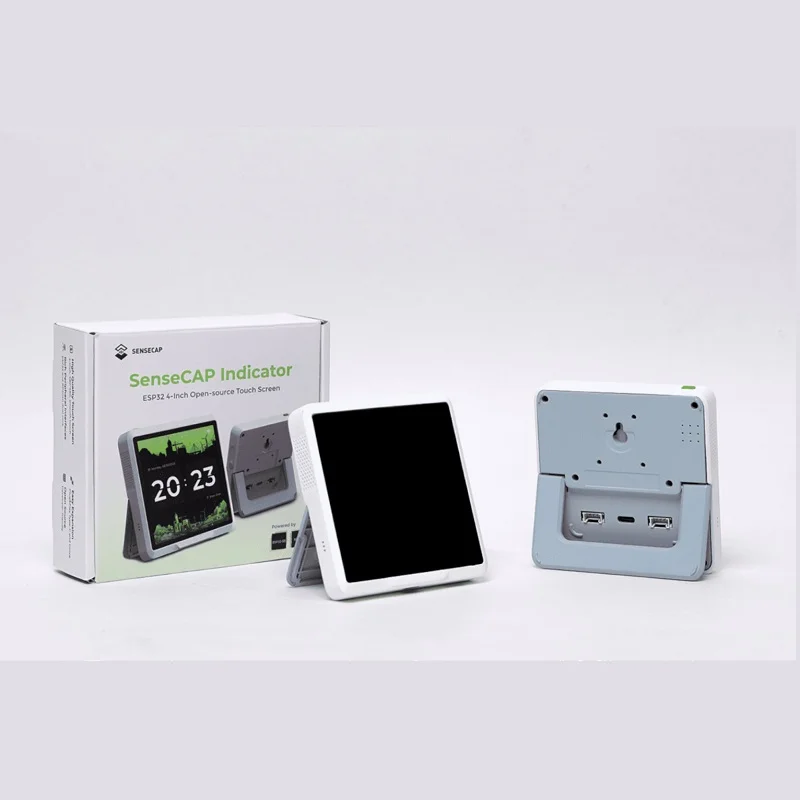
  • Developer-Friendly Expansion: Offers USB Type-C, two Grove (ADC/I2C) interfaces, and rich GPIOs for easy peripheral connection and rapid prototyping.
  • Fully Open-Source Platform: Supported by Arduino, ESP-IDF, and MicroPython for complete firmware customization, from air quality detectors to bespoke IoT applications.

Out of stock

Description

The SenseCAP Indicator D1S is a professional-grade IoT development platform engineered for creating sophisticated touch-screen applications. Its core is a dual-microcontroller system: the Espressif ESP32-S3 handles high-performance wireless communication via 2.4GHz Wi-Fi and Bluetooth 5.0 LE, while the Raspberry Pi RP2040 co-processor manages display rendering and sensor data acquisition, ensuring smooth, responsive user interfaces.

Designed as a fully open-source tool, it provides developers with a complete hardware and software ecosystem. The platform ships with native firmware that can immediately function as a desktop air quality monitor, displaying real-time tVOC and CO2 levels. For custom projects, its extensive GPIO breakout, Grove connectivity for I2C and ADC protocols, and support for microSD cards up to 32GB enable the development of complex data loggers, industrial HMIs, or smart home control hubs.

Key Features

  • Dual-Processor Design: Leverage the ESP32-S3 for network tasks and the RP2040 for UI/sensor processing, optimizing performance and power efficiency.
  • High-Resolution Touch Interface: 3.95-inch capacitive screen with 480x480 resolution provides a crisp, responsive canvas for custom graphical applications.
  • Comprehensive Sensor Suite: Monitor indoor air quality with onboard tVOC & CO2 sensors and an external, thermally isolated Grove AHT20 for precise temperature and humidity.
  • Extensible I/O System: Includes multiple GPIOs, two Grove ports (I2C & ADC), and a USB Type-C port for programming, power, and peripheral expansion.
  • Robust Power Management: Operates from a stable 5V/1A DC supply, suitable for continuous desktop or embedded deployment.
  • Broad Development Support: Compatible with Arduino IDE, ESP-IDF, MicroPython, and CircuitPython, accelerating firmware development for diverse IoT use cases.

Applications

  • Smart Environmental Monitors: Deploy as a desktop or wall-mounted unit for real-time indoor air quality (IAQ) tracking of CO2, VOCs, temperature, and humidity.
  • Industrial HMI & Control Panels: Build custom touch-screen interfaces for machine control, process monitoring, or IIoT dashboards in manufacturing and automation.
  • Smart Home Hubs: Create a central control panel to manage Wi-Fi/BLE-connected lights, sensors, and appliances with a graphical user interface.
  • Prototyping & Education: Ideal platform for teaching IoT concepts, prototyping interactive devices, and developing proof-of-concept applications with dual-MCU architecture.
  • Data Visualization Nodes: Use the display and connectivity to present live data feeds from networks (MQTT, HTTP) in offices, labs, or public spaces.

Technical Specifications

Microcontroller/SoCESP32-S3 (Xtensa dual-core LX7, 240MHz) & RP2040 (Dual ARM Cortex-M0+, 133MHz)
Wireless ProtocolsWi-Fi 802.11 b/g/n (2.4GHz), Bluetooth 5.0 Low Energy (BLE)
Display3.95-inch Capacitive Touch Screen, 480 x 480 pixels
Flash MemoryESP32-S3: 8MB, RP2040: 2MB
External StorageMicroSD Card Slot (Supports up to 32GB, card not included)
SensorsBuilt-in: tVOC, CO2; External Provided: Grove AHT20 (Temperature & Humidity)
InterfacesUSB Type-C, 2x Grove (I2C & ADC), GPIO Headers
Supply Voltage5V DC
Operating CurrentRecommended 1A power supply
Operating Temperature-10°C to +50°C
Operating Humidity0% to 90% RH (non-condensing)
Dimensions96.2mm (L) x 92.2mm (W)
Weight231g

Frequently Asked Questions

How do I program the SenseCAP Indicator D1S, and which MCU handles what?

You program the ESP32-S3 and RP2040 separately. Use Arduino IDE or ESP-IDF for the ESP32-S3 to manage Wi-Fi, BLE, and network tasks. For the RP2040, use the Arduino IDE with the Raspberry Pi Pico framework or MicroPython to control the display, touch interface, and sensor data processing. The two MCUs communicate via serial (UART) or GPIO. The provided examples demonstrate this dual-firmware architecture for coordinated operation.

What is the purpose of the external Grove AHT20 sensor, and how is it connected?

The external Grove AHT20 temperature and humidity sensor is provided to obtain more accurate environmental readings by reducing heat interference from the main board's processors. It connects to one of the board's Grove I2C ports using the included cable. In the default air quality monitor firmware, it supplies the primary temperature and humidity data, while the onboard sensors measure tVOC and CO2 concentrations for a complete indoor climate profile.

Can I develop custom graphical interfaces for the 4-inch screen, and what libraries are supported?

Yes, you can fully customize the graphical interface. For the RP2040 (which drives the display), you can use libraries like LVGL with Arduino or MicroPython for advanced UI elements. The board's open-source hardware design includes display driver documentation. Example projects from Seeed Studio Studio provide starter code for creating gauges, charts, and touch controls, making it suitable for building professional dashboards, control panels, or data visualization applications.

What power supply is required, and what is the typical operating current?

The board requires a stable 5V DC power supply capable of delivering at least 1A, provided via the USB Type-C port. The typical operating current depends on screen brightness and wireless activity but generally stays within 300-500mA during active use. For power-sensitive applications, you can leverage the ESP32-S3's deep sleep modes and adjust the display brightness to significantly reduce consumption when the device is idle between sensor readings.

Package Includes

  • 1 x SenseCAP Indicator D1S Development Board
  • 1 x USB Type-C Cable (1 Meter)
  • 1 x Grove AHT20 Temperature & Humidity Sensor

Additional Information

Weight 0.231 kg
Dimensions 9.62 × 9.22 cm