SKU: IOWC-1088
📋 GST Invoice Available

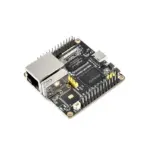
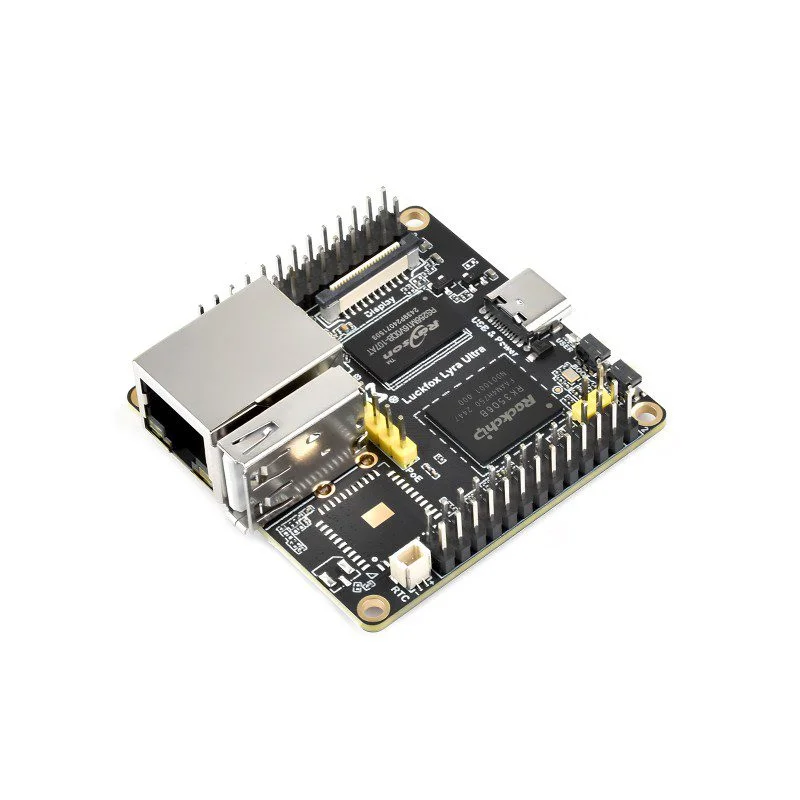
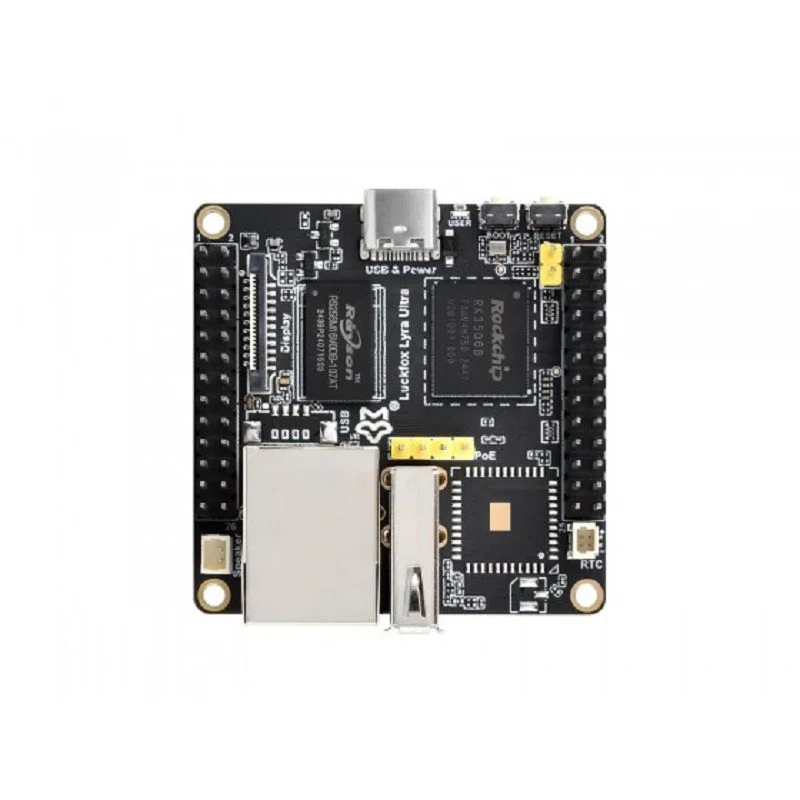
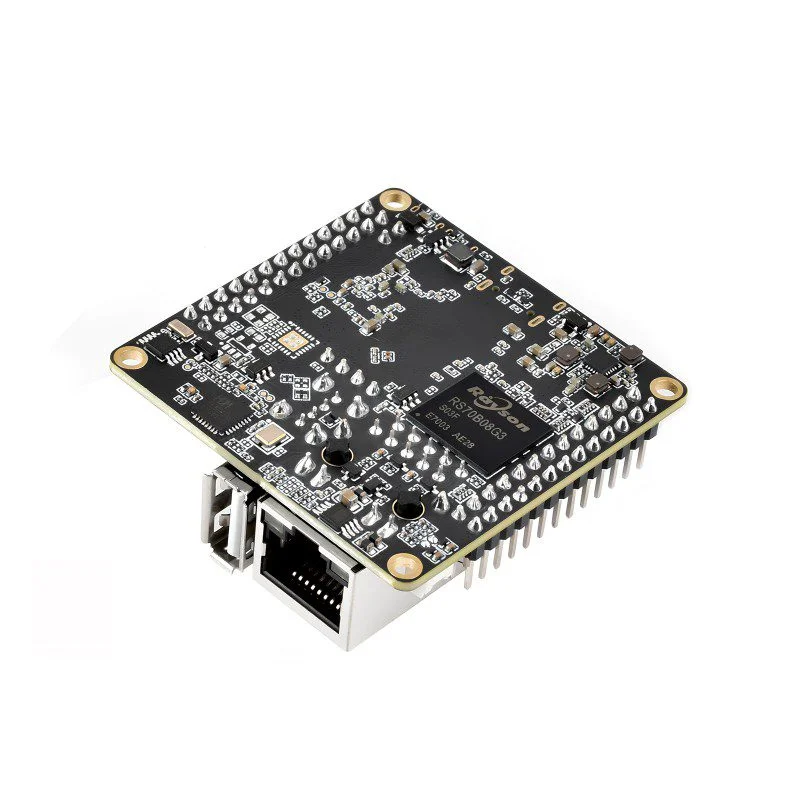
Waveshare Luckfox Lyra Ultra RK3506B Linux Micro Board 8GB eMMC

₹5,879.00 (Inclusive of all taxes)
Out of Stock

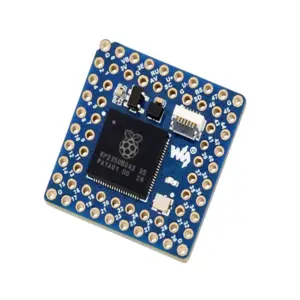
The Waveshare Luckfox Lyra Ultra is a compact, Linux-ready development board built around the Rockchip RK3506B processor, featuring a triple-core Cortex-A7 and Cortex-M0 for SMP/AMP configurations, 8GB eMMC storage, and integrated WiFi 6/Bluetooth 5.2 for efficient IoT and edge computing applications.

Features

  • Rockchip RK3506B SoC: Combines a 1.2GHz triple-core ARM Cortex-A7 with an ARM Cortex-M0 MCU, supporting SMP/AMP for flexible processing power distribution between Linux and real-time tasks.
  • Integrated Wireless & High-Speed I/O: Onboard 2.4GHz WiFi 6 and Bluetooth 5.2/BLE module ensures stable connectivity, paired with MIPI DSI 2-lane for displays, USB-A, Ethernet, and audio codec support.
  • Rockchip Matrix IO Flexibility: 29 configurable pins supporting up to 98 multiplexed functions (PWM, UART, I2C, SPI) via software-defined pin mapping, enabling highly adaptable peripheral circuit design.
  • Ready for Industrial Deployment: Features 512MB DDR3L RAM, 8GB eMMC storage, PoE module header for simplified power delivery, and a compact form factor ideal for embedded vision, gateways, and automation controllers.

Out of stock

Description

The Waveshare Luckfox Lyra Ultra RK3506B Linux Micro Development Board delivers a powerful, all-in-one embedded platform for developers building advanced IoT systems, edge AI applications, and industrial controllers. Its core architecture pairs a 1.2GHz triple-core ARM Cortex-A7 cluster—capable of running full Linux distributions—with a dedicated ARM Cortex-M0 microcontroller, enabling hybrid SMP/AMP configurations where real-time tasks can be offloaded to the M0 core for deterministic performance.

Engineered for connectivity and expansion, the board integrates a 2.4GHz WiFi 6 and Bluetooth 5.2/BLE module directly on the PCB, eliminating the need for external dongles. High-speed interfaces include a MIPI DSI 2-lane port for driving displays, a USB-A host port, 10/100 Ethernet via RMII, and built-in audio codecs. The innovative Rockchip Matrix IO system multiplexes up to 98 functional signals across 29 physical GPIOs, allowing developers to reconfigure pinouts for UART, I2C, SPI, PWM, and ADC in software, dramatically simplifying hardware layout.

Key Features

  • Hybrid Processing Core: Triple-core Cortex-A7 handles main OS and applications, while integrated Cortex-M0 manages low-power, real-time sensor polling or control loops.
  • Software-Defined Pin Multiplexing: Rockchip Matrix IO design allows dynamic assignment of 98 functions (UART, I2C, SPI, PWM, I2S) to 29 physical pins, enabling maximum peripheral flexibility.
  • Onboard High-Speed Wireless: Integrated 2.4GHz WiFi 6 (802.11ax) and Bluetooth 5.2/BLE module provides reliable, low-latency connectivity for IoT gateways and edge devices.
  • Rich Multimedia & Display Support: Built-in audio/video codec with speaker header and MIPI DSI 2-lane interface enables development of multimedia kiosks, smart displays, and vision-based systems.
  • Expansion-Oriented Design: Includes PoE module header for single-cable power+data, supports DDR2/DDR3/DDR3L memory expansion, and provides USB-A host port for peripherals.
  • Linux-Ready Embedded Platform: Ships with 8GB eMMC for the OS and 512MB DDR3L RAM, offering a stable foundation for Debian, Buildroot, or custom Linux distributions.

Applications

  • IoT Edge Gateways & Controllers: Acts as a central hub for aggregating sensor data via WiFi/BLE, running local logic, and connecting to cloud platforms over Ethernet or cellular dongles.
  • Embedded Vision & Smart Displays: Powers interactive kiosks, digital signage, and machine vision systems using the MIPI DSI interface and processing capabilities for lightweight AI inference.
  • Industrial Automation & IIoT: Suitable for programmable logic controllers (PLCs), equipment monitoring, and Modbus gateways leveraging its real-time M0 core and serial communication interfaces.
  • Multimedia & Audio Devices: Enables development of internet radios, voice assistants, and audio streaming devices with built-in codec and wireless connectivity.
  • Prototyping & Education: An ideal platform for learning embedded Linux, real-time operating systems, and wireless IoT system design due to its extensive I/O and documentation.

Technical Specifications

Processor / SoCRockchip RK3506B (Triple-core ARM Cortex-A7 @ 1.2GHz + ARM Cortex-M0)
Wireless ProtocolsWiFi 6 (802.11ax 2.4GHz), Bluetooth 5.2 / BLE
Memory512MB DDR3L RAM, 8GB eMMC Flash
Display InterfaceMIPI DSI 2-lane
GPIO & I/O29 × Rockchip Matrix IO pins (98 multiplexed functions), 4 × dedicated GPIO, USB-A Host, 10/100 Ethernet (RMII), Audio Codec, Speaker Header
Supply Voltage5V via USB Type-C or PoE Header
InterfacesUSB Type-C (Power/Data), USB-A Host, MIPI DSI, RMII Ethernet, I2C, SPI, UART, PWM, I2S, ADC
AntennaOnboard PCB antenna for WiFi/BT
Operating TemperatureCommercial grade (typically 0°C to +70°C)
DimensionsApprox. 85mm x 56mm (Board size)

Frequently Asked Questions

What operating systems are supported by the Luckfox Lyra Ultra board?

The board is designed to run embedded Linux distributions. Official support typically includes a custom Buildroot or Debian-based image provided by Waveshare/Luckfox. You can flash the OS to the onboard 8GB eMMC via the USB Type-C port using tools like RKDevTool. The Cortex-M0 core can run a separate real-time OS (RTOS) like FreeRTOS in an AMP configuration alongside Linux on the A7 cores.

How do I configure the Rockchip Matrix IO pins for specific functions like UART or I2C?

Pin multiplexing is handled through device tree overlays (DTO) and kernel drivers in Linux. You must modify the device tree source (.dts) file to assign your desired function (e.g., i2c1, uart2, pwm0) to the specific Matrix IO pin numbers. After compiling the overlay and loading it, the corresponding /dev device node will be available. The vendor SDK provides examples and a pinmux configuration tool to generate the correct settings, abstracting the complex hardware mapping.

Can I power the board using Power over Ethernet (PoE)?

Yes, but it requires an external PoE module. The board includes a dedicated header for connecting a compatible 802.3af PoE module (not included). You must solder or connect the module to the header pins, which will deliver regulated 5V power to the board. Ensure your PoE injector or switch supports the required power class. Alternatively, you can power the board via the USB Type-C port using a standard 5V/2A adapter for development.

What is the procedure for updating the board's firmware or kernel?

Firmware updates are performed via MaskROM mode and the Rockchip USB upgrade tool. Hold the MaskROM button while connecting USB Type-C to a PC to enter bootloader mode. Use the official RKDevTool (Windows/Linux) to load a new unified firmware image (.img file) containing U-Boot, kernel, and rootfs. For incremental kernel updates, you can compile a new kernel and modules within the provided SDK and replace the kernel partition on the eMMC using dd or upgrade tools.

Package Includes

  • 1 x Waveshare Luckfox Lyra Ultra RK3506B Linux Micro Development Board (with 8GB eMMC)
  • 1 x USB Type-A to Type-C Cable (~1 meter)

Additional Information

Weight 0.087 kg
Dimensions 16 × 11 × 3 cm