SKU: IOWC-1040
📋 GST Invoice Available

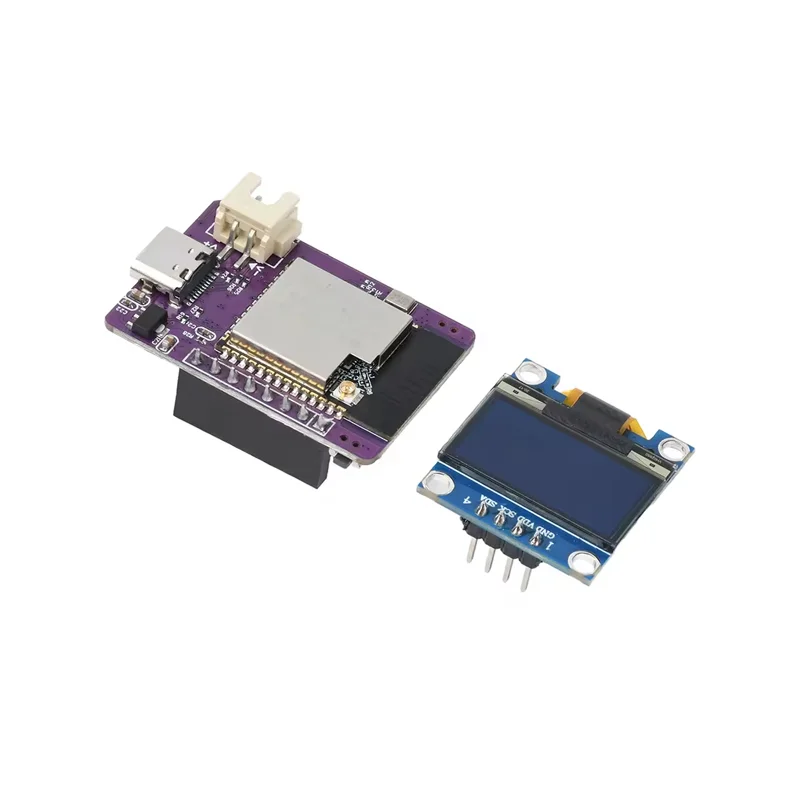
ESP32-S3 AI Voice Development Board w/ 0.96-Inch OLED & Dual Mics

₹1,059.00 (Inclusive of all taxes)
Out of Stock

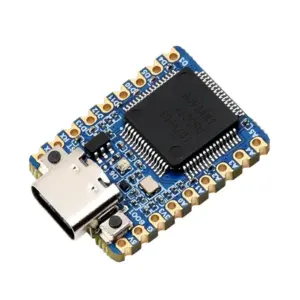
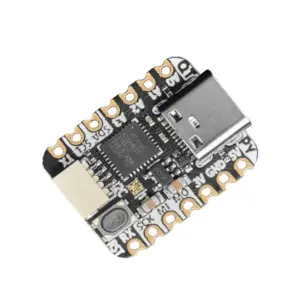
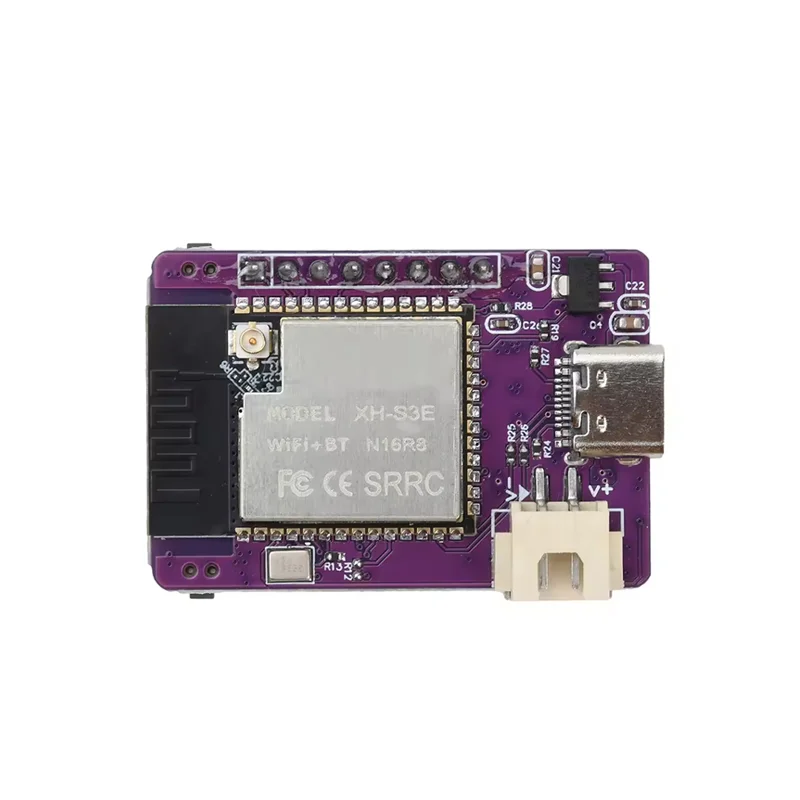
This compact ESP32-S3 AI voice development board integrates a 0.96-inch OLED display and dual PDM microphones for offline wake-word detection and voice-controlled IoT applications, compatible with ESP-IDF, Arduino IDE, and MicroPython.

Features

  • ESP32-S3 dual-core SoC with integrated Wi-Fi 4 and Bluetooth 5.0 for wireless connectivity.
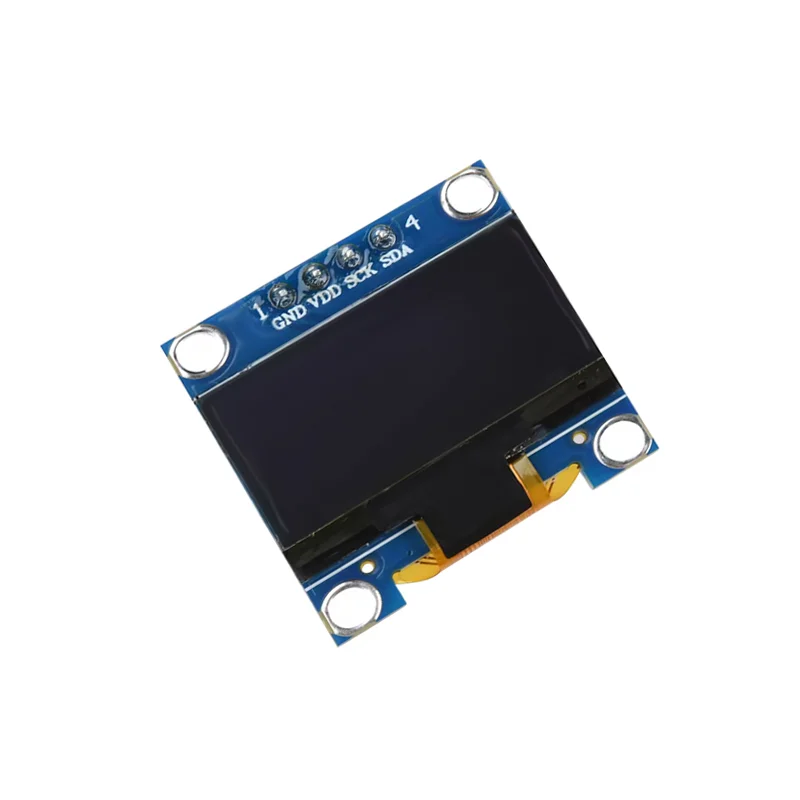
  • Onboard 0.96-inch OLED screen for real-time data visualization and system status display.
  • Dual PDM microphones enable accurate voice capture and offline wake-word detection via Espressif’s AI frameworks.
  • Includes a 2.5W onboard audio amplifier for direct speaker connection and voice feedback.
  • Compact 24mm x 25mm form factor with USB-C and battery power support for portable projects.

Out of stock

Description

The MINI ESP32-S3 AI Voice Development Board is engineered for voice-interactive edge AI and IoT prototyping. Its ESP32-S3 chip provides the processing muscle for hardware-accelerated voice recognition algorithms, enabling low-latency offline wake-word detection and command processing without relying on cloud connectivity.

Designed for low-power operation, the board supports battery-powered deployments and offers a comprehensive set of I/O including SPI, UART, I2C, and GPIOs for sensor integration. The integrated 2.5W amplifier drives speakers directly, creating a complete audio input/output system for smart home assistants, voice-controlled gadgets, and portable AI devices.

Key Features

  • AI-optimized ESP32-S3 microcontroller with dual-core Xtensa LX7 processors.
  • Integrated 0.96-inch OLED display for visual feedback and debugging without external monitors.
  • Dual high-sensitivity PDM microphones for robust far-field voice pickup.
  • Supports Espressif's WakeNet and MultiNet for offline wake-word and speech command recognition.
  • Onboard 2.5W Class-D audio amplifier with direct speaker output terminals.
  • USB-C interface for programming, serial communication, and 5V power delivery.
  • Extensive peripheral interfaces: SPI, I2C, UART, PWM, ADC, and user GPIOs.
  • Compact, solderless design ideal for rapid prototyping and embedded into final products.

Applications

  • Smart home voice assistants and offline voice control hubs.
  • Portable AI gadgets and interactive toys with audio feedback.
  • Voice-activated IoT switches and environmental controllers.
  • Prototyping edge AI devices with local speech recognition.
  • Educational platforms for AI and embedded systems development.

Technical Specifications

Microcontroller/SoCEspressif ESP32-S3 (Dual-core Xtensa LX7)
Wireless ProtocolsWi-Fi 4 (802.11 b/g/n), Bluetooth 5.0 (LE)
Display0.96-inch OLED (SSD1306 or compatible)
Audio Input2x PDM Microphones
Audio OutputOnboard 2.5W Amplifier
Supply Voltage5V via USB-C, 3.3V via onboard LDO
InterfacesUSB-C, SPI, I2C, UART, GPIO, ADC
Dimensions24mm (W) x 25mm (L)
Weight14g

Frequently Asked Questions

How do I program this ESP32-S3 AI Voice board?

You can program the board using the Arduino IDE with the ESP32 board package installed, Espressif's official ESP-IDF framework for advanced features, or MicroPython for scripting. Connect via the USB-C port, select the correct COM port and board target (e.g., ESP32-S3 Dev Module), and upload your code. The board supports standard serial communication for debugging.

What AI frameworks are supported for offline voice recognition?

The board is designed to work with Espressif's AI frameworks like WakeNet for offline wake-word detection and MultiNet for speech command recognition. You need to integrate these models into your ESP-IDF project, configure the PDM microphone channels, and flash the firmware. The dual microphones provide the necessary audio data for accurate, noise-resistant voice processing locally on the chip.

Can I power the board with a battery, and what is the typical operating current?

Yes, the board supports battery operation via its 3.3V input pin. Typical operating current depends on Wi-Fi/Bluetooth activity and CPU load, ranging from 50mA during active wireless communication to below 10mA in deep sleep mode. For prolonged battery life, utilize the ESP32-S3's ultra-low-power coprocessor and deep sleep features, waking via timer or external interrupt.

How do I connect a speaker for audio output?

Connect a 4-8 ohm speaker directly to the onboard amplifier's output terminals. The integrated 2.5W Class-D amplifier is controlled via the I2S audio interface of the ESP32-S3. Use the ESP-IDF Audio Development Kit (ADF) or Arduino libraries to generate tones, play audio files, or synthesize speech, sending the digital audio stream to the I2S peripheral which drives the amplifier.

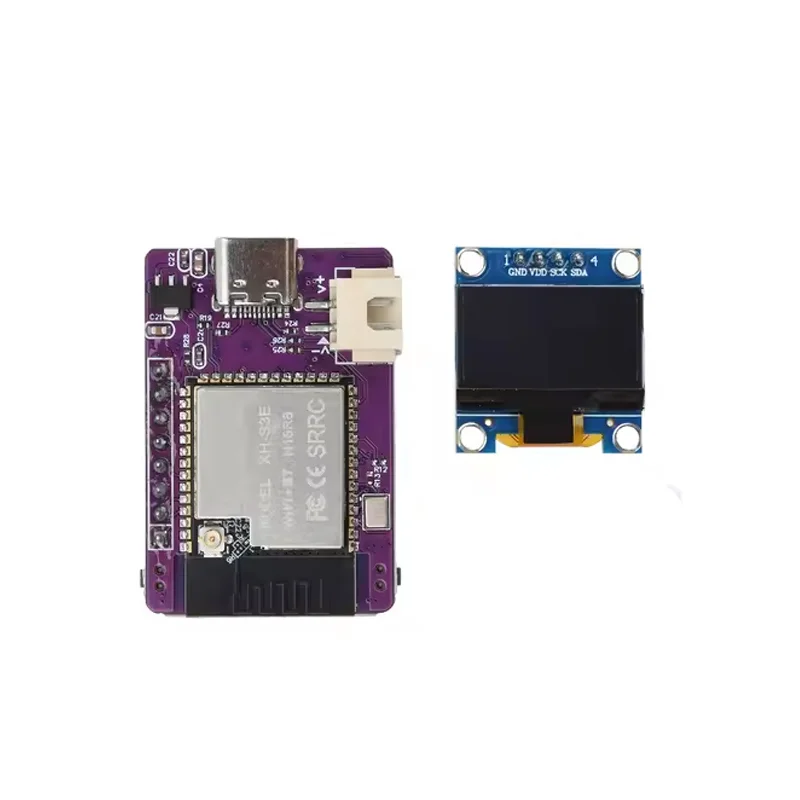
Package Includes

  • 1 x MINI ESP32-S3 AI Voice Development Board
  • 1 x 0.96-inch OLED Screen Module

Additional Information

Weight 0.014 kg
Dimensions 2.5 × 2.4 cm