SKU: IOWC-0951
📋 GST Invoice Available

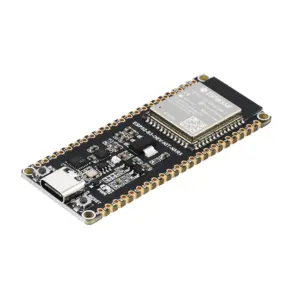
EdgeHax ESP32-S3 DevKit WROOM-1 N16R8 (16MB Flash + 8MB PSRAM)

₹839.00 (Inclusive of all taxes)
Out of Stock

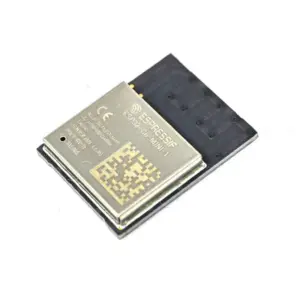
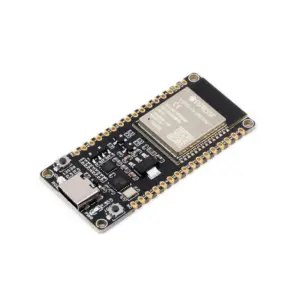
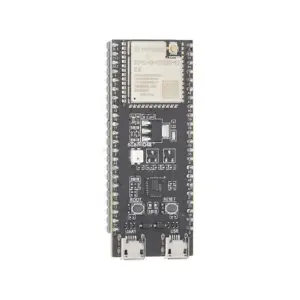
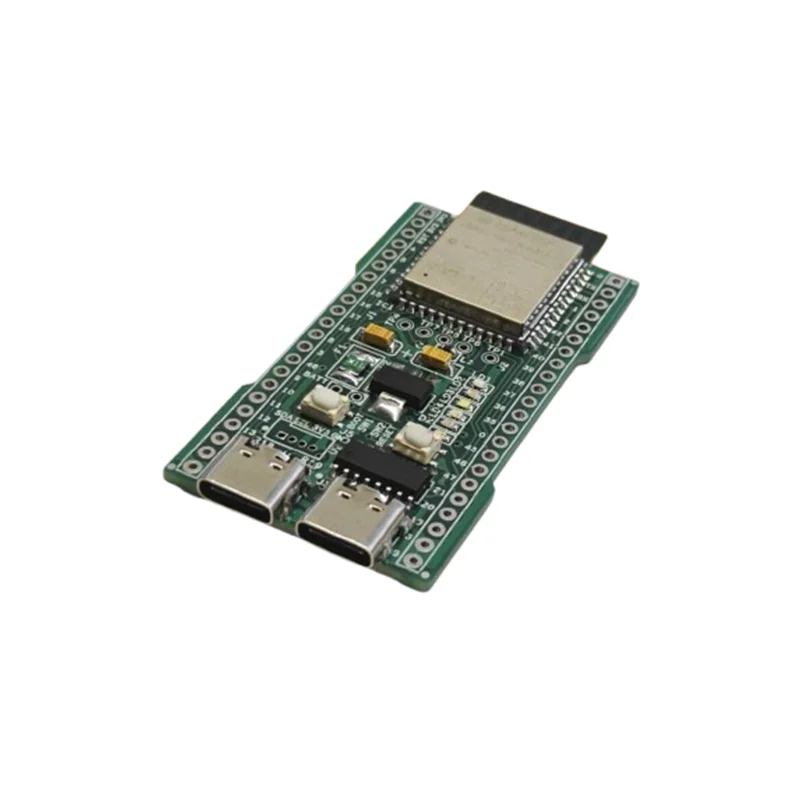
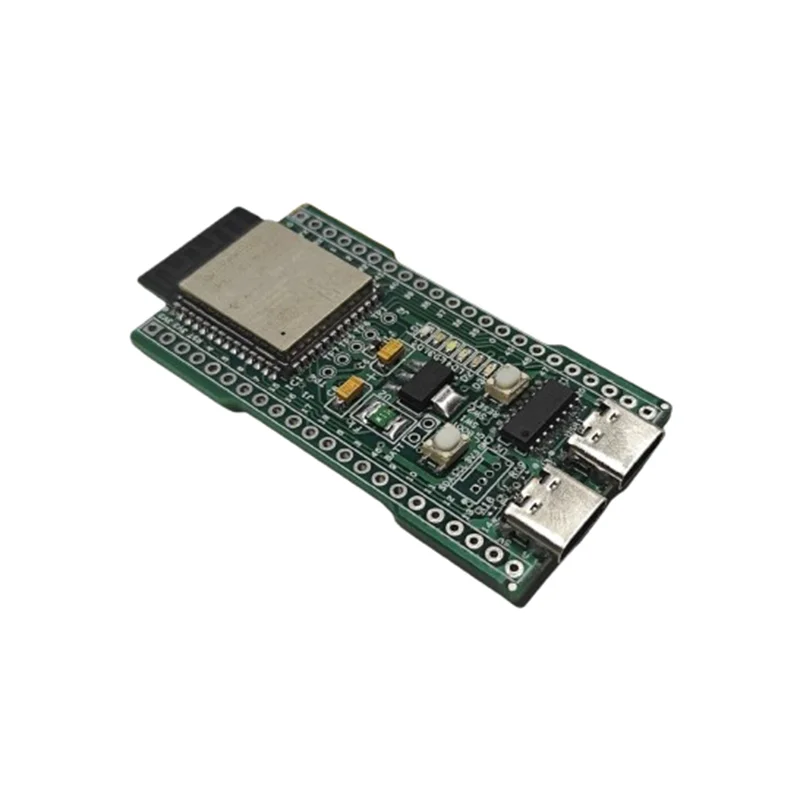
The EdgeHax ESP32-S3 DevKit is a feature-rich development board built around the ESP32-S3 WROOM-1 module, offering dual-core processing, 16MB Flash, 8MB PSRAM, and integrated Wi-Fi/Bluetooth 5 LE. It is fully programmable via Arduino IDE, ESP-IDF, or MicroPython via its USB Type-C interface, making it ideal for advanced IoT and edge AI applications.

Features

  • Dual-core Xtensa LX7 processor running at up to 240 MHz for high-performance computing tasks.
  • High-capacity 16MB Flash and 8MB PSRAM for memory-intensive applications like AI, ML, and data logging.
  • Integrated 802.11 b/g/n Wi-Fi and Bluetooth 5 LE for robust wireless IoT connectivity.
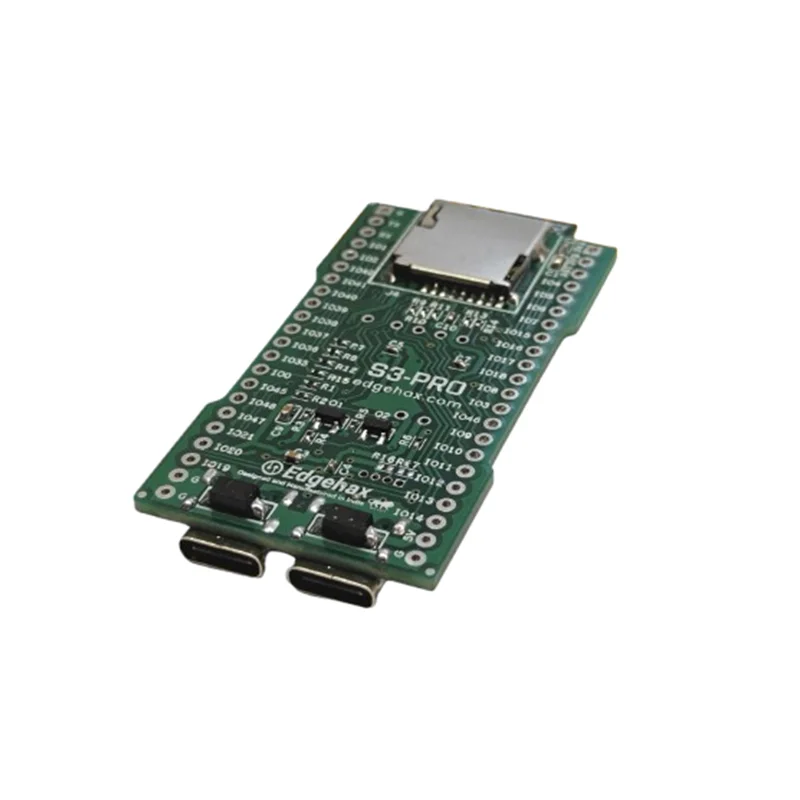
  • Onboard microSD card slot supports external storage expansion up to 64GB.
  • USB Type-C interface simplifies power, programming, and debugging workflows.

Out of stock

Description

The ESP32-S3 DevKit from EdgeHax leverages the powerful ESP32-S3 RISC-V microcontroller, featuring dual-core processing and substantial on-chip memory. This architecture provides the computational headroom necessary for edge inference, voice processing, and complex sensor fusion algorithms while maintaining the low-power operation essential for battery-powered deployments.

Its integrated 2.4GHz radio supports both Wi-Fi and Bluetooth Low Energy 5.0 protocols, enabling seamless connection to local networks, smartphones, and BLE peripherals. The board’s comprehensive GPIO suite, including UART, SPI, I2C, ADC, and PWM, offers extensive interfacing capabilities for sensors, displays, and actuators. The inclusion of a USB OTG interface further expands its utility as a host for peripheral devices.

Key Features

  • High-performance dual-core Xtensa LX7 CPU for demanding embedded applications.
  • Ample 16MB SPI flash and 8MB PSRAM support AI model storage and execution.
  • Integrated 2.4 GHz RF with support for Wi-Fi 4 and Bluetooth 5 LE connectivity.
  • Onboard microSD card slot for high-capacity, external data storage and logging.
  • Modern USB Type-C connector for reliable power delivery and data transfer.
  • Broad development framework support including ESP-IDF, Arduino, and MicroPython.
  • Rich set of peripheral interfaces (GPIO, I2C, SPI, UART, ADC, PWM, USB OTG).
  • Compact form factor designed for prototyping and integration into final products.

Applications

  • Edge AI and TinyML projects for image recognition and voice control.
  • Advanced IoT sensor nodes with data logging and wireless telemetry.
  • Smart home automation hubs controlling BLE and Wi-Fi devices.
  • Prototyping for wearable tech and interactive multimedia installations.
  • Industrial monitoring systems with remote dashboard connectivity.

Technical Specifications

Microcontroller / SoCESP32-S3 (Dual-core Xtensa LX7)
Wireless ProtocolsWi-Fi 802.11 b/g/n, Bluetooth 5 LE
Frequency Range2.4 GHz
Memory16MB Flash, 8MB PSRAM
Supply Voltage3.0V – 3.6V (3.3V typical)
InterfacesGPIO, UART, SPI, I2C, ADC, PWM, USB OTG, microSD Slot
Programming InterfaceUSB Type-C
Supported SoftwareESP-IDF, Arduino IDE, MicroPython, PlatformIO
Dimensions (LxW)55mm x 28mm
Weight15g

Frequently Asked Questions

What software frameworks are supported for programming this ESP32-S3 DevKit?

This board is fully compatible with Espressif's official ESP-IDF framework, the Arduino Core for ESP32 via the Arduino IDE, and MicroPython. You can also use PlatformIO as a unified development environment. Initial setup typically involves installing the ESP32-S3 board package in your chosen IDE and connecting via the USB Type-C port to upload your first sketch or firmware binary.

How do I utilize the onboard PSRAM for my memory-intensive application?

The 8MB of octal PSRAM is automatically enabled in ESP-IDF. For Arduino, you must select a board configuration that includes PSRAM support, such as 'ESP32S3 Dev Module' with 'PSRAM: Enabled' in the Tools menu. You can then use standard malloc() or the ESP-IDF heap_caps_malloc() function with the MALLOC_CAP_SPIRAM flag to allocate memory directly into the external RAM for large buffers or data structures.

What is the recommended power supply for this development board?

The board operates at a typical voltage of 3.3V, with a safe input range of 3.0V to 3.6V. The most convenient and recommended method is to power it via the provided USB Type-C port, which supplies regulated 5V that is down-converted onboard. For standalone operation, you can supply 3.3V directly to the appropriate VCC pin, ensuring your power source can deliver adequate current for the RF components during transmission.

Package Includes

  • 1 x EdgeHax ESP32-S3 DevKit (ESP32-S3 WROOM-1 N16R8)

Additional Information

Weight 0.015 kg
Dimensions 5.5 × 2.8 cm