SKU: IOWC-0177
📋 GST Invoice Available

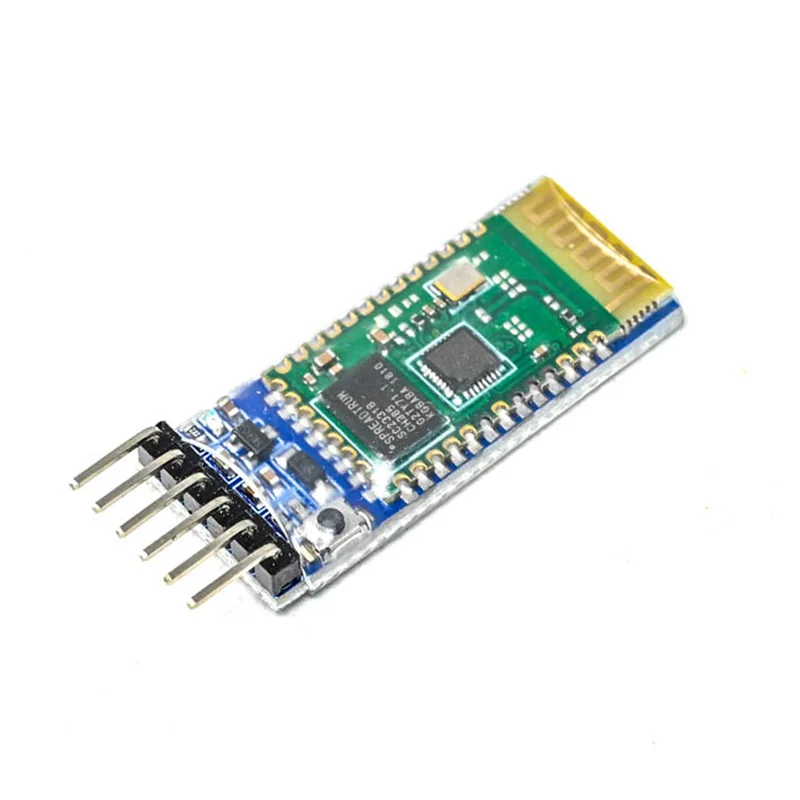
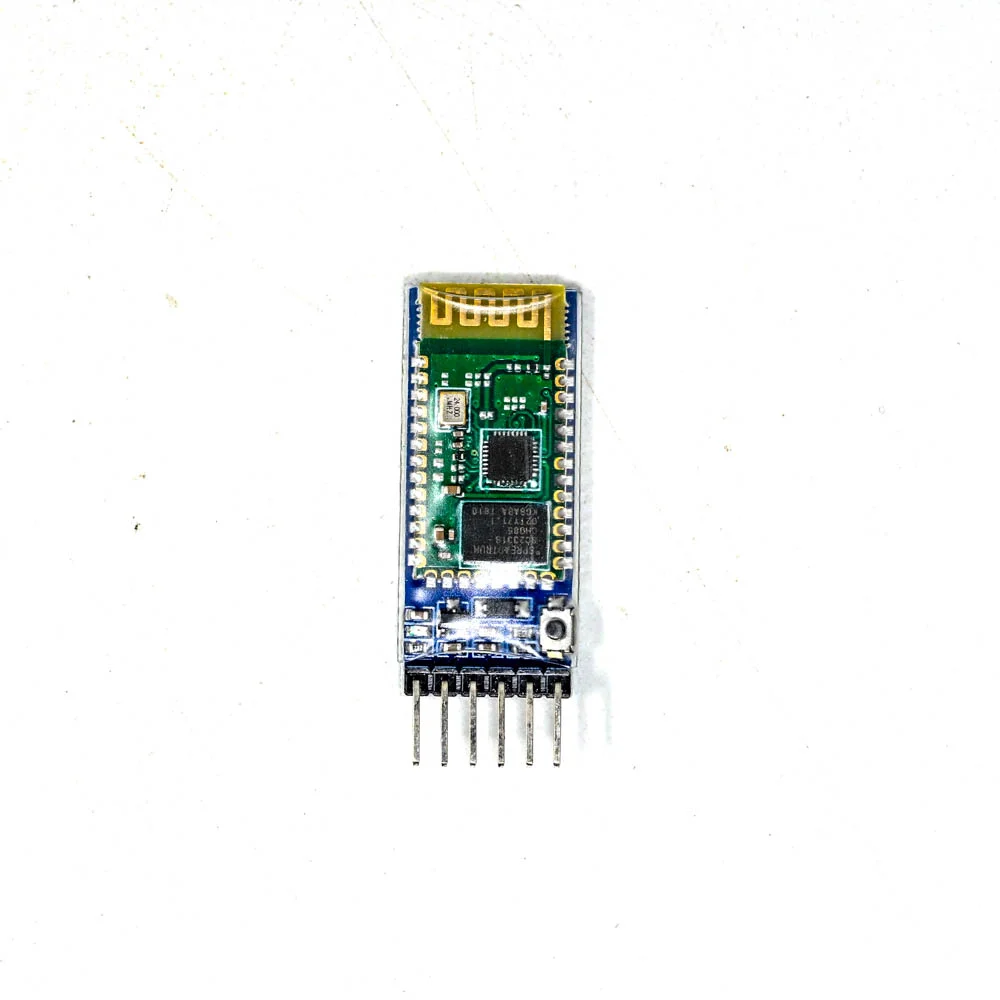
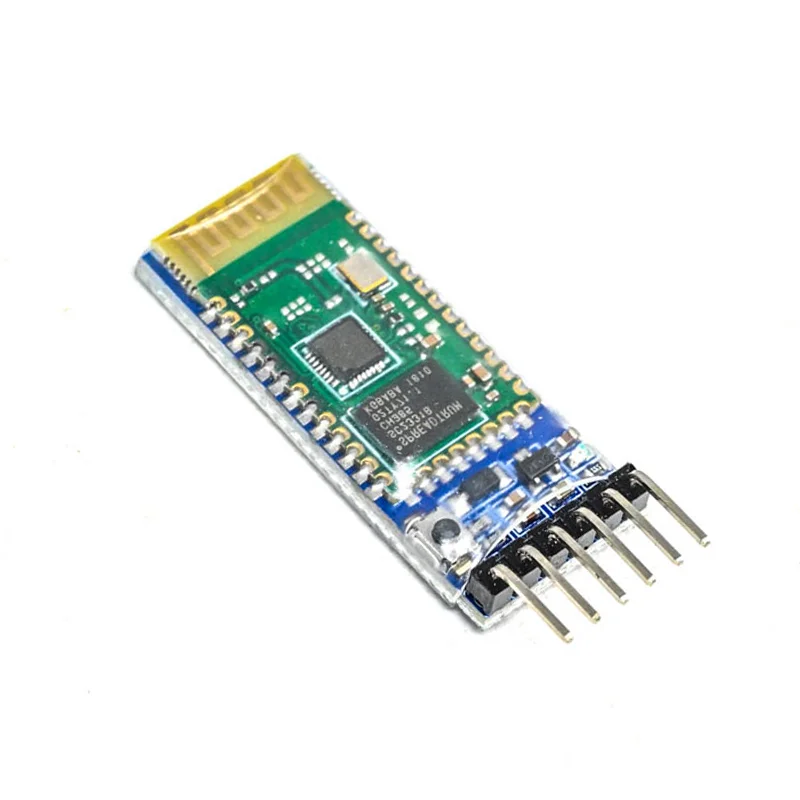
HC-05 6-Pin Bluetooth Serial Module with Button

₹209.00 (Inclusive of all taxes)
Out of Stock

The HC-05 is a versatile Bluetooth 2.0+EDR serial transceiver module supporting both master and slave roles, enabling wireless UART communication for microcontroller projects with a range up to 10 meters.

Features

  • Master/Slave Dual-Mode Bluetooth 2.0+EDR module for flexible device pairing and data bridging.
  • UART serial interface with configurable baud rates (default 9600) for easy integration with Arduino, ESP32, STM32, and Raspberry Pi.
  • Low power operation with a typical 30mA working current and a compact 6-pin footprint including a mode control button.
  • Robust RF performance with +4dBm transmit power and -84dBm receiver sensitivity in the 2.4GHz ISM band.
  • Wide 3.6V to 6V supply voltage range, compatible with both 3.3V and 5V logic systems.

Out of stock

Description

The HC-05 Bluetooth Serial Port Profile (SPP) module is a classic wireless workhorse for embedded systems, built around a CSR core chipset. It facilitates transparent serial communication over Bluetooth, effectively replacing a physical UART cable with a reliable wireless link. Its dual master/slave capability allows it to initiate connections to other Bluetooth devices or accept incoming pairings, making it suitable for creating bidirectional data links between microcontrollers, PCs, and smartphones.

Engineered for stability, the module operates on the universal 2.4GHz frequency with Gaussian Frequency Shift Keying (GFSK) modulation. It features a configurable command mode accessible via AT commands for setting parameters like device name, PIN, and role. The integrated button simplifies the switching between data and command modes for on-the-fly configuration. With an operating temperature range of -20°C to +75°C, it is robust enough for indoor industrial telemetry, DIY automation, and portable data logging applications.

Key Features

  • Dual-mode (Master & Slave) operation for maximum connectivity flexibility in wireless sensor networks.
  • Transparent serial port protocol emulation for plug-and-play replacement of wired UART connections.
  • Configurable via AT commands for baud rate, device name, PIN code, and pairing mode.
  • Hardware button for easy switching between command mode and transparent data transmission.
  • Class 2 Bluetooth power rating with a typical 10-meter line-of-sight range in open environments.
  • Wide power supply compatibility from 3.6V to 6V DC, simplifying power rail design.
  • Compact form factor (43mm x 16.5mm) with a 6-pin header for straightforward soldering and integration.

Applications

  • Wireless serial communication for Arduino, Raspberry Pi, and other microcontroller projects.
  • DIY smart home automation for wireless sensor data transmission and relay control.
  • Industrial data acquisition systems for wireless telemetry from sensors and meters.
  • Bluetooth-enabled computer peripherals and portable device data bridges.
  • Educational platforms for learning wireless communication and IoT prototyping.

Technical Specifications

Bluetooth Chip/SoCCSR (Bluetooth V2.0+EDR)
Wireless ProtocolBluetooth 2.0 + EDR (Serial Port Profile - SPP)
Frequency Range2.4GHz ISM Band
RF Transmit Power+4 dBm (Class 2)
Receiver Sensitivity-84 dBm @ 0.1% BER
Supply Voltage3.6 V to 6 V DC
Operating Current~30 mA (average), ~8 mA (during communication)
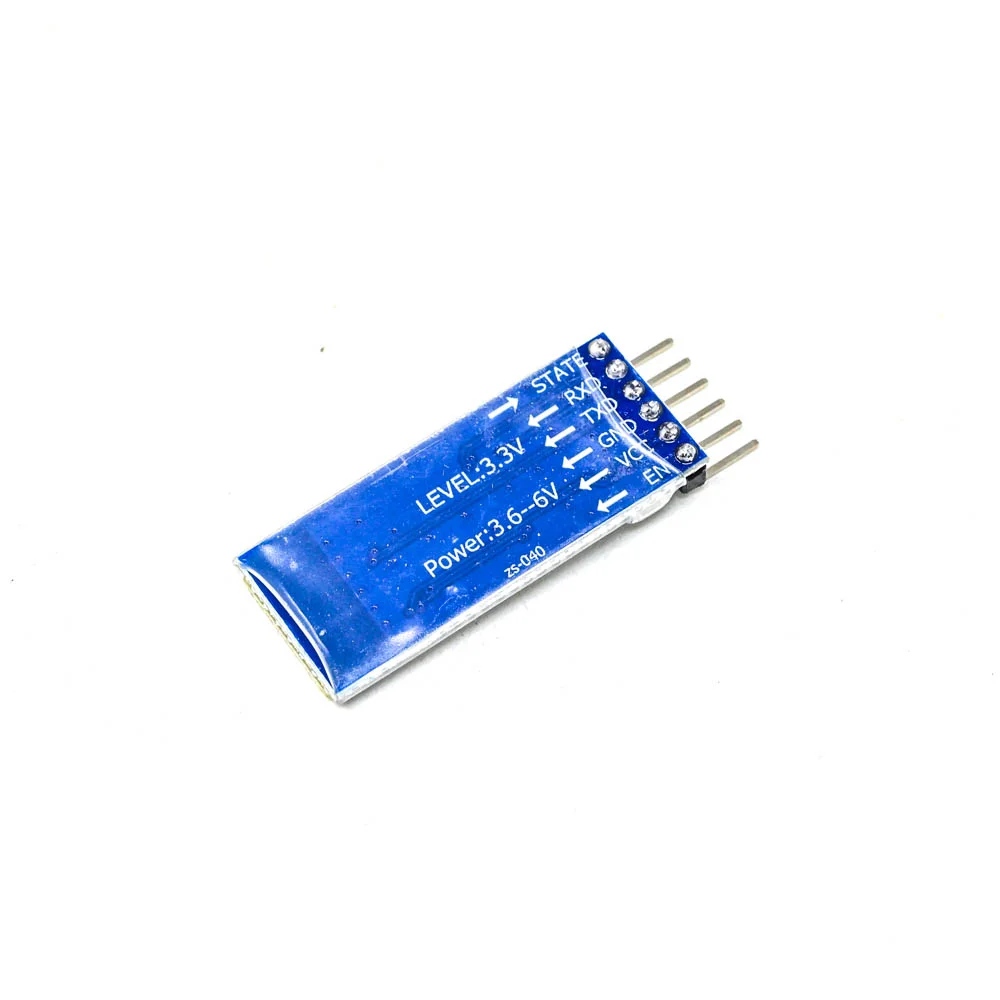
Data InterfaceUART (TXD, RXD, GND, VCC, KEY, STATE)
Default Baud Rate9600 bps (Configurable)
Operating RangeUp to 10 meters (typical, line-of-sight)
Operating Temperature-20°C to +75°C
Dimensions (L x W)43 mm x 16.5 mm

Frequently Asked Questions

How do I configure the HC-05 module using AT commands?

To enter AT command mode, ensure the module is powered on but not paired. Press and hold the onboard button, then apply power until the LED blinks slowly (approx. 2 seconds per blink). Connect the module's TXD and RXD pins to your microcontroller's UART crosswise (TXD to RX, RXD to TX). Open a serial terminal at 38400 baud (default AT mode baud rate) and send commands like 'AT' to test, 'AT+NAME?' to check the device name, or 'AT+PSWD?' to view the PIN. Remember to save changes with 'AT+RESET'.

What is the difference between the HC-05 and HC-06 Bluetooth modules?

The primary difference is the operational mode. The HC-05 supports both master and slave roles, allowing it to initiate connections to other devices or accept incoming pairings. The HC-06 is a slave-only device, meaning it can only wait to be connected by a master (like a smartphone or PC). Therefore, for creating a link between two microcontrollers, you need at least one HC-05 in master mode. The HC-05 also features a dedicated KEY pin for mode switching, while the HC-06 typically lacks this hardware control.

How do I wire the HC-05 to an Arduino Uno for basic serial communication?

Connect VCC to Arduino's 5V pin (if using the module's 3.6-6V range) or 3.3V for lower power. Connect GND to GND. For data, link the HC-05's TXD pin to Arduino's RX (pin 0) and the HC-05's RXD pin to Arduino's TX (pin 1). The KEY pin can be left unconnected for normal operation or connected to a digital pin to control command mode via software. Ensure you use a serial terminal on your PC (via USB) to see data sent from the HC-05, as it will communicate over the same hardware UART as the USB connection.

Why is my HC-05 module not entering AT command mode?

First, verify the baud rate. While the default data baud rate is 9600, the AT command mode often uses 38400 baud. Ensure you are sending 'AT' followed by a carriage return. Second, confirm the mode switch procedure: power must be applied while the button is pressed. The LED should indicate a slow blink rate. Third, check your wiring; TX and RX must be crossed between your USB-to-serial adapter and the module. Finally, note that some cloned modules may have non-standard AT command sets or require a specific voltage (like 3.3V) on the KEY pin to activate command mode.

Package Includes

  • 1 x HC-05 6-Pin Bluetooth Module with Button

Additional Information

Weight 0.005 kg
Dimensions 4.3 × 1.65 cm