SKU: IOWC-0043
📋 GST Invoice Available

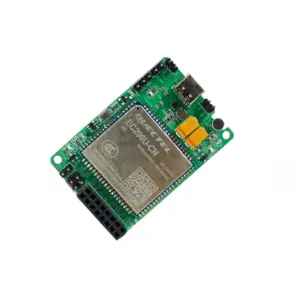
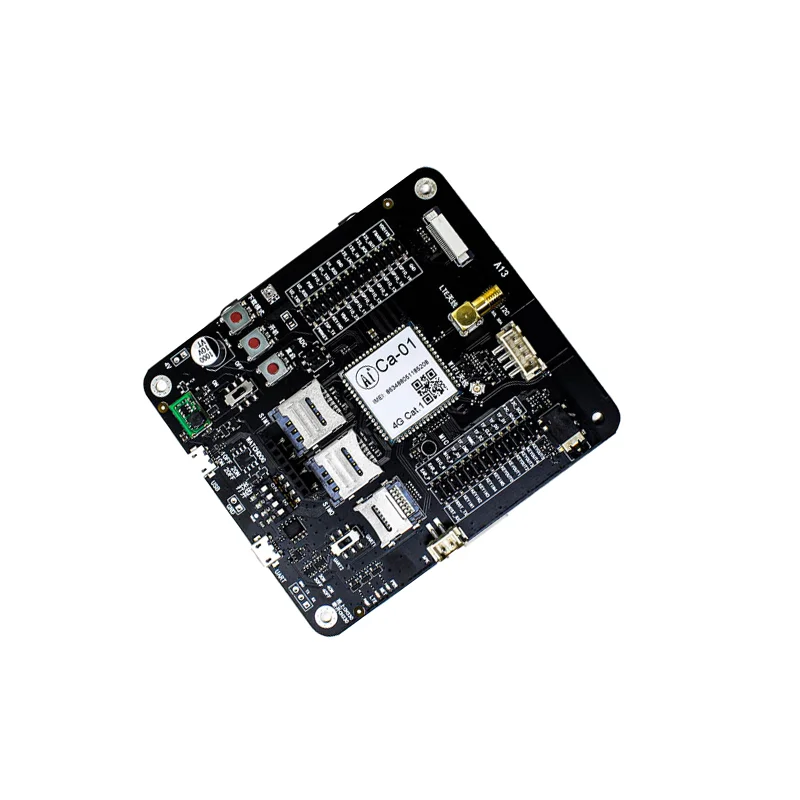
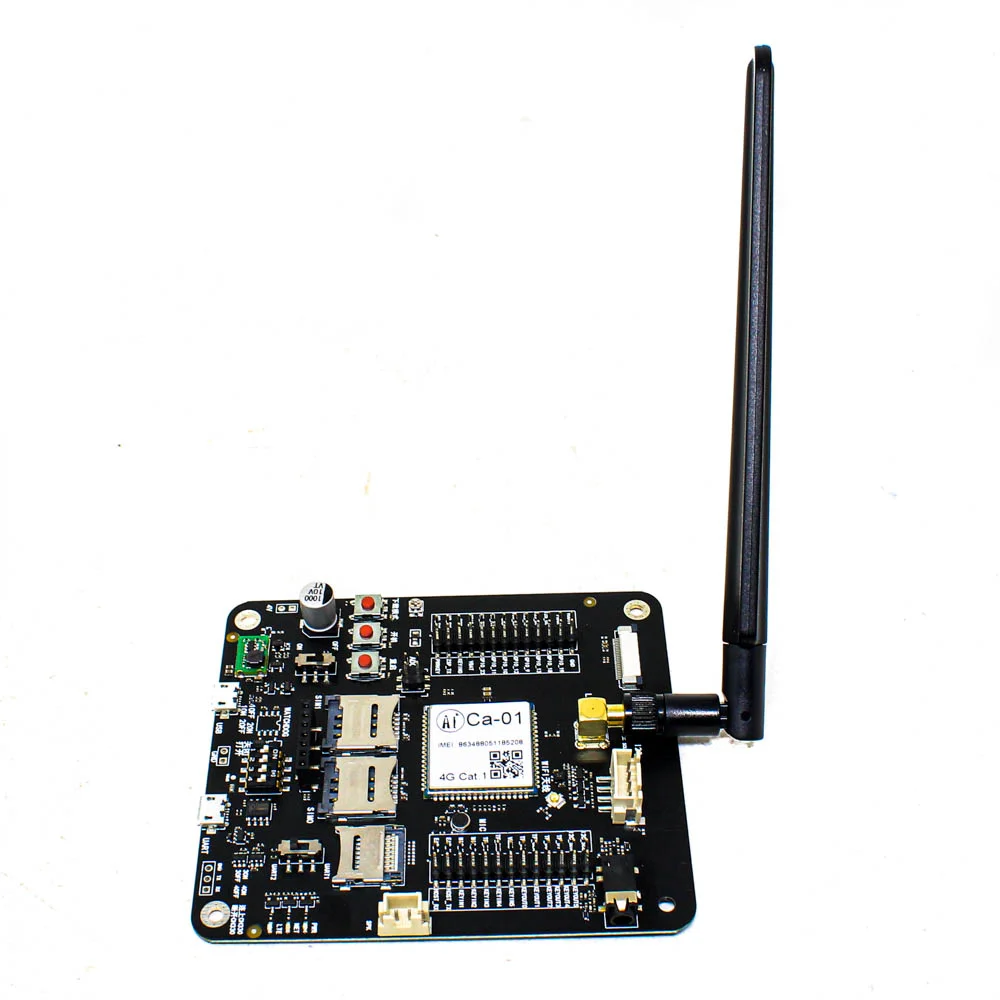
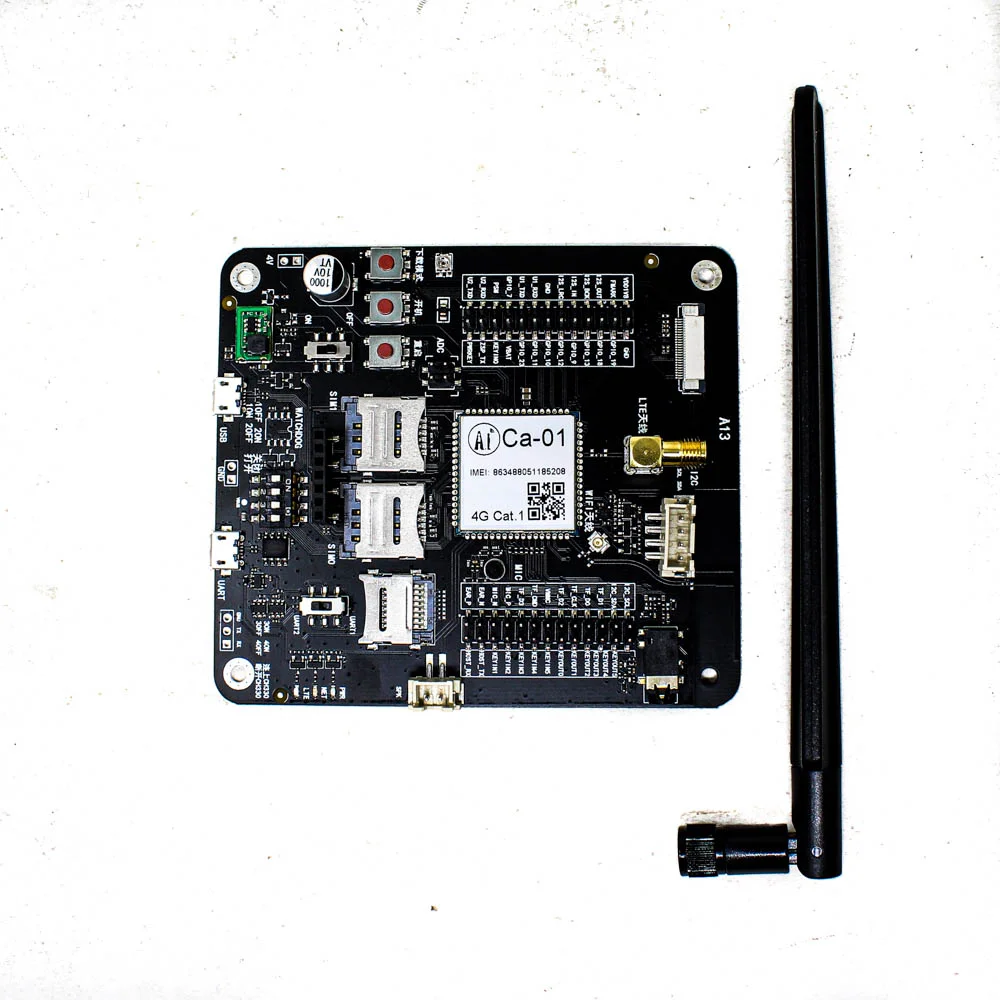
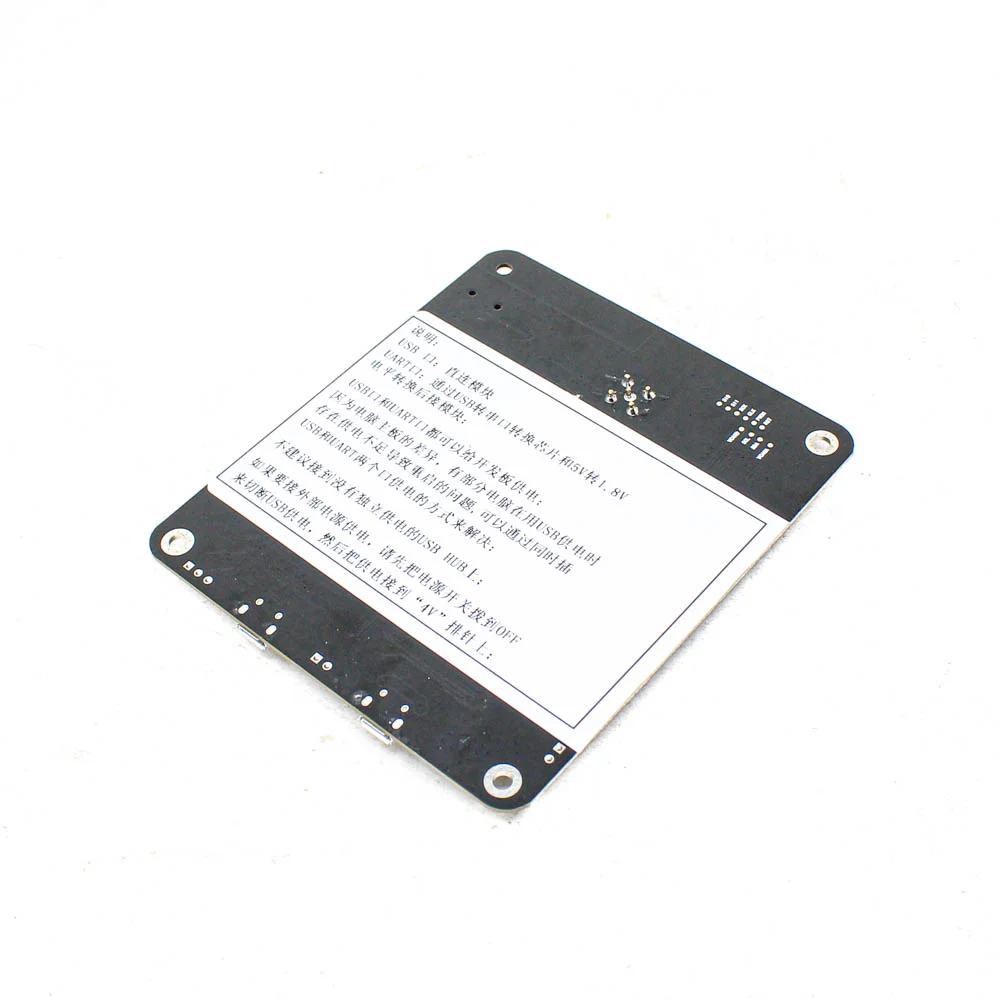
AI-Thinker CA-01 LTE Cat.1 bis Module Dev Board

₹2,312.00 (Inclusive of all taxes)
Out of Stock

The AI-Thinker CA-01 is an ultra-compact LTE Cat.1 bis development board based on the Unigroup UIS8910 platform, offering cost-effective, low-to-mid bandwidth cellular connectivity for IoT applications with support for VoLTE, analog voice, and extensive peripheral interfaces.

Features

  • LTE Cat.1 bis Connectivity: Features the UIS8910 platform supporting 3GPP Release 13, delivering up to 10 Mbps downlink and 5 Mbps uplink speeds for reliable, mid-bandwidth IoT data transmission.
  • Global Frequency Bands: Supports LTE-TDD bands B34/B38/B39/B40/B41 and LTE-FDD bands B1/B3/B5/B8, ensuring compatibility with major cellular networks worldwide.
  • Rich Peripheral Set: Integrates 3x UART, SPI, ADC, USB 2.0, camera interface, and analog voice I/O, providing extensive hardware expansion for sensor integration and control.
  • Ultra-Low Power Modes: Engineered for battery-operated deployments with a deep sleep current of 3 mA and a shutdown current of just 20 µA, maximizing operational lifespan.
  • Industrial-Grade Robustness: Operates reliably across an extended temperature range from -40°C to +85°C, making it suitable for harsh outdoor and industrial environments.

Out of stock

Description

The AI-Thinker CA-01 Dev Board is a compact, stamp-hole plus LGA-packaged module designed for integrating LTE Cat.1 bis cellular connectivity into IoT devices. It leverages the Unigroup UIS8910 chipset, which complies with 3GPP Release 13 standards, offering a balanced solution between higher-cost Cat.4 modules and lower-data-rate NB-IoT/LTE-M technologies. Its architecture supports flexible RF bandwidths from 1.4 to 20 MHz and provides robust network protocol stacks including TCP/UDP/PPP/HTTP/HTTPS for secure data backhaul.

Power management is a core focus, with the module supporting multiple low-power states to conserve energy in field deployments. The inclusion of a full-speed USB 2.0 interface (480 Mbps) facilitates AT command communication, firmware updates, and data transfer, while the multiple serial ports and SPI buses allow for seamless connection to sensors, displays, and other peripherals. The board’s support for both VoLTE and traditional analog voice, along with a camera interface, opens up use cases in telematics, security, and interactive monitoring systems.

Key Features

  • Ultra-compact LTE Cat.1 bis module based on the Unigroup UIS8910 platform for global IoT connectivity.
  • Supports VoLTE (Voice over LTE) and legacy analog voice calls for versatile communication applications.
  • Integrated USB 2.0 high-speed interface (480 Mbps) for AT commands, data transfer, and firmware debugging.
  • Comprehensive peripheral set includes 3x UART, SPI, ADC, SIM interface, and dedicated camera/display interfaces.
  • Advanced power management with deep sleep (3 mA) and shutdown (20 µA) modes for extended battery life.
  • Robust industrial design certified for operation from -40°C to +85°C.
  • Supports a wide range of network protocols including TCP, UDP, FTP, HTTP, HTTPS, and PPP for flexible integration.

Applications

  • Telematics & Fleet Management: For vehicle tracking, diagnostics, and driver communication systems requiring reliable mid-bandwidth data and voice.
  • Industrial IoT (IIoT) Monitoring: Connects remote sensors, PLCs, and energy meters in manufacturing, agriculture, and utilities back to central servers.
  • Smart Security & Surveillance: Powers 4G-connected security cameras, alarm panels, and two-way voice intercoms with its camera and voice interfaces.
  • POS & Vending Machines: Provides always-on connectivity for payment processing, inventory reporting, and remote management of kiosks.
  • Asset Tracking: Enables global tracking of high-value containers, equipment, and livestock with periodic GPS-over-Cellular data transmission.

Technical Specifications

Module Model / ChipsetCA-01 / Unigroup UIS8910
Wireless StandardLTE Cat.1 bis, 3GPP Release 13
Supported Frequency BandsLTE-TDD: B34, B38, B39, B40, B41; LTE-FDD: B1, B3, B5, B8
RF Transmit PowerClass 3 (23 dBm ±2 dB for FDD, +1/-3 dB for TDD)
Data Rate (Max)DL: 10 Mbps (FDD), 8 Mbps (TDD); UL: 5 Mbps (FDD), 4 Mbps (TDD)
Supply Voltage3.3V to 4.3V
Operating Current (Typical)Sleep: 3 mA; Shutdown: 20 µA
Key InterfacesUSB 2.0, 3x UART, SPI, ADC, SIM (1.8V/3V), Camera SPI, NETLIGHT, Analog Voice I/O
Antenna ConnectorStamp-hole/LGA pad for external antenna
Operating Temperature-40°C to +85°C
Dimensions / WeightApprox. 2.6g (Module weight)

Frequently Asked Questions

What AT command set does the CA-01 module use, and how do I establish a connection?

The CA-01 uses standard 3GPP AT commands for network registration, data session management, and SMS. To establish a connection, power the module with 3.3-4.3V, connect an active LTE antenna to its pads, and insert a compatible SIM card. Use a USB-to-serial adapter or the onboard USB interface to communicate via a UART at a default baud rate (often 115200). Send basic AT commands like AT+CPIN? to check SIM status and AT+CREG? to verify network registration before initiating a data call with AT+CGDCONT and AT+CGACT.

How do I achieve the lowest power consumption for battery-powered projects?

To minimize power, utilize the module's sleep modes via AT commands like AT+CFUN=0 (minimum functionality) or AT+CFUN=4 (flight mode). The typical sleep current is 3 mA. For the absolute lowest consumption of 20 µA, use the PWRKEY pin to trigger a full shutdown, waking the module via a timed GPIO or external event. Design your host MCU to control the module's power rail completely, only enabling it when data needs to be transmitted, and leverage extended DRX (eDRX) cycles if supported by your network.

Can I connect a camera or display to this module, and what interfaces are required?

Yes, the CA-01 provides dedicated SPI interfaces for both a camera and an LCD display. You will need to connect the camera's MCLK, PCLK, VSYNC, HSYNC, and data lines to the corresponding module pads, and configure the sensor via the SPI control interface. For displays, use the SPI LCD interface pins. Development requires the vendor's SDK or AT commands to initialize the camera sensor (e.g., for JPEG capture) and to push framebuffer data to the display. Ensure your external components are compatible with 3.3V logic levels.

What is the procedure for updating the module's firmware?

Firmware updates are typically performed via the high-speed USB 2.0 interface using a manufacturer-provided flashing tool (like a .exe or Python script). Place the module into a specific download mode, often by holding a boot pin low during reset. Connect the module via USB to your PC, run the flashing tool, and select the new firmware file. The process will erase and reprogram the internal flash. Always backup any custom AT command profiles or configurations before starting, as they will be lost.

Package Includes

  • 1 x AI-Thinker CA-01 Development Board

Additional Information

Weight 0.067 kg
Dimensions 15 × 19 × 2 cm