SKU: IOWC-1269
📋 GST Invoice Available

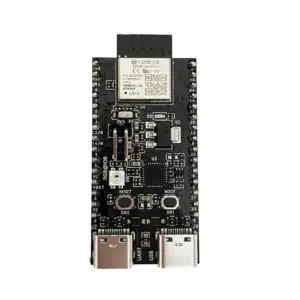
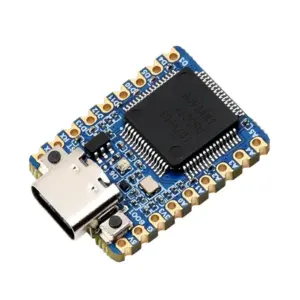
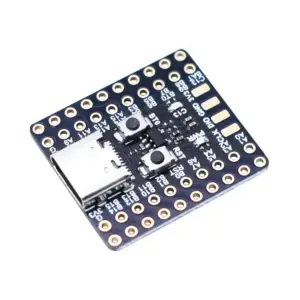
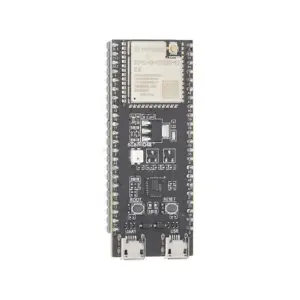
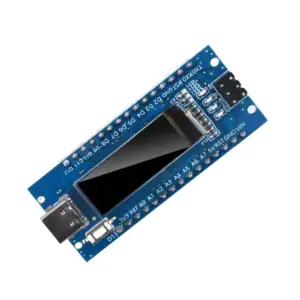
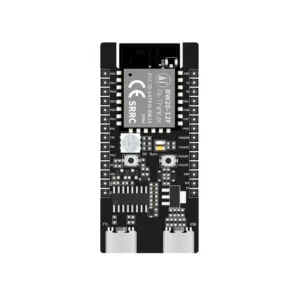
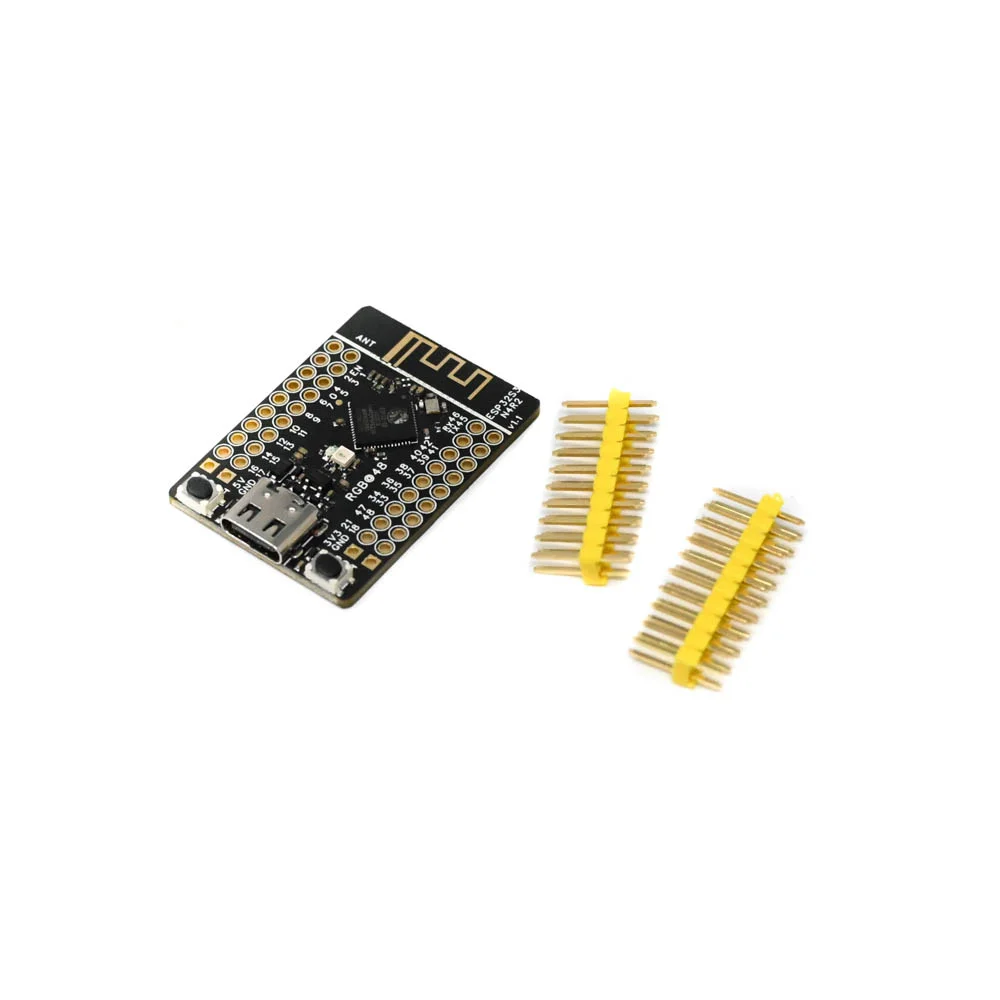
WeAct Studio ESP32-S3FH4R2 Mini IoT Board w/ 4MB Flash 2MB PSRAM

₹709.00 (Inclusive of all taxes)
Out of Stock

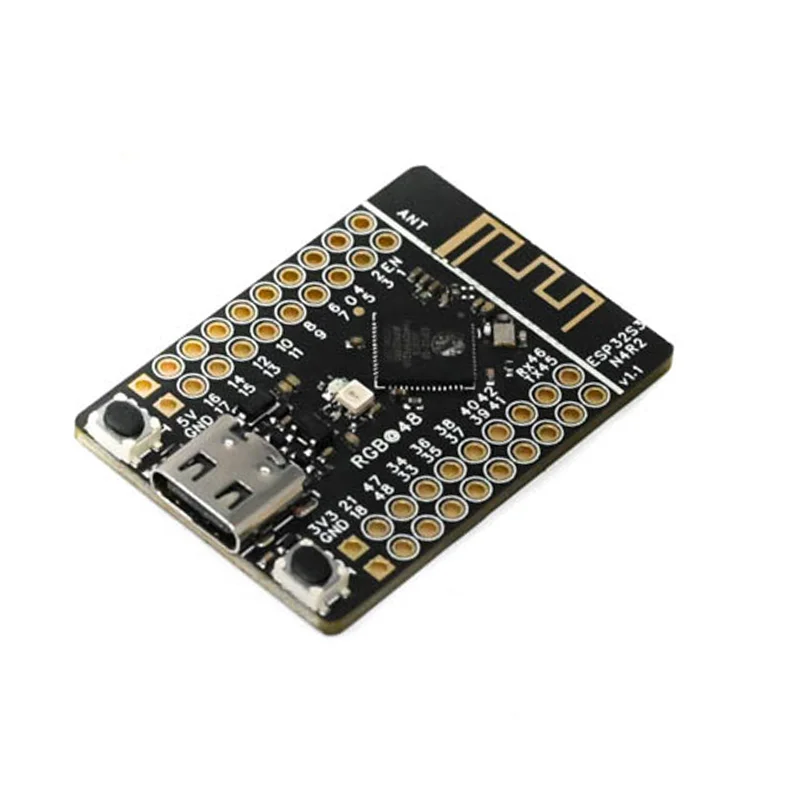
The WeAct Studio S3 Mini is a compact IoT development board built around the ESP32-S3FH4R2 chip, featuring 2.4 GHz Wi-Fi and Bluetooth LE connectivity. It is programmable via MicroPython or Arduino IDE through its USB Type-C interface, making it ideal for rapid IoT prototyping.

Features

  • Powered by the ESP32-S3FH4R2 dual-core Xtensa LX7 processor with 4MB flash and 2MB PSRAM for complex IoT applications.
  • Integrated 2.4 GHz Wi-Fi and Bluetooth LE 5.0 for robust wireless communication and mesh networking.
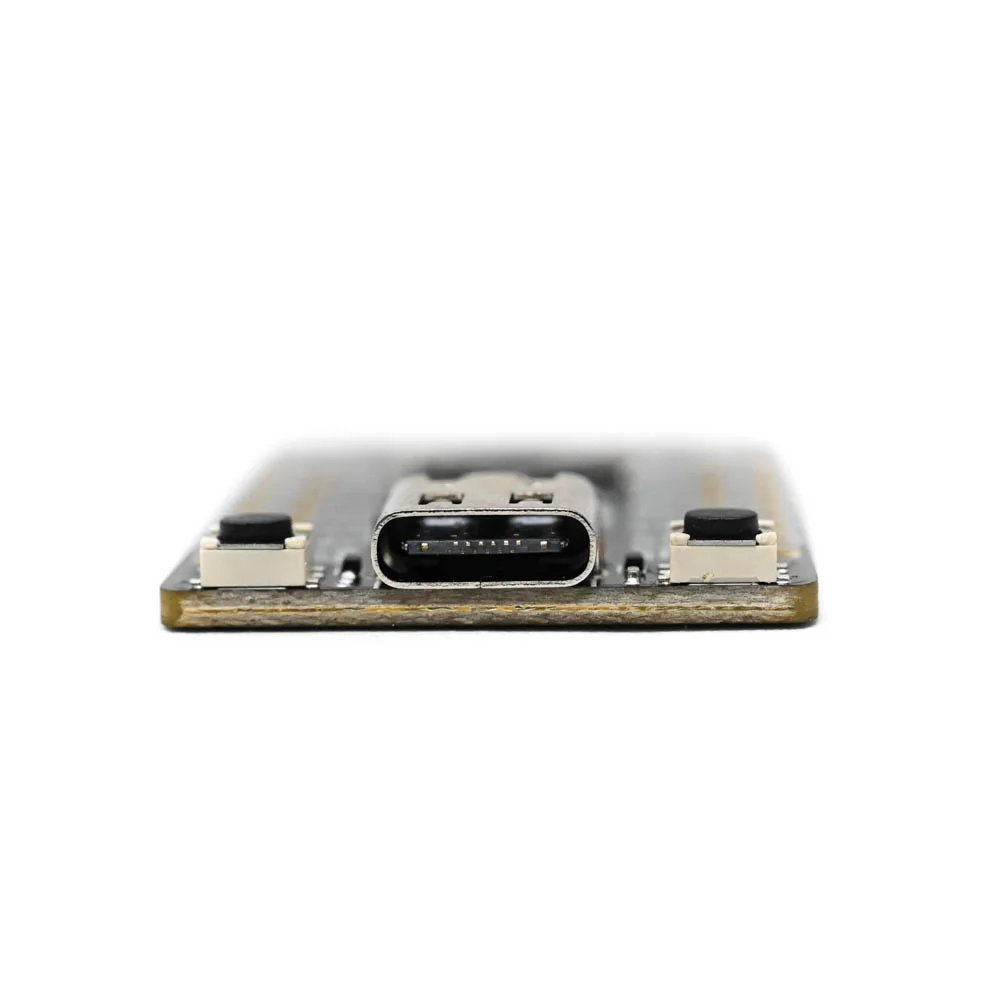
  • Compact form factor with a USB Type-C port for easy programming, debugging, and power supply.
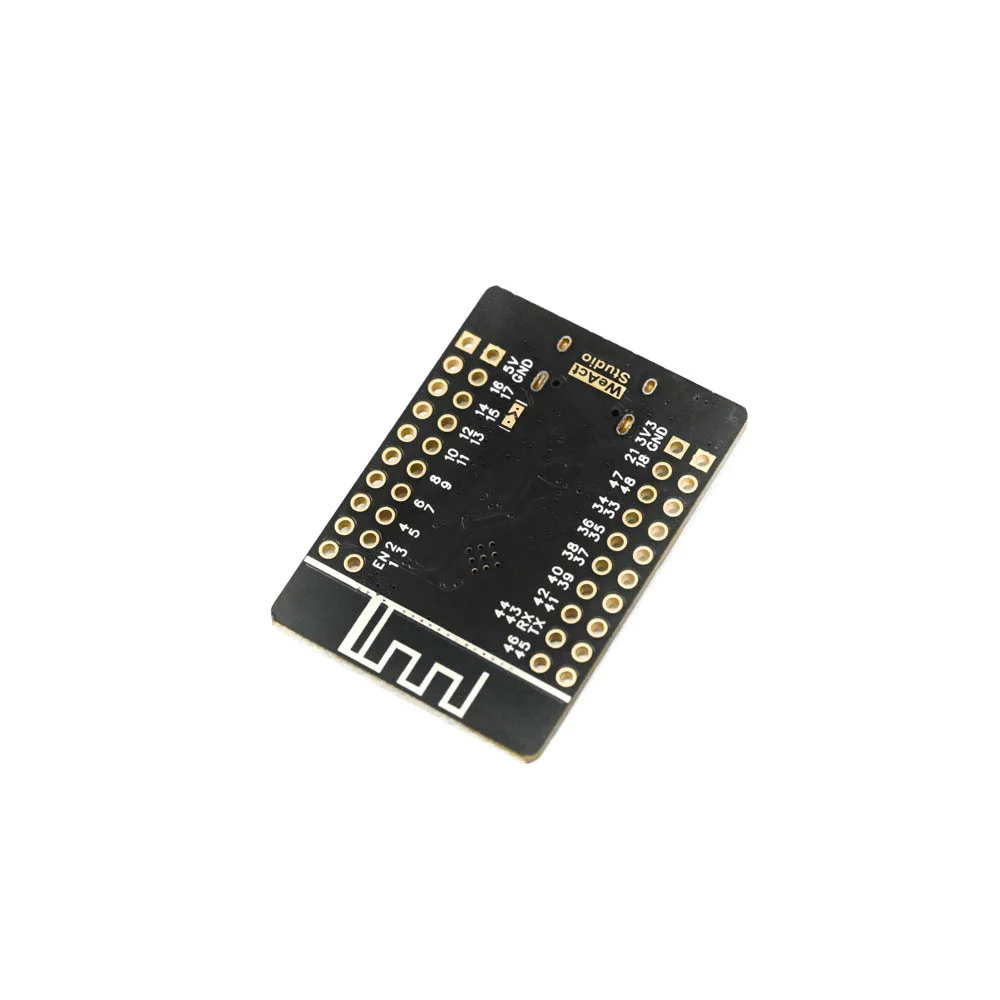
  • 27 versatile digital GPIO pins supporting ADC, DAC, I2C, SPI, UART, USB OTG, PWM, and one-wire protocols.
  • Fully compatible with Arduino IDE and MicroPython firmware for flexible, rapid development workflows.

Out of stock

Description

The WeAct Studio S3 Mini IoT Board is a feature-rich development platform centered on the Espressif ESP32-S3FH4R2 SoC. This chip delivers a dual-core Xtensa LX7 processor capable of running at up to 240 MHz, coupled with 4MB of flash memory and 2MB of PSRAM, providing ample resources for data-intensive IoT tasks and Over-the-Air (OTA) updates.

Its integrated 2.4 GHz Wi-Fi radio supports IEEE 802.11 b/g/n protocols, while the Bluetooth LE 5.0 stack enables low-power peripheral and mesh networking. The board’s 27 configurable GPIO pins expose a full suite of industrial interfaces, including 14-bit ADC, 8-bit DAC, multiple UARTs, SPI, I2C, and USB On-The-Go, allowing for seamless sensor integration and peripheral expansion. Power management is optimized for battery-operated scenarios, with support for deep sleep modes to minimize current consumption.

Key Features

  • ESP32-S3FH4R2 SoC with dual-core 240 MHz processor for high-performance IoT edge computing.
  • Integrated 2.4 GHz Wi-Fi 4 and Bluetooth 5.0 LE with long-range and mesh networking capabilities.
  • 4MB flash memory and 2MB PSRAM for storing application code, filesystems, and buffering sensor data.
  • Comprehensive I/O suite: 27 digital GPIOs with ADC, DAC, I2C, SPI, UART, USB OTG, PWM, and touch sensor support.
  • USB Type-C interface for stable data transfer, firmware flashing, and 5V power input.
  • Broad development ecosystem support including Arduino Core, ESP-IDF, MicroPython, and PlatformIO.
  • Compact PCB design (approx. 5x5 cm) ideal for space-constrained embedded projects and final product integration.

Applications

  • Smart home automation hubs and wireless sensor nodes.
  • IoT data loggers and environmental monitoring stations.
  • Bluetooth LE beacons, proximity sensors, and mesh network devices.
  • Prototyping for wearable tech and portable battery-powered gadgets.
  • Educational platforms for learning embedded systems, MicroPython, and wireless communication.

Technical Specifications

Microcontroller/SoCEspressif ESP32-S3FH4R2 (Dual-core Xtensa LX7 @ up to 240 MHz)
Wireless ProtocolsWi-Fi 802.11 b/g/n (2.4 GHz), Bluetooth 5.0 LE
Flash Memory4 MB
PSRAM2 MB
Supply Voltage5V via USB Type-C
Digital I/O Pins27
InterfacesADC, DAC, I2C, SPI, UART, USB OTG, PWM, Touch
USB InterfaceType-C (Data & Power)
Development SupportArduino IDE, ESP-IDF, MicroPython, PlatformIO
Dimensions (approx.)5 cm x 5 cm

Frequently Asked Questions

How do I program the WeAct S3 Mini board using the Arduino IDE?

First, install the ESP32 board support via the Arduino Boards Manager using the Espressif repository URL. Select 'ESP32S3 Dev Module' as your board. Configure the flash mode to 'QIO', flash size to '4MB', and PSRAM to 'Enabled'. Connect the board via USB-C, select the correct COM port, and upload your sketch. The board uses the standard USB CDC serial protocol for communication.

What is the purpose of the 2MB PSRAM on the ESP32-S3FH4R2 in this board?

The 2MB of pseudo-static RAM (PSRAM) provides additional volatile memory for data-intensive applications. It is useful for buffering images, audio streams, complex data structures, or serving as a heap extension in MicroPython. This allows your IoT application to handle larger datasets or more sophisticated graphics without being constrained by the chip's internal SRAM.

Can I power this board directly from a 3.3V pin, bypassing the USB Type-C port?

No, you should not apply 3.3V directly to the board's 3.3V pin. The onboard voltage regulator is designed to accept 5V input via the USB-C port. For external power, supply 5V to the USB-C connector's VBUS pin or use a regulated 5V source connected to the appropriate test pad, ensuring you do not exceed the regulator's current limits.

How do I enable Bluetooth Low Energy (BLE) advertising in MicroPython on this board?

After flashing the MicroPython firmware for ESP32-S3, use the 'ubluetooth' module. Initialize the BLE object with `ble = bluetooth.BLE()` and then activate it with `ble.active(True)`. Create an advertising payload using `ble.gap_advertise(interval_us, adv_data)` where 'adv_data' is a byte array containing your device name and service UUIDs. Refer to the MicroPython docs for detailed BLE server/client examples.

Package Includes

  • 1 x WeAct Studio S3 Mini IoT Board (ESP32-S3FH4R2)

Additional Information

Weight 0.01 kg
Dimensions 5 × 5 × 2 cm