SKU: SENS-3180
📋 GST Invoice Available

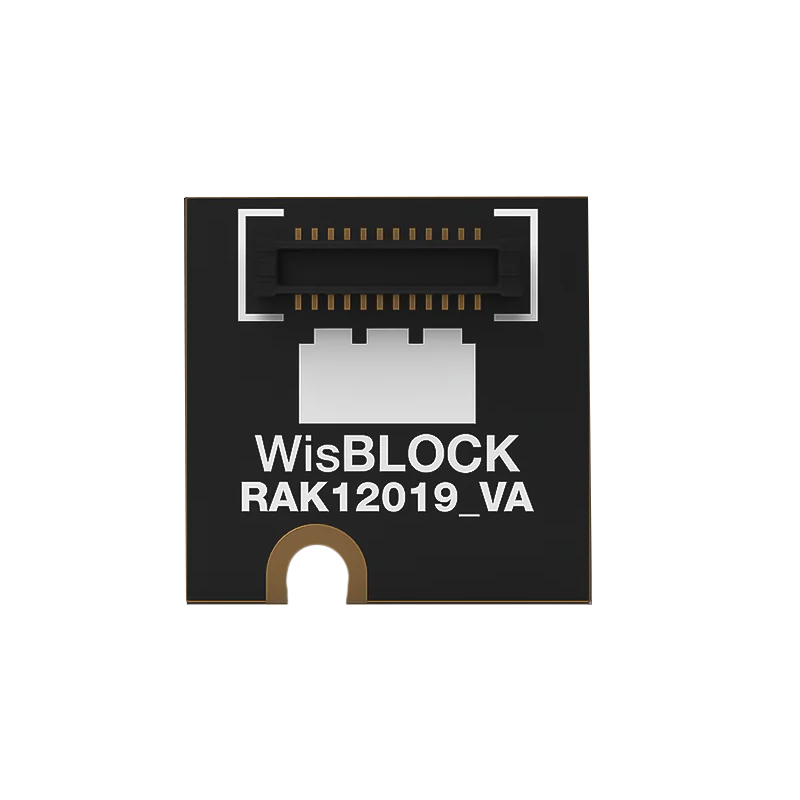
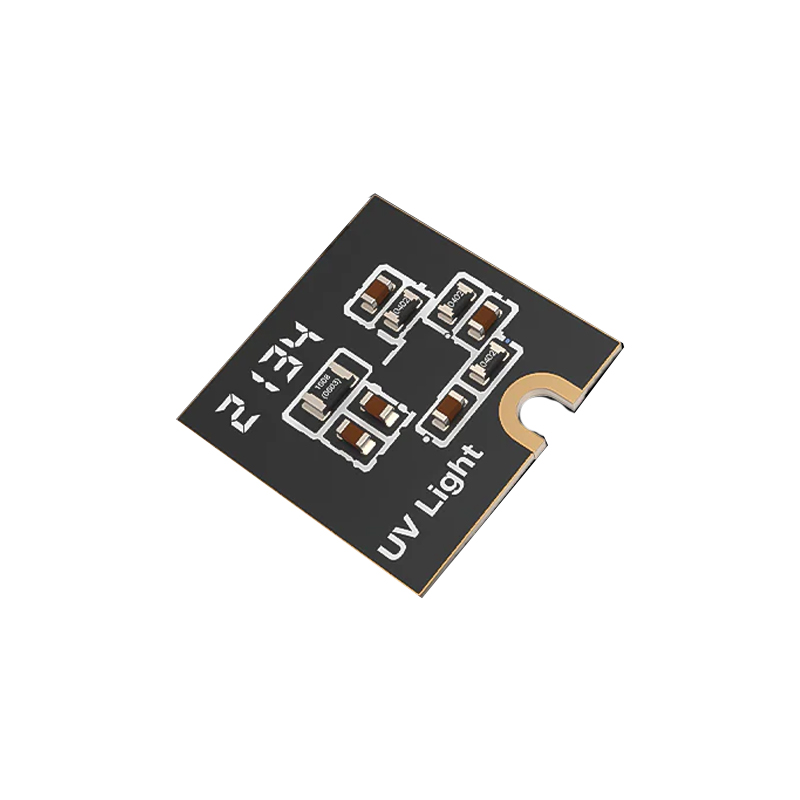
RAKwireless RAK12019 UV Light Sensor Module Lite-On LTR-390UV-01 - I2C Interface, WisBlock Compatible

₹669.00 (Inclusive of all taxes)
Out of Stock

The RAK12019 is a WisBlock-compatible UV and ambient light sensor module based on the Lite-On LTR-390UV-01. It provides precise UV Index and lux measurements via I2C interface, making it ideal for integration with Arduino, Raspberry Pi, and other 3.3V/5V logic microcontroller platforms for environmental monitoring applications.

Features

  • Dual-mode sensor for Ambient Light (ALS) and UV Light (UVS) measurement.
  • I2C interface with standard (100kHz) and fast (400kHz) modes for easy microcontroller integration.
  • Ultra-low power consumption with programmable interrupt and sleep mode for battery-powered IoT.
  • High dynamic range (1:18,000,000) and human-eye-like spectral response with flicker rejection.
  • Built-in temperature compensation ensures accuracy across a wide operating range (-40°C to +85°C).

Out of stock

Description

The RAK12019 module integrates the Lite-On LTR-390UV-01, a highly sensitive photodiode sensor with an integrated ADC and signal conditioning circuit. It operates on a photometric principle to deliver ambient light sensing (ALS) with a spectral response closely matching the human eye, while its dedicated UV photodiode provides accurate UV Index measurement. The sensor’s built-in temperature compensation corrects for thermal drift, ensuring stable readings in varying environmental conditions.

Designed for seamless integration into the WisBlock modular IoT ecosystem, the module features a standard I2C digital interface, simplifying connection to platforms like Arduino, ESP32, and Raspberry Pi. Its compact form factor and low operating voltage (1.7V to 3.6V) make it an optimal choice for space-constrained, battery-powered applications requiring reliable light data.

Key Features

  • Based on the high-performance Lite-On LTR-390UV-01 sensor IC.
  • Dual sensing modes: Ambient Light (0.01 to 64,000 lux) and UV Light.
  • Programmable interrupt thresholds for ALS and UVS with hysteresis control.
  • Excellent flicker rejection for stable operation under 50Hz/60Hz artificial lighting.
  • High-resolution output with effective resolution configurable from 13 to 20 bits.
  • Optimized for low-power operation, featuring a dedicated sleep mode.
  • Compact PCB design (25 x 20 mm) ready for WisBlock socket mounting.
  • Robust performance across a wide temperature range from -40°C to +85°C.

Applications

  • UV Index monitoring for wearable devices and personal sun exposure alerts.
  • Smart greenhouse and agricultural lighting control systems.
  • IoT environmental stations for ambient light and UV data logging.
  • Automated smart lighting and daylight harvesting in building automation.
  • Portable health and wellness gadgets measuring light exposure.

Technical Specifications

Model NumberRAK12019
Sensor ICLite-On LTR-390UV-01
Operating Voltage1.7 V to 3.6 V DC
Operating Current0.55 mA (typical)
InterfaceI2C (100kHz standard, 400kHz fast)
Ambient Light Range0.01 lux to 64,000 lux
Non-linearity Error≤ ±5%
Resolution (Effective)13 to 20 bits (configurable)
Dynamic Range1 : 18,000,000
Operating Temperature-40°C to +85°C
PCB Dimensions (L x W)25 mm x 20 mm
Module Height10 mm

Frequently Asked Questions

What is the operating voltage range for the RAK12019 sensor module?

The RAK12019 module operates from 1.7V to 3.6V DC. It is designed for low-voltage systems and is directly compatible with 3.3V logic microcontrollers like ESP32 or STM32. For use with 5V Arduino boards, a logic level converter is recommended to avoid damaging the sensor's I2C lines.

How do I interface with the RAK12019 module?

The module communicates exclusively via the I2C protocol. It supports both standard mode (100kHz) and fast mode (400kHz). You will need to connect the VCC, GND, SDA, and SCL pins to your microcontroller. The I2C address is configurable, and detailed register maps for the LTR-390UV-01 IC are provided in its datasheet for programming ALS and UVS modes.

Can this sensor measure both UV Index and ambient light?

Yes, the LTR-390UV-01 IC features dual photodiodes. One is optimized for ambient light sensing (ALS) with a human-eye response curve, providing readings from 0.01 to 64,000 lux. The other is a dedicated UV photodiode used to calculate the UV Index. The module can be configured via I2C commands to output data from either sensor mode.

Is the RAK12019 compatible with Arduino and Raspberry Pi?

Yes, the module is fully compatible with popular development platforms. For Arduino, use the Wire library for I2C communication. For Raspberry Pi, you can use Python libraries like smbus2. Its WisBlock form factor also allows for plug-and-play use with RAKwireless WisBlock Core boards, significantly speeding up IoT prototyping.

What is the purpose of the programmable interrupt feature?

The sensor has programmable upper and lower threshold interrupts for both ALS and UVS readings. This allows the microcontroller to enter a deep sleep mode and be woken up only when light levels cross a set boundary, drastically reducing overall system power consumption in battery-powered IoT and wearable applications.

Package Includes

  • 1 x RAK12019 UV Light Sensor Module

Additional Information

Weight 0.001 kg
Dimensions 2.5 × 2 × 1 cm