SKU: SENS-1519
📋 GST Invoice Available

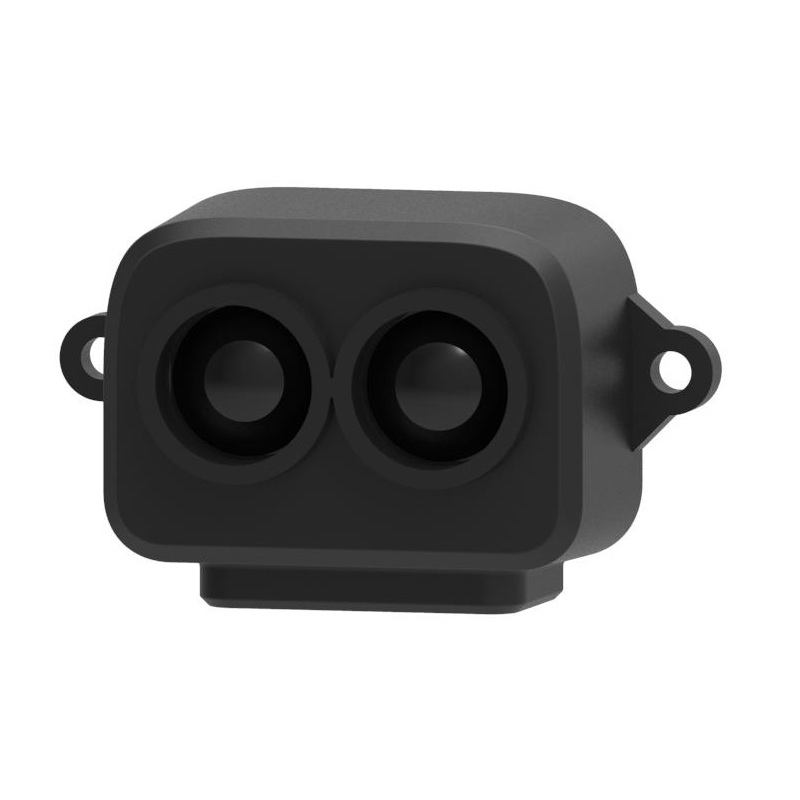
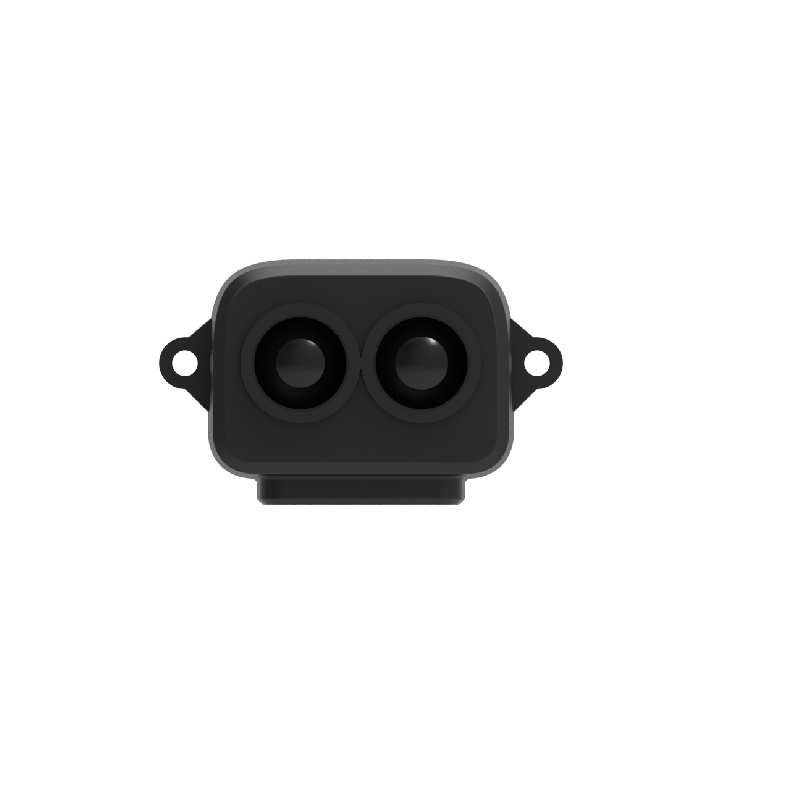
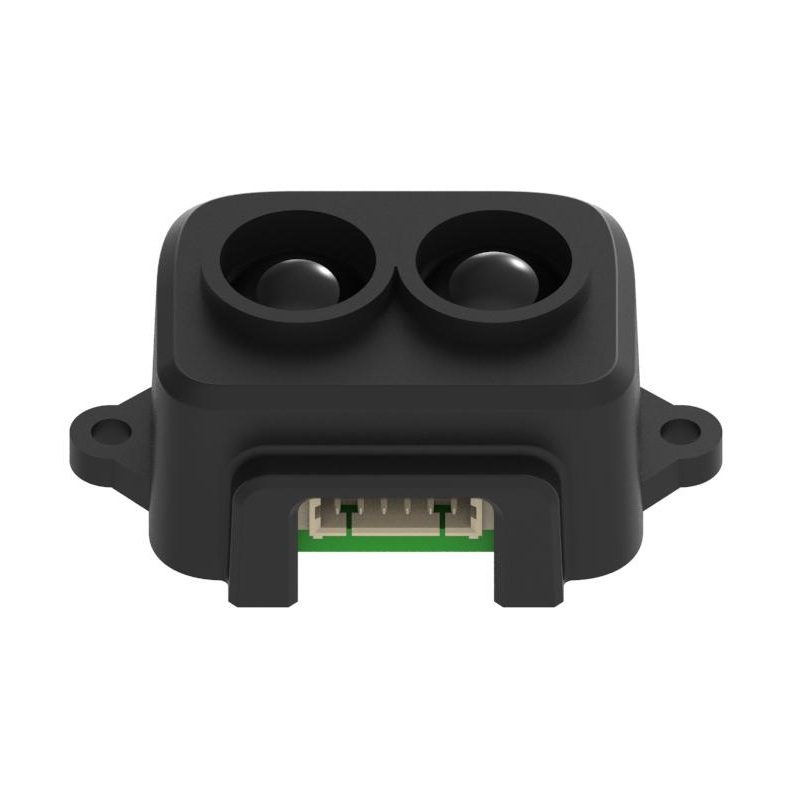
Benewake TF-LUNA Micro LiDAR Distance Sensor (Range: 0.2m~8m) - UART/I2C Interface

₹2,329.00 (Inclusive of all taxes)
Out of Stock

The Benewake TF-LUNA is a compact, single-point Time-of-Flight (ToF) LiDAR distance sensor module offering stable and accurate ranging from 0.2 to 8 meters. It communicates via UART or I2C interfaces, making it compatible with development platforms like Arduino, Raspberry Pi, and ESP32 for IoT, robotics, and ITS applications.

Features

  • Time-of-Flight (ToF) LiDAR with 0.2m to 8m measurement range
  • High accuracy: ±6cm (0.2-3M) and ±2% (3-8m) with 1cm resolution
  • Dual communication interface: Configurable for UART (TTL) or I2C protocol
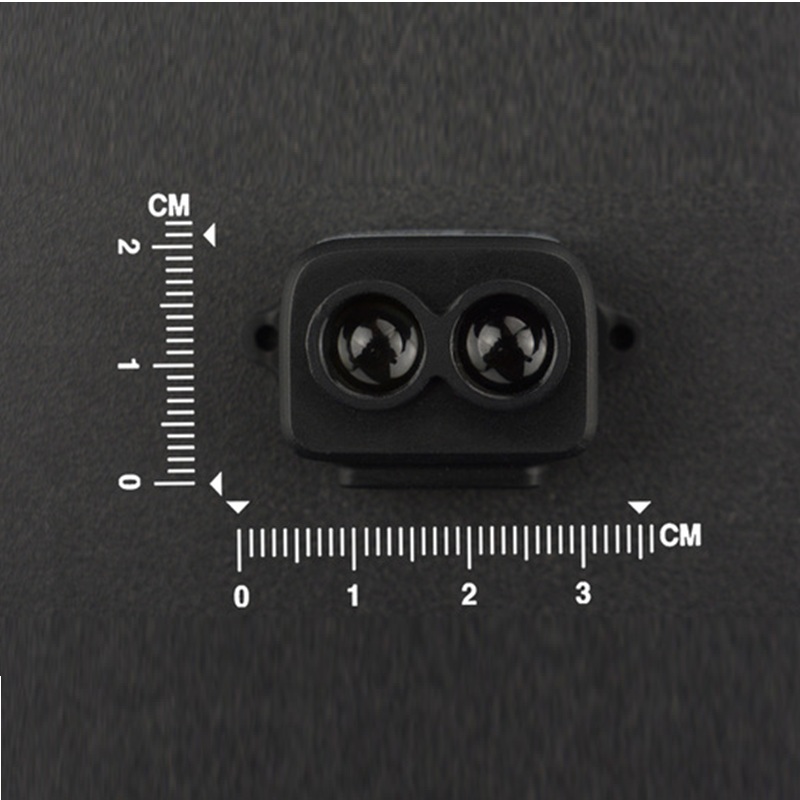
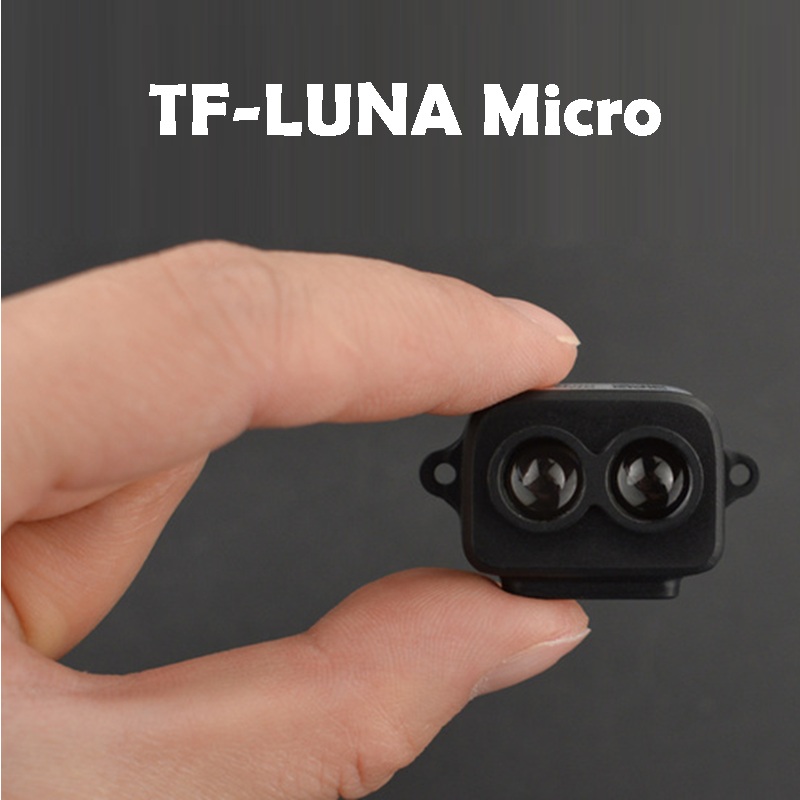
  • Ultra-compact form factor: 35 x 21.25 x 13.5 mm and less than 5g weight
  • Robust performance with 70 kLux ambient light immunity and -10°C to 60°C operating range

Out of stock

Description

The TF-LUNA utilizes a Time-of-Flight (ToF) laser ranging principle to deliver precise, non-contact distance measurements. Its integrated optical design and signal processing algorithms ensure stable performance even in complex ambient lighting conditions, making it suitable for both indoor and outdoor applications.

Operating from a regulated 5V ±0.1V supply, the module features configurable frame rates from 1 to 250 Hz and low average current consumption. Its small footprint and lightweight design facilitate easy integration into space-constrained projects such as drones, robotic navigation systems, and automated guided vehicles (AGVs).

Key Features

  • Precise ToF Ranging: Delivers accurate distance data with 1cm resolution and configurable update rates up to 250Hz.
  • Dual-Protocol Flexibility: Supports both UART (TTL serial) and I2C communication, allowing seamless integration with a wide range of microcontrollers and SBCs.
  • Environmental Robustness: Engineered for reliable operation with high immunity to ambient light (up to 70 kLux) and across an industrial temperature range.
  • Optimized Power Profile: Consumes ≤70mA average current, with a peak under 150mA, for efficient use in battery-powered IoT devices.
  • High-Value Compact Build: Features an ultra-small PCB design that provides a superior performance-to-size ratio for modern embedded systems.

Applications

  • Robotics navigation and obstacle avoidance for AGVs and service robots
  • Intelligent Transportation Systems (ITS) for vehicle detection and traffic monitoring
  • UAV/UAS altitude hold and terrain following
  • Industrial automation for level measurement, bin filling, and conveyor belt monitoring
  • Security and intrusion detection systems for perimeter sensing

Technical Specifications

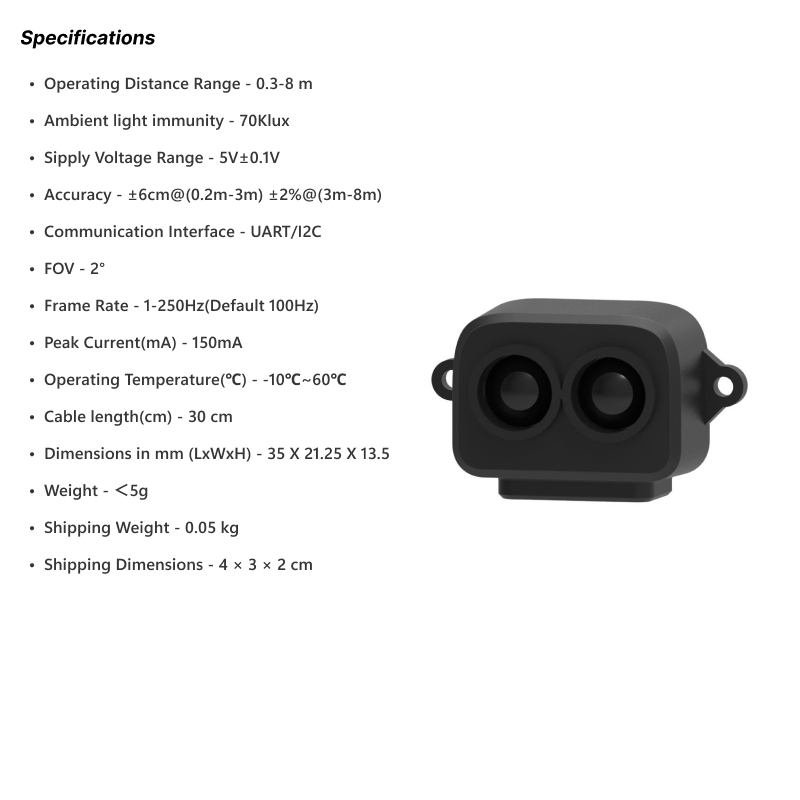
Model / NameTF-LUNA Micro LiDAR Distance Sensor
Measurement Range0.2 m to 8 m
Accuracy±6 cm (0.2m-3M), ±2% of reading (3M-8m)
Distance Resolution1 cm
Field of View (FOV)2°
Frame Rate1 to 250 Hz (Default: 100 Hz)
Communication InterfaceUART (TTL) / I2C (Configurable)
Supply Voltage5V DC ±0.1V
Average Current Consumption≤ 70 mA
Peak Current150 mA
Power Consumption≤ 0.35 W
Ambient Light Immunity70 kLux
Operating Temperature-10°C to +60°C
Cable Length30 cm (included)
Dimensions (L x W x H)35 x 21.25 x 13.5 mm
Weight< 5 g

Frequently Asked Questions

What is the difference between UART and I2C mode on the TF-LUNA, and how do I select one?

The TF-LUNA can be configured for either UART (TTL serial) or I2C communication via a configuration command or a physical solder Jumper, depending on the hardware version. UART mode is typically used for direct serial communication with a microcontroller's UART pins, while I2C mode allows multiple sensors to share the same bus. You must ensure your host controller's logic levels (3.3V or 5V) are compatible with the sensor's TTL interface.

What is the required power supply specification for stable operation?

The sensor requires a stable 5V DC power supply with a tight tolerance of ±0.1V. The average current draw is under 70mA, but you should provision for peak currents up to 150mA. It is critical to use a clean, well-regulated power source and bypass capacitors near the sensor's power pins to minimize noise that could affect measurement accuracy.

How do I interface the TF-LUNA with an Arduino or Raspberry Pi?

For Arduino, connect the sensor's UART_TX to an RX pin and UART_RX to a TX pin, ensuring common ground and 5V power. Use the SoftwareSerial or HardwareSerial library. For Raspberry Pi (3.3V logic), you must use a logic level converter between the Pi's GPIO and the sensor's 5V TTL pins. For I2C mode, connect SDA and SCL lines with appropriate pull-up resistors. Benewake provides a communication protocol document with example code for both platforms.

What factors can affect the accuracy and maximum range of the sensor?

Accuracy can be influenced by the reflectivity and color of the target surface, extreme ambient light (>70 kLux), and electrical noise on the power lines. The maximum effective range of 8 meters is specified for a target with ≥10% reflectivity. For low-reflectivity (dark) targets, the maximum range will be reduced. Ensuring a stable 5V supply and proper signal conditioning will optimize performance.

Package Includes

  • 1 x Benewake TF-LUNA Micro LiDAR Distance Sensor Module
  • 1 x 30 cm interface cable

Additional Information

Weight 0.005 kg
Dimensions 3.5 × 2.125 × 1.35 cm