SKU: IOWC-1678
📋 GST Invoice Available

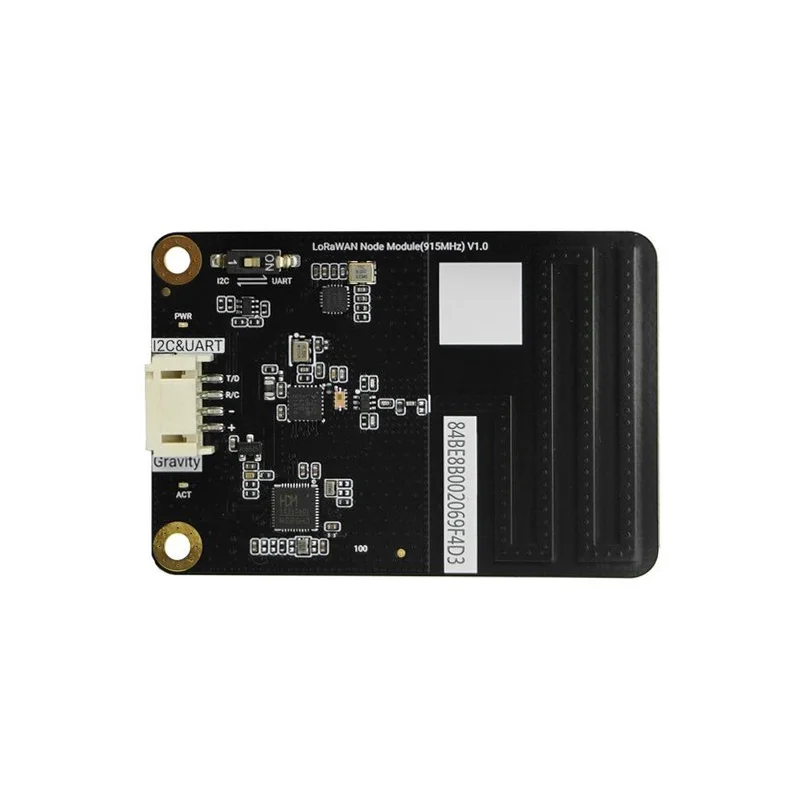
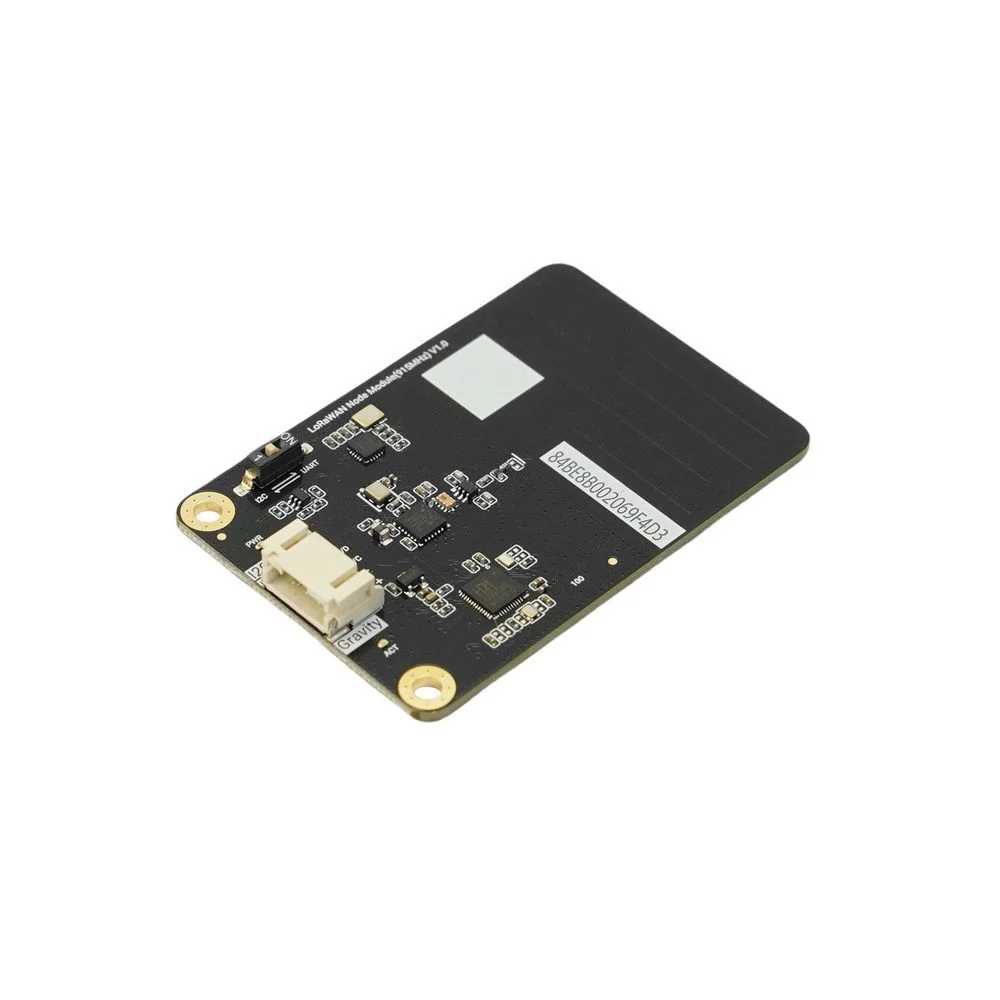
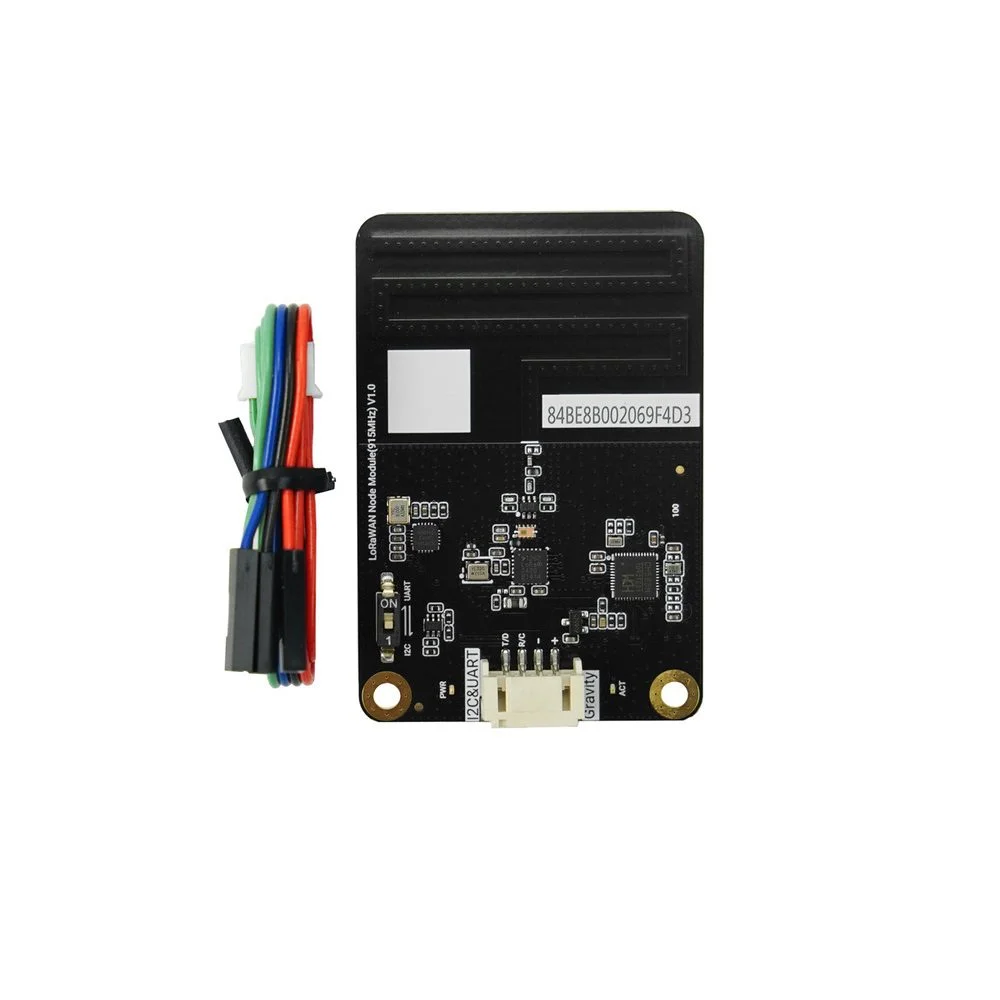
DFRobot Gravity LoRaWAN Node Module SX1262 US915

₹1,289.00 (Inclusive of all taxes)
Out of Stock

The DFRobot Gravity LoRaWAN Node Module is a compact, low-power wireless transceiver based on the SX1262 chip for long-range IoT deployments. Operating on the US915 frequency band, it supports LoRa point-to-point and LoRaWAN Class A/C networking, compatible with Arduino IDE, micro:bit, and ESP32 platforms via UART and I2C interfaces.

Features

  • Long-range LoRaWAN node module based on the Semtech SX1262 RF chip for robust performance.
  • Operates on the US915 frequency band with up to +22 dBm transmit power for a range up to 4.5 km in open areas.
  • Supports both LoRa point-to-point direct communication and LoRaWAN Class A & C network protocols.
  • Features UART and I2C communication interfaces for easy integration with Arduino, micro:bit, and ESP32.
  • Low-power design operates from a 3.3V to 5V DC supply, ideal for battery-powered IoT sensor nodes.

Out of stock

Description

The DFRobot Gravity LoRaWAN Node Module is engineered for developers building long-range, low-power IoT networks. Utilizing the Semtech SX1262 transceiver, it delivers enhanced RF performance with a receiver sensitivity of -137 dBm and a configurable transmit power up to +22 dBm, ensuring reliable data links over several kilometers. The module operates exclusively in the US915 ISM band, making it suitable for North American LoRaWAN deployments.

Designed for flexible integration, the module provides both UART and I2C host interfaces, simplifying firmware development on popular platforms like Arduino IDE, ESP-IDF, and micro:bit. Its power-efficient architecture supports deep sleep modes, extending operational life in remote sensing applications. The compact form factor and included PH2.0-4P connection cable facilitate rapid prototyping and deployment in field-ready enclosures.

Key Features

  • High-performance SX1262 LoRa transceiver with improved blocking immunity and spectral efficiency.
  • Dual-mode operation supports direct LoRa peer-to-peer links and standardized LoRaWAN Class A/C end-device functionality.
  • Wide operating voltage range from 3.3V to 5V DC, compatible with most microcontroller development boards.
  • Integrated UART (Serial) and I2C host interfaces for straightforward command and data exchange via AT commands or custom firmware.
  • Optimized for long-range transmission, achieving up to 4.5 km line-of-sight and 1.5 km in urban environments.
  • Compact and lightweight PCB design with standard Gravity-series PH2.0 connectors for plug-and-play sensor connectivity.
  • Fully compatible with popular IoT development ecosystems including Arduino, ESP32, Raspberry Pi (with host MCU), and micro:bit.

Applications

  • Remote environmental monitoring stations for air quality, soil moisture, and weather data.
  • Smart agriculture systems for crop sensing, irrigation control, and livestock tracking.
  • Industrial IoT (IIoT) telemetry for asset monitoring, tank level sensing, and equipment health.
  • Urban smart city deployments such as smart parking, waste management, and streetlight control.
  • Long-range sensor networks for forestry, wildlife research, and perimeter security.

Technical Specifications

RF Chip / SoCSemtech SX1262
Wireless ProtocolLoRa, LoRaWAN (Class A, C)
Frequency BandUS915 (902-928 MHz)
Max Transmit Power+22 dBm
Receiver Sensitivity-137 dBm
ModulationLoRa (Spread Spectrum)
Supply Voltage3.3V - 5V DC
Host InterfacesUART, I2C
Antenna ConnectorIntegrated PCB antenna (or external via pad)
Dimensions (LxW)Approx. 70mm x 60mm
WeightApprox. 20g

Frequently Asked Questions

How do I connect and configure this LoRaWAN module with an Arduino Uno?

Connect the module's VCC (3.3V-5V), GND, TX, and RX pins to the Arduino's corresponding pins. Use a software serial library on an unused pin pair if needed. Install the required LoRa library (like MCCI LoRaWAN LMIC or Sandeep Mistry's library) in the Arduino IDE. Configure the sketch with your LoRaWAN keys (AppEUI, DevEUI, AppKey) for OTAA activation or use ABP. Set the correct US915 frequency plan and sub-band in the library configuration files before uploading.

What is the difference between LoRa point-to-point and LoRaWAN mode on this module?

In LoRa point-to-point mode, two modules communicate directly with each other using raw LoRa modulation, which is simpler and suitable for private, device-to-device links. LoRaWAN mode connects the module to a LoRaWAN network server (like The Things Network) via gateways, enabling secure, scalable, and bidirectional communication with cloud applications. The module supports LoRaWAN Class A (low-power, uplink-initiated) and Class C (continuously listening for downlinks). You typically select the mode via AT commands or within your embedded firmware library settings.

What type of antenna should I use, and how do I maximize range with this US915 module?

The module has an integrated PCB antenna. For extended range, you can solder a wire antenna to the designated pad or connect an external 915MHz antenna via an IPEX/U.FL connector if present. Use a matched 50-ohm antenna like a dipole or whip with approximately 3dBi gain. Ensure the antenna is elevated and has a clear line of sight. Configure the transmit power to the maximum +22 dBm in your firmware, but be mindful of local regulatory limits. Optimal range also depends on spreading factor (SF) and bandwidth settings; higher SF increases range but reduces data rate.

What is the power consumption and how can I implement sleep modes for battery operation?

The module's operating current varies with transmit power; expect ~120mA during transmission at +22 dBm and ~5mA during active reception. In sleep mode, current drops to microamps. To implement battery-saving operation, use the module's built-in low-power commands. In your firmware, after sending data, put the SX1262 chip into deep sleep via the appropriate library function or AT command. Wake the module periodically using a hardware timer interrupt on your host MCU. Power the entire node from a 3.3V regulator and use a high-capacity Li-ion battery coupled with a solar charger for long-term field deployment.

Package Includes

  • 1 x DFRobot Gravity LoRaWAN Node Module (US915)
  • 1 x PH2.0-4P Connection Cable

Additional Information

Weight 0.02 kg
Dimensions 7 × 6 cm