SKU: IOWC-1285
📋 GST Invoice Available

DFRobot Beetle ESP32-C6 Mini Development Board w/ BLE, Wi-Fi 6, Zigbee

₹629.00 (Inclusive of all taxes)
Out of Stock

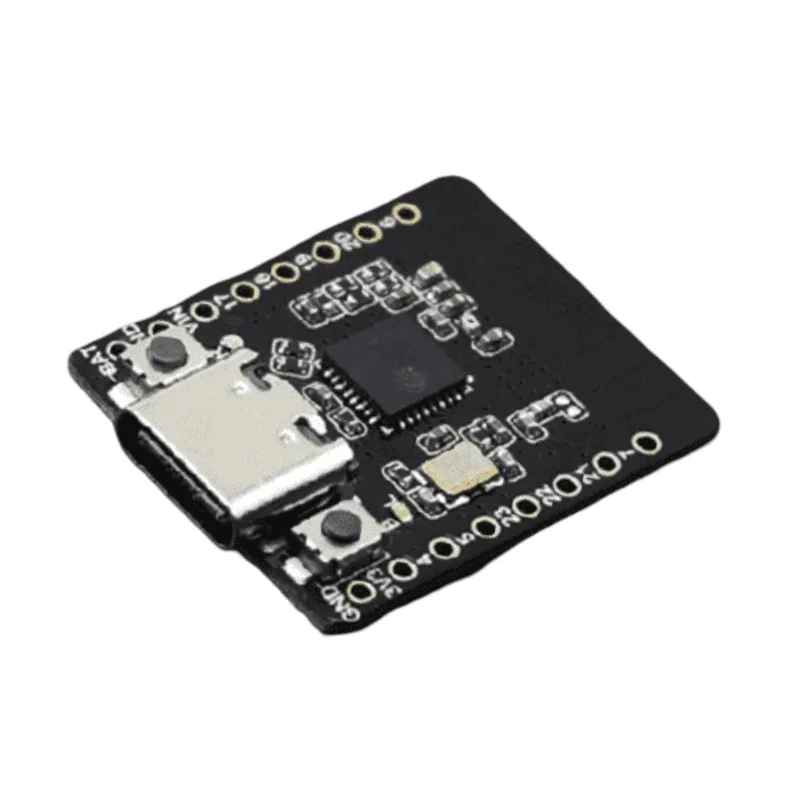
The DFRobot Beetle ESP32-C6 Mini is an ultra-compact, coin-sized IoT development board based on Espressif’s ESP32-C6 RISC-V chip. It supports multi-protocol connectivity including Wi-Fi 6, Bluetooth 5, Zigbee 3.0, and Thread 1.3, making it ideal for Arduino IDE, ESP-IDF, and MicroPython projects focused on wearable tech and low-power edge nodes.

Features

  • Multi-Protocol Wireless SoC: Features the ESP32-C6 with integrated support for Wi-Fi 6 (802.11ax), Bluetooth 5, Zigbee 3.0, and Thread 1.3 on a single 2.4GHz radio.
  • Ultra-Low Power Design: Achieves a deep sleep current as low as 14µA and includes integrated lithium battery charging management for portable, wearable applications.
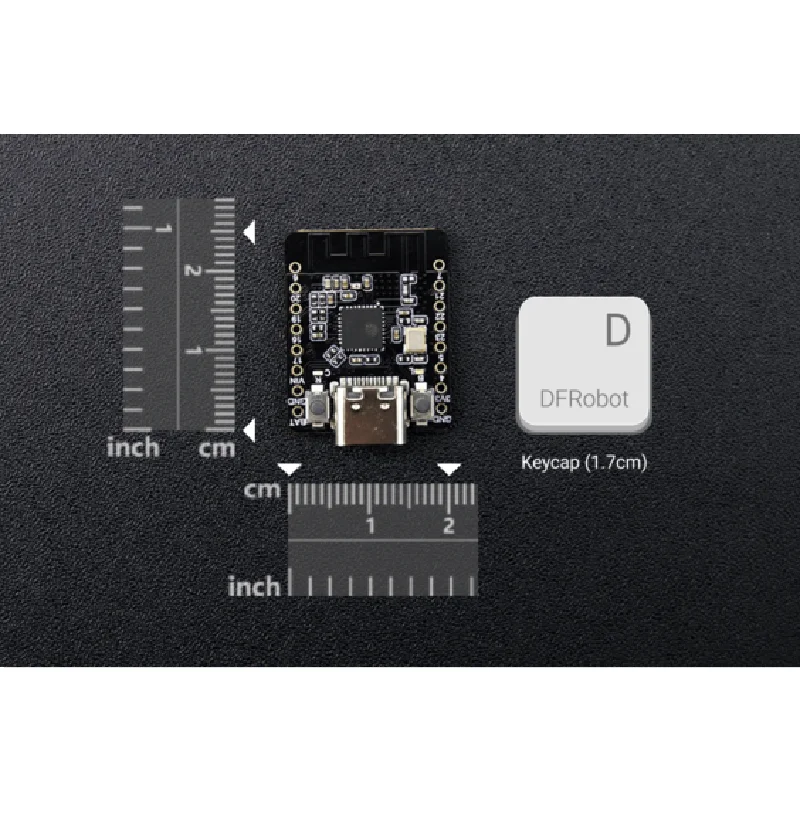
  • Compact Form Factor: Measures only 25 x 20.5mm (coin-sized), enabling integration into space-constrained projects like smart badges, pet trackers, and interactive wearables.
  • Rich I/O & Interfaces: Provides 13 digital I/O pins, 3x UART, 2x I2C, SPI, I2S, 6-channel PWM, and a 12-bit SAR ADC for sensor connectivity and control.
  • Developer-Friendly Platform: Compatible with Arduino Core, ESP-IDF, and MicroPython, and includes a USB-C port for easy programming, debugging, and power.

Out of stock

Description

The DFRobot Beetle ESP32-C6 Mini Development Board is engineered for next-generation, low-power IoT and wearable device prototyping. At its core is Espressif’s ESP32-C6, a high-performance 160MHz RISC-V 32-bit processor that consolidates Wi-Fi 6, Bluetooth 5, Zigbee, and Thread radios into a single, efficient package. This convergence enables seamless connectivity across modern smart home and industrial IoT networks, including Matter ecosystems.

Power management is a central design focus. The board integrates a lithium-polymer battery charging circuit, eliminating the need for external charger modules and simplifying portable product design. Coupled with an ultra-low deep sleep current of 14µA, it is optimized for battery-operated applications requiring extended operational life. The compact 25 x 20.5mm footprint, akin to a large coin, makes it exceptionally suitable for wearable electronics, interactive badges, and miniaturized sensor nodes.

Key Features

  • Multi-Network Connectivity: Single-chip support for Wi-Fi 6 (802.11ax), Bluetooth 5/LE, Zigbee 3.0, and Thread 1.3 protocols enables flexible integration into diverse IoT infrastructures.
  • Integrated Battery Management: On-board charging circuit for single-cell LiPo/Li-ion batteries simplifies power design for wearable and portable projects.
  • Ultra-Compact & Dense I/O: Despite its miniature size, the board exposes 13 GPIOs, multiple serial interfaces (UART, I2C, SPI), PWM, ADC, and I2S for extensive peripheral connectivity.
  • Enhanced Wi-Fi 6 Performance: Supports 20/40MHz bandwidth in the 2.4GHz band with features like A-MPDU/A-MSDU aggregation for improved efficiency and lower latency.
  • Low-Power RISC-V Core: The 160MHz single-core RISC-V processor provides a balance of computational performance and energy efficiency for edge computing tasks.
  • Comprehensive Development Support: Fully programmable via Arduino IDE, ESP-IDF, or MicroPython through the USB-C interface, accelerating firmware development and debugging.

Applications

  • Smart Wearables & Interactive Devices: Electronic badges, smart watches, backpack charms, and human-interactive controllers leveraging BLE and compact form factor.
  • Portable Asset Trackers: Pet, luggage, or equipment trackers using Wi-Fi/BLE for proximity logging and Zigbee/Thread for mesh network integration.
  • Matter & Smart Home Endpoints: Multi-protocol smart buttons, lighting controls, and sensors acting as Matter-compatible edge devices.
  • Low-Power Sensor Nodes: Environmental monitoring stations (temperature, humidity) with Wi-Fi 6 for efficient data uplink and deep sleep for battery longevity.

Technical Specifications

Microcontroller / SoCEspressif ESP32-C6 (160MHz RISC-V single-core)
Wireless ProtocolsWi-Fi 6 (802.11b/g/n/ax), Bluetooth 5/LE/Mesh, Zigbee 3.0, Thread 1.3
Frequency Range2.4 GHz
Supply Voltage3.3V (Operating), 5V DC (USB-C Input)
Operating CurrentVaries with RF mode; Deep Sleep: 14 µA
Memory512KB SRAM, 320KB ROM, 4MB Flash, 16KB RTC SRAM
Interfaces13x Digital I/O, 3x UART (1x LP UART), 2x I2C (1x LP I2C), 1x SPI, 1x I2S, 6x PWM, 7ch 12-bit SAR ADC, IR Transceiver
USBUSB 2.0 CDC via USB-C Connector
Battery ChargingIntegrated LiPo Charger
Operating Temperature-10°C to 60°C
Dimensions25mm x 20.5mm (Board)

Frequently Asked Questions

What programming frameworks are supported by the Beetle ESP32-C6 Mini?

The board is fully compatible with the Arduino Core for ESP32, Espressif's official ESP-IDF (IoT Development Framework), and MicroPython. You can program it via the USB-C port using Arduino IDE, PlatformIO, or esptool.py for flashing. The ESP-IDF provides full access to all wireless protocols (Wi-Fi 6, BLE, Zigbee, Thread) and low-power features, while Arduino offers a simpler library-based approach for rapid prototyping.

How do I power and charge a battery with this development board?

You can power the board directly via the USB-C port with 5V, or connect a single-cell 3.7V LiPo/Li-ion battery to the designated BAT+ and BAT- pins. The integrated TP4056-based charging circuit will automatically charge the battery when USB power is present. The charging current is set to approximately 500mA. For monitoring, the board supports battery voltage detection through an ADC channel, allowing your firmware to read the battery level and manage low-power states.

Can this board operate as a Zigbee or Thread coordinator or just an end device?

The ESP32-C6 chip's IEEE 802.15.4 radio fully supports Zigbee 3.0 and Thread 1.3 protocols. Using the ESP-IDF with the OpenThread stack or Zigbee SDK, you can configure the board as an end device (router or sleepy end device), a router, or even a coordinator/border router for Thread networks. However, running as a coordinator typically requires more flash storage and stable power, making the board more suited as an end device or router in most battery-powered wearable applications.

What is the pinout for the 10-pin headers, and how do I access the I2C or SPI interfaces?

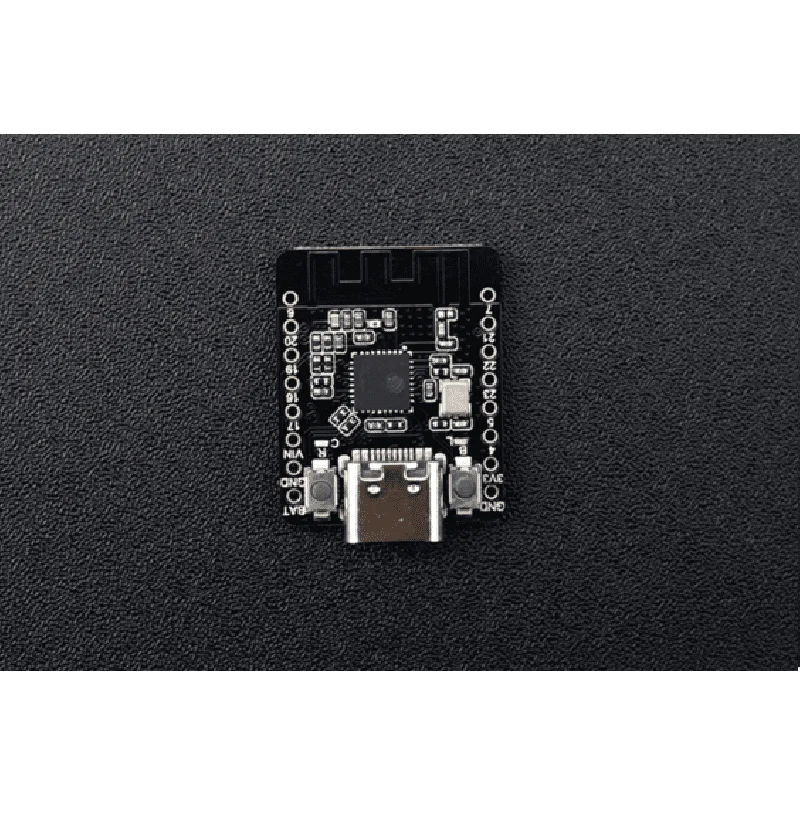
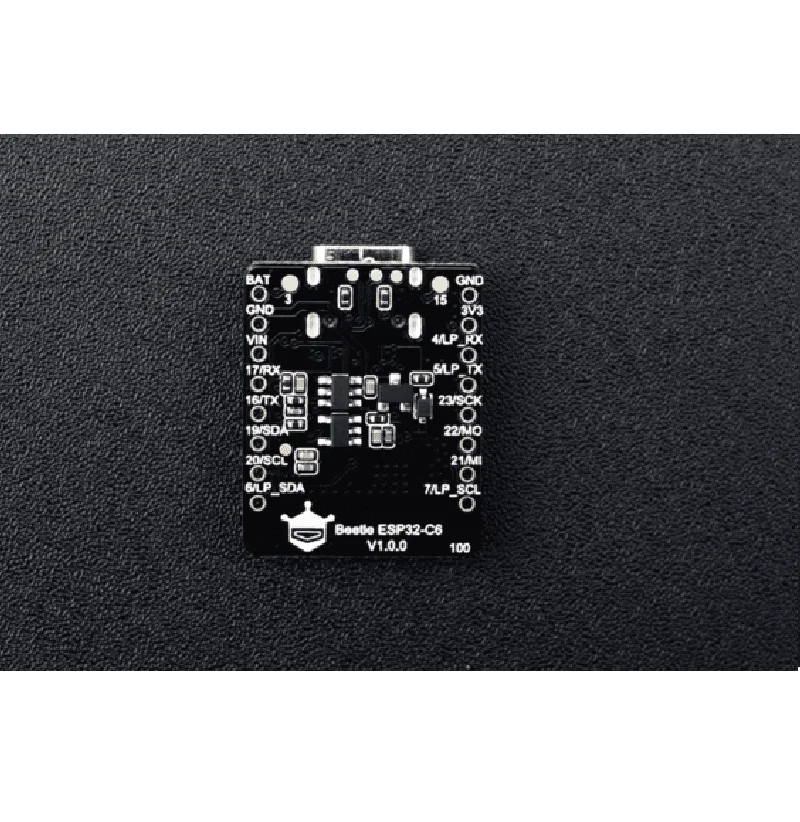
The two 10-pin headers provide access to all 13 GPIOs and special function pins. Specific pin mappings (e.g., GPIO6 for SCL, GPIO7 for SDA for I2C0, GPIO11-13 for SPI) are defined in the official DFRobot wiki and ESP32-C6 datasheet. You must refer to the pinout diagram to avoid using pins reserved for internal flash or USB. The headers are not pre-soldered, allowing you to solder straight or right-angle headers based on your project's form factor requirements.

Package Includes

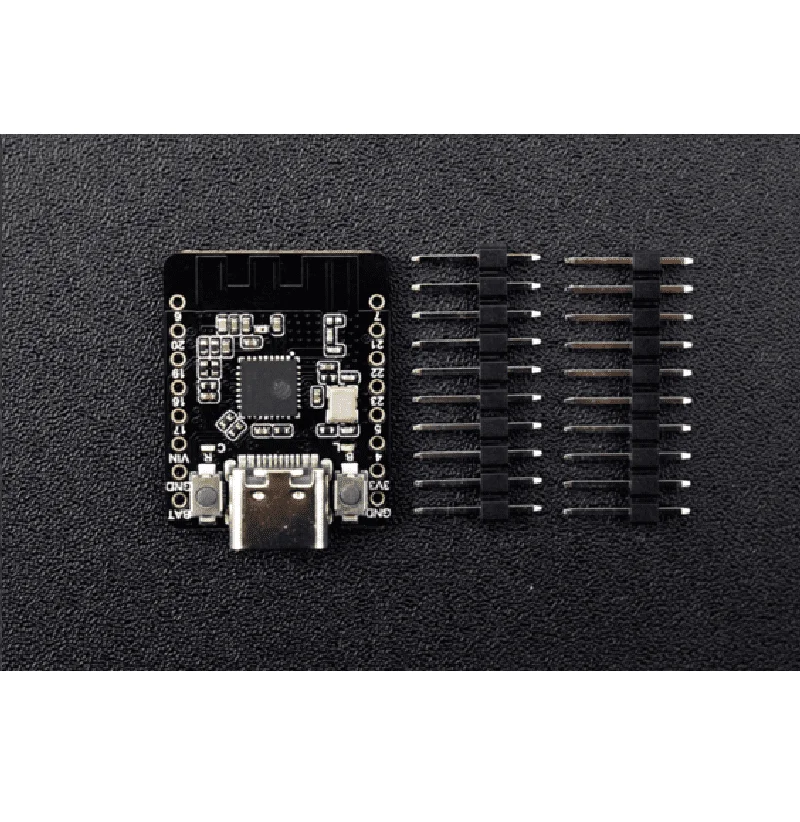
  • 1 x Beetle ESP32-C6 Mini Development Board
  • 2 x 10-pin 2.54mm Male Pin Headers

Additional Information

Weight 0.015 kg
Dimensions 6 × 6 × 3 cm