SKU: IOWC-1273
📋 GST Invoice Available

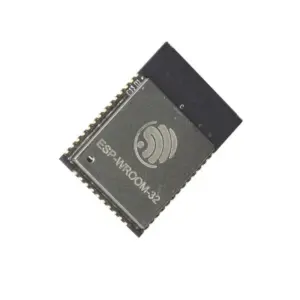
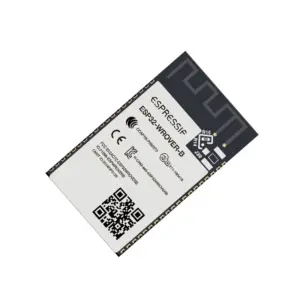
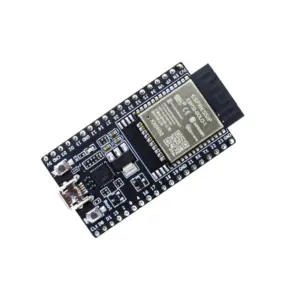
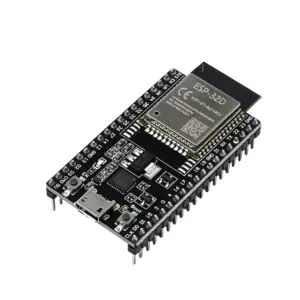
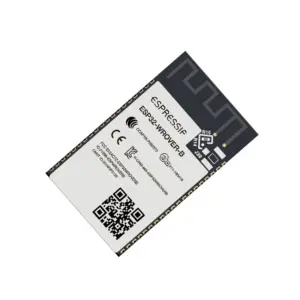
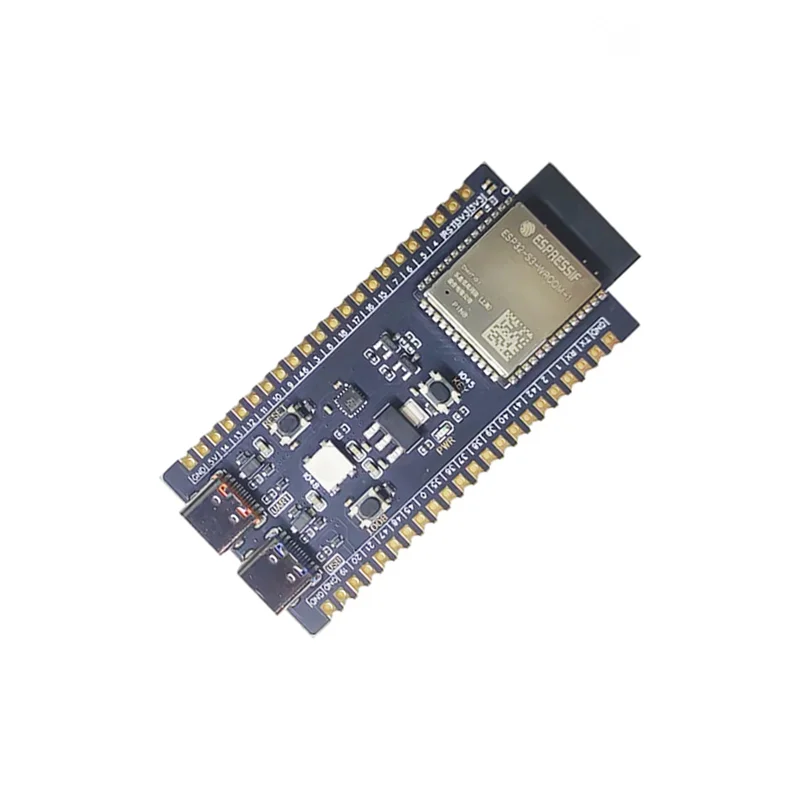
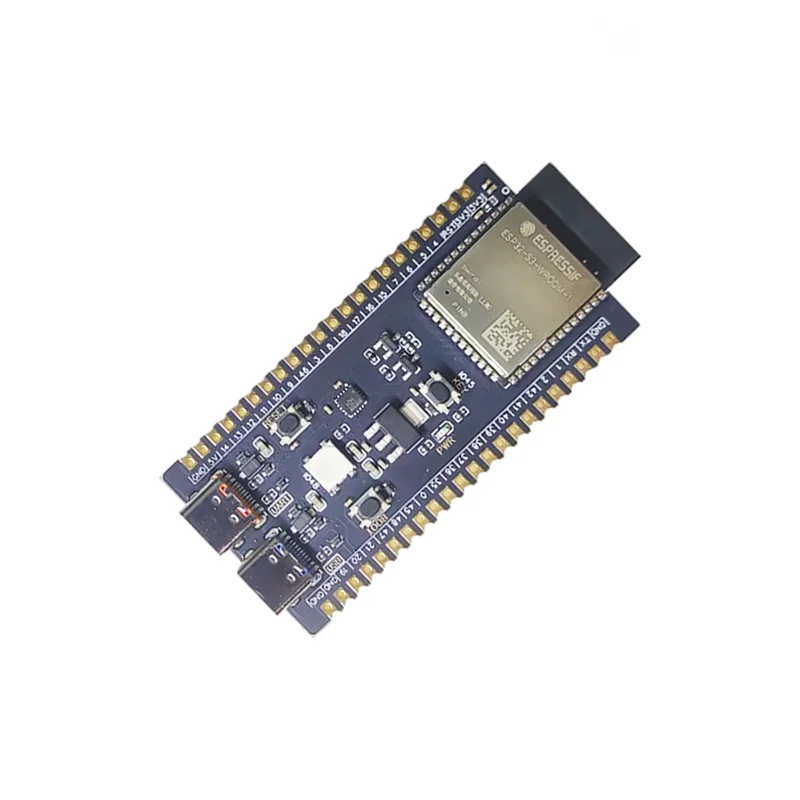
WeAct Studio ESP32-S3-DevKitC-1 WiFi BLE 5.0 Mesh Dev Board

₹1,099.00 (Inclusive of all taxes)
Out of Stock

The WeAct Studio ESP32-S3-DevKitC-1 is a feature-rich development board based on the ESP32-S3 dual-core microcontroller, offering integrated 2.4GHz Wi-Fi and Bluetooth 5.0 with mesh support, ideal for prototyping with Arduino IDE, ESP-IDF, or MicroPython.

Features

  • Dual-Core ESP32-S3 Power: Features the Xtensa LX7 dual-core processor clockable up to 240MHz, paired with 512KB SRAM for demanding IoT applications.
  • Integrated Wi-Fi & BLE 5.0: Combines 802.11b/g/n Wi-Fi (up to 150Mbps) and Bluetooth 5.0 with mesh support for versatile wireless connectivity.
  • Ultra-Low Power Operation: Supports advanced sleep modes with deep sleep current under 8µA, enabling long-term battery-powered deployments.
  • Rich Peripheral Set: Exposes a comprehensive range of interfaces including USB OTG, GPIO, ADC, I2C, SPI, I2S, and capacitive touch sensors for extensive hardware integration.
  • Developer-Friendly: Supports FOTA updates, AT commands, and is fully compatible with popular frameworks like Arduino, ESP-IDF, and MicroPython for rapid development.

Out of stock

Description

The WeAct Studio ESP32-S3-DevKitC-1 development board provides a robust platform for building advanced IoT nodes and wireless devices. Its core is the ESP32-S3 SoC, which integrates all necessary RF components—MAC, baseband, power amplifier, and low-noise amplifier—for stable 2.4GHz Wi-Fi and Bluetooth 5.0 communication. The board supports multiple network modes (STA, AP, STA+AP) and features like Smart Config for easy Wi-Fi provisioning.

Engineered for low-power applications, the board offers configurable sleep modes to minimize energy consumption, making it suitable for sensor networks and portable gadgets. The extensive I/O breakout, including USB OTG and a dedicated USB serial controller, allows for direct PC connection and peripheral hosting. This combination of processing power, integrated wireless, and developer support makes it a versatile choice for prototyping and production.

Key Features

  • Integrated Wireless SoC: ESP32-S3 chip with built-in 2.4GHz Wi-Fi 802.11b/g/n and Bluetooth 5.0 + BLE Mesh radio.
  • High-Performance Processing: Dual-core Xtensa LX7 CPU running at up to 240 MHz for complex firmware tasks.
  • Optimized Power Management: Features multiple sleep modes, including a deep sleep state drawing less than 8 microamps.
  • Comprehensive Development Support: Compatible with Arduino core, ESP-IDF, MicroPython, and supports FOTA for remote updates.
  • Rich Sensor & Interface Support: Onboard interfaces for temperature sensing, pulse counting, capacitive touch GPIOs, and standard communication protocols.
  • Easy Network Provisioning: Supports Smart Config (ESP-Touch) and AirKiss for one-touch Wi-Fi setup from mobile apps.

Applications

  • Smart Home Automation Hubs: Acts as a central controller for BLE mesh networks or Wi-Fi-connected appliances.
  • IoT Sensor Nodes: Ideal for environmental monitoring systems leveraging its low-power sleep modes and wireless connectivity.
  • Prototyping & Education: Serves as a versatile platform for learning embedded systems, wireless communication, and MicroPython programming.
  • Wireless Device Gateways: Used to bridge BLE sensors to a Wi-Fi network for cloud data aggregation.
  • Interactive Displays & HMI: Supports LCD and touch interfaces for building simple human-machine interfaces.

Technical Specifications

Microcontroller / SoCEspressif ESP32-S3 (Xtensa LX7 Dual-Core)
Wireless ProtocolsWi-Fi 802.11b/g/n (1T1R), Bluetooth 5.0 & BLE Mesh
CPU Clock SpeedUp to 240 MHz
Memory512KB SRAM, 384KB ROM, 16KB RTC SRAM
Supply Voltage3.3V (Typical via USB)
Operating CurrentVaries with mode; Deep Sleep < 8µA
InterfacesUART, GPIO, ADC, PWM, I2C, I2S, SPI, USB OTG, LCD, DVP, SDIO, TWAI, RMT
AntennaIntegrated PCB Antenna
Package / Form FactorSMD-40, Development Board
Dimensions (approx.)50mm x 50mm x 20mm

Frequently Asked Questions

What is the primary difference between the ESP32-S3 and the classic ESP32?

The ESP32-S3 features upgraded dual-core Xtensa LX7 processors, enhanced Bluetooth 5.0 capabilities with mesh support, and improved AI acceleration instructions. It also offers more GPIOs with touch sensor support and a USB OTG interface, which are not present on the original ESP32. Memory and peripheral options are also expanded for more complex applications.

How do I program this board using the Arduino IDE?

First, install the ESP32 board support via the Arduino Boards Manager using the Espressif package URL. Select 'ESP32S3 Dev Module' as your board. Ensure the correct USB port is chosen. The board typically uses the built-in USB-serial converter, so no external programmer is needed. You can then write and upload sketches that utilize the Wi-Fi, BLE, and GPIO libraries provided by the ESP32 Arduino core.

What is the power supply requirement and how do I achieve the lowest sleep current?

The board operates at 3.3V, typically supplied via its USB-C port. To achieve the specified deep sleep current of less than 8µA, you must ensure all power-hungry peripherals are disabled in your firmware. Use the `esp_deep_sleep_start()` function in ESP-IDF or equivalent in Arduino. For battery operation, disconnect the USB and power the 3.3V pin directly with a regulated source, ensuring no LEDs or regulators are drawing excess current.

Can I use an external antenna with this ESP32-S3 development board?

This specific WeAct Studio DevKitC-1 model comes with a fixed PCB trace antenna. It does not have an external antenna connector like an IPEX or SMA. For projects requiring an external antenna, you would need to select a different ESP32-S3 module variant that includes an RF connector or manually solder to the RF pad, which requires impedance matching and is recommended for advanced users only.

Package Includes

  • 1 x WeAct Studio ESP32-S3-DevKitC-1 Development Board

Additional Information

Weight 0.01 kg
Dimensions 5 × 5 × 2 cm