SKU: IOWC-1060
📋 GST Invoice Available

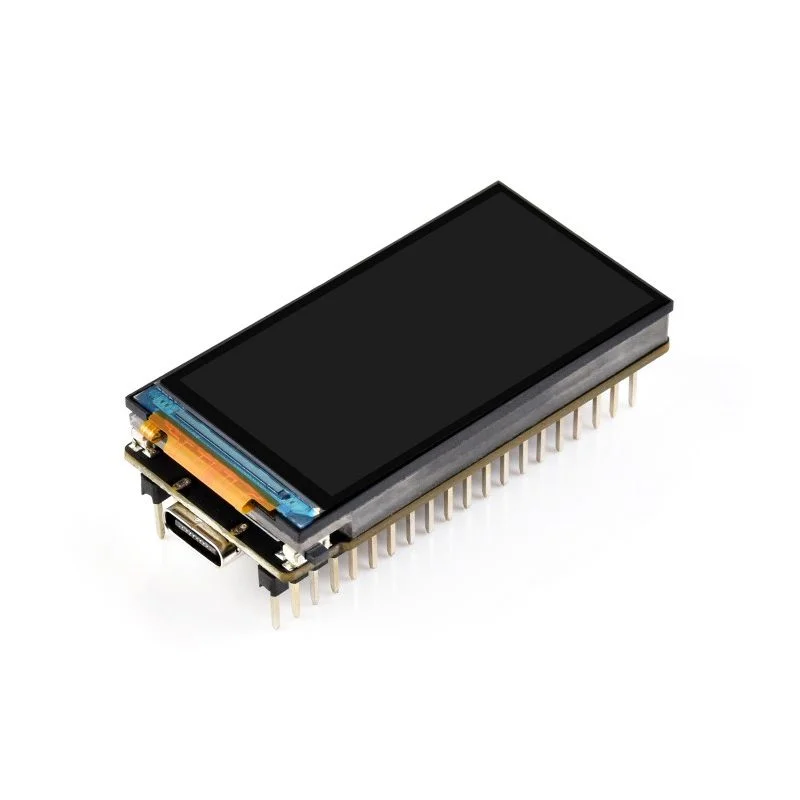
Waveshare ESP32-S3 1.9-Inch LCD Display Development Board

₹2,099.00 (Inclusive of all taxes)
Out of Stock

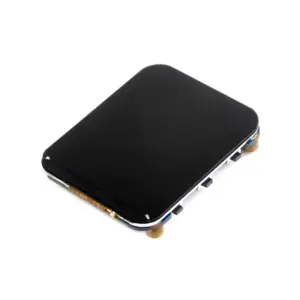
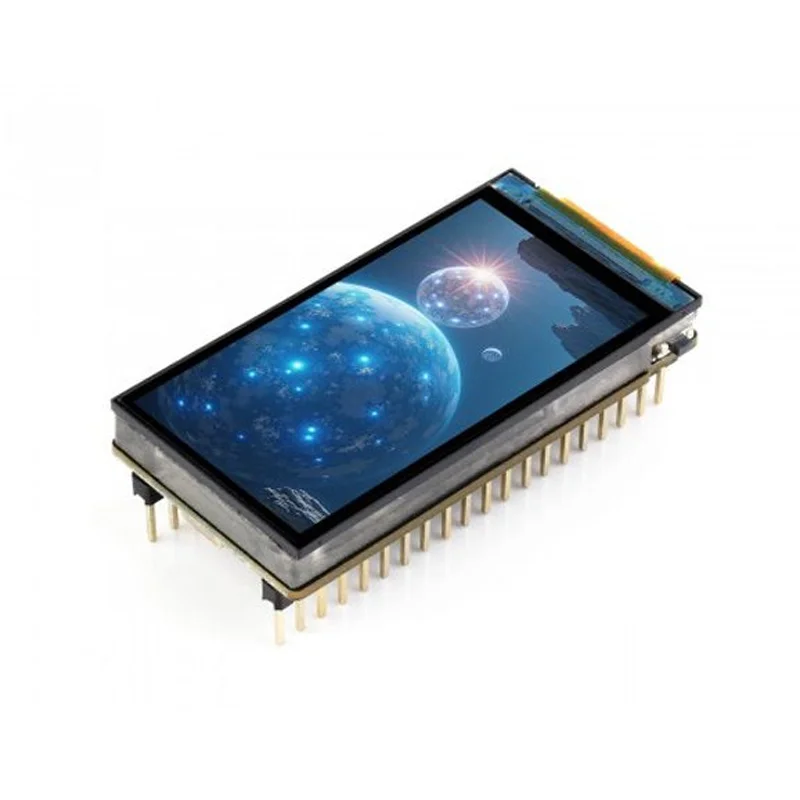
The Waveshare ESP32-S3 1.9-Inch Display Development Board is a compact AIoT platform featuring a 170×320 color LCD, powered by a dual-core ESP32-S3R8 with Wi-Fi/Bluetooth 5 LE, 16MB Flash, 8MB PSRAM, and a 6-axis IMU for GUI and motion-based applications.

Features

  • Dual-Core ESP32-S3R8 Power: Features a 32-bit LX7 dual-core processor clocked up to 240MHz, paired with 16MB Flash and 8MB PSRAM for smooth GUI rendering and complex IoT logic.
  • Vibrant 1.9-Inch LCD Display: Offers a 170×320 resolution with 262K colors and 500 cd/m² brightness, ideal for creating rich user interfaces and visual feedback in embedded projects.
  • Integrated Wireless & Sensors: Combines 2.4GHz Wi-Fi (802.11 b/g/n) and Bluetooth 5 LE connectivity with an onboard 6-axis IMU (QMI8658) for motion sensing and gesture control.
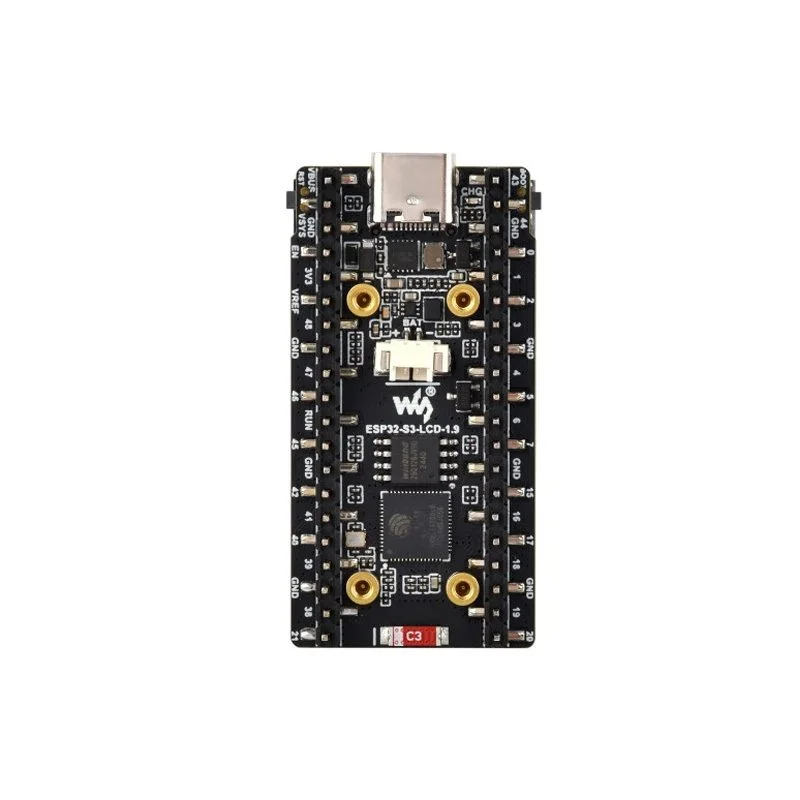
  • Versatile Expansion & Power: Includes a USB Type-C port for programming/debugging, a TF card slot, a lithium battery header, and Raspberry Pi Pico-compatible headers for easy peripheral attachment.
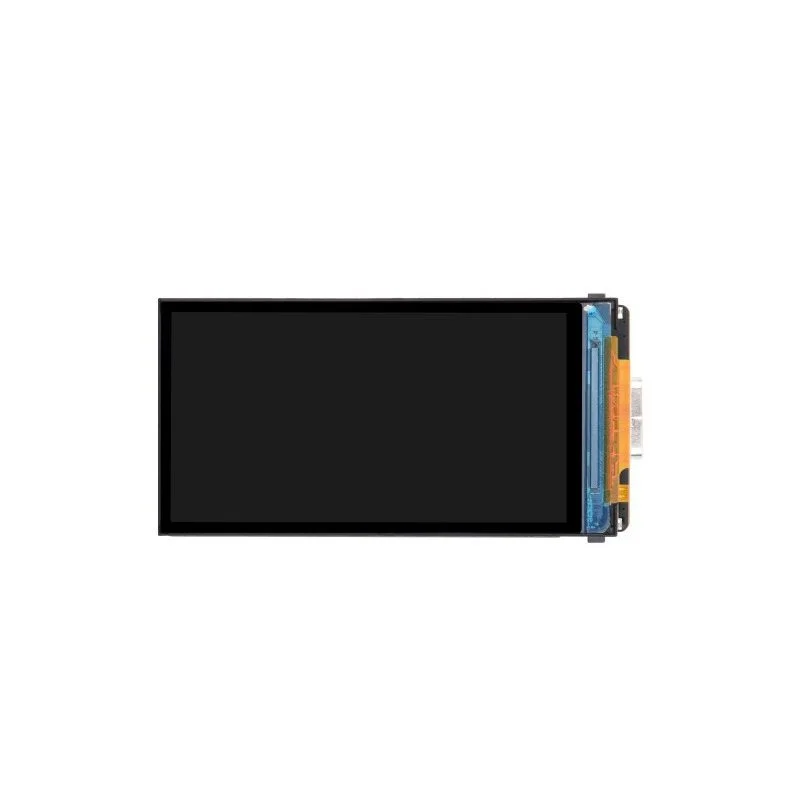
  • Touch & Rotation Options: Available in both touch and non-touch variants, supporting 90° hardware display rotation for flexible orientation in wearables and HMIs.

Out of stock

Description

Designed for rapid prototyping of GUI-centric IoT devices, the Waveshare ESP32-S3 Display Board integrates a high-performance ESP32-S3R8 microcontroller with a crisp 1.9-inch LCD. The dual-core LX7 processor, ample 8MB PSRAM, and dedicated 16MB external flash are optimized for running frameworks like LVGL, enabling responsive touch interfaces and complex animations without external memory bottlenecks.

Its built-in 2.4GHz Wi-Fi and Bluetooth 5 LE stack provide robust wireless connectivity for smart home dashboards, wearable telemetry, and remote control applications. The inclusion of a QMI8658 6-axis IMU adds motion and gesture detection capabilities, perfect for interactive projects. Power management is handled via the USB-C port or an external LiPo battery, supporting portable and low-power deployments.

Key Features

  • High-Performance AIoT Core: ESP32-S3R8 dual-core processor (up to 240MHz) with 512KB SRAM, 16MB Flash, and 8MB PSRAM for demanding GUI and wireless tasks.
  • Rich Color Display: 1.9-inch LCD with 170x320 resolution, 262K colors, and 500 nits brightness for clear, vibrant visuals in any lighting.
  • Dual Wireless Connectivity: Integrated 2.4GHz Wi-Fi (802.11 b/g/n) and Bluetooth 5 Low Energy for IoT networking, data transfer, and peripheral control.
  • Onboard Motion Sensing: 6-axis IMU (QMI8658) provides accelerometer and gyroscope data for gesture recognition and orientation tracking.
  • Extensive I/O & Storage: Features Raspberry Pi Pico-compatible GPIO headers, a microSD (TF) card slot for data logging, and a USB Type-C interface for power and programming.
  • Portable Power Design: Includes a JST-PH connector for attaching a lithium battery, enabling untethered and wearable applications.
  • Display Flexibility: Supports 90-degree hardware screen rotation and is available in capacitive touch and non-touch versions to suit project needs.

Applications

  • Smart Home Control Panels: Create local touchscreen dashboards for managing IoT devices via Wi-Fi or Bluetooth.
  • Wearable Tech & Fitness Devices: Develop portable gadgets with display feedback, motion tracking (IMU), and wireless data sync.
  • Industrial HMI & Telemetry Displays: Build compact, networked interfaces for monitoring sensor data and machine status.
  • Interactive Prototypes & Educational Kits: Ideal for learning embedded GUI development with LVGL on the ESP32-S3 platform.
  • Portable Data Loggers: Use the TF card slot and battery interface for field data collection with visual confirmation.

Technical Specifications

Microcontroller / SoCESP32-S3R8 (32-bit LX7 Dual-Core)
Clock FrequencyUp to 240 MHz
Wireless ProtocolsWi-Fi 802.11 b/g/n (2.4GHz), Bluetooth 5 LE
Onboard Memory512KB SRAM, 16MB Flash, 8MB PSRAM
Display1.9-inch LCD, 170x320 resolution, 262K colors
Display Brightness500 cd/m²
Onboard Sensor6-axis IMU (QMI8658 Accelerometer + Gyroscope)
Power InterfaceUSB Type-C
Expansion InterfacesTF Card Slot, Lithium Battery Header (JST-PH), Pico-compatible GPIO Headers
Dimensions (L x W)50 mm x 25 mm (5.0 cm x 2.5 cm)
Weight13.5 g (Board only)

Frequently Asked Questions

How do I program this Waveshare ESP32-S3 display board?

You can program it using the Arduino IDE with the ESP32 board package, Espressif's ESP-IDF framework, or MicroPython. Connect via the onboard USB Type-C port. In Arduino IDE, select 'ESP32S3 Dev Module' as the board. For display and IMU drivers, you may need to install specific libraries from Waveshare's GitHub repository or the LVGL library for advanced graphical interfaces.

What is the difference between the touch and non-touch versions?

The touch version includes a capacitive touch layer over the 1.9-inch LCD, allowing for direct finger input and interactive controls. The non-touch version is a display-only model, suitable for projects where input is handled via physical buttons or other sensors. Both versions share identical core specs: ESP32-S3R8 chip, wireless connectivity, memory, IMU, and expansion headers. Choose based on your project's user interface requirements.

Can I power the board with a battery and what is the sleep current?

Yes, you can power it via the onboard JST-PH connector for a lithium battery (typically 3.7V). The ESP32-S3 supports multiple low-power sleep modes. While exact sleep current depends on your firmware and active peripherals (like the IMU), the ESP32-S3 core can achieve deep sleep currents in the microamp range. For precise battery life calculation, refer to Espressif's datasheet and disable unnecessary components in software to minimize power draw.

How do I use the TF card slot and what file systems are supported?

The microSD (TF) card slot supports SPI mode communication. Format your card as FAT16 or FAT32. In your code, use the standard SD library in Arduino or the 'sdmmc' component in ESP-IDF. You'll need to define the correct SPI pins (typically HSPI) in your setup. This slot is ideal for storing images for the display, logging sensor data from the IMU, or serving web page assets for a Wi-Fi connected project.

Is the display compatible with the LVGL graphics library?

Yes, the combination of the ESP32-S3's processing power, 8MB PSRAM for frame buffering, and the color LCD makes it an excellent platform for LVGL. You will need to install the LVGL library and configure the display driver (likely using SPI or parallel interface) and touch driver if using the touch version. Waveshare may provide example code. Ensure your project allocates sufficient PSRAM in the ESP-IDF menuconfig or Arduino partition scheme for smooth graphics performance.

Package Includes

  • 1 x Waveshare ESP32-S3 1.9inch Display Development Board

Additional Information

Weight 0.0135 kg
Dimensions 5 × 2.5 cm