SKU: IOWC-0145
📋 GST Invoice Available

Adafruit nRF52840 Sensor Board w/ LIS3DH & PDM Mic

₹2,759.00 (Inclusive of all taxes)
Out of Stock

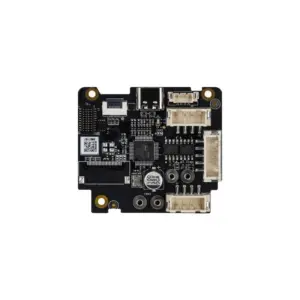
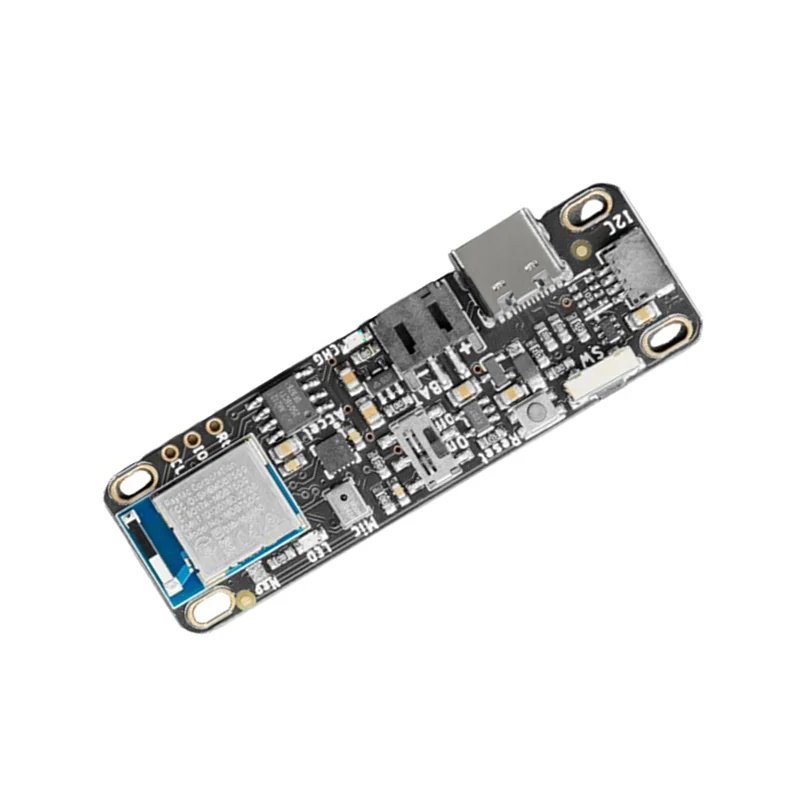
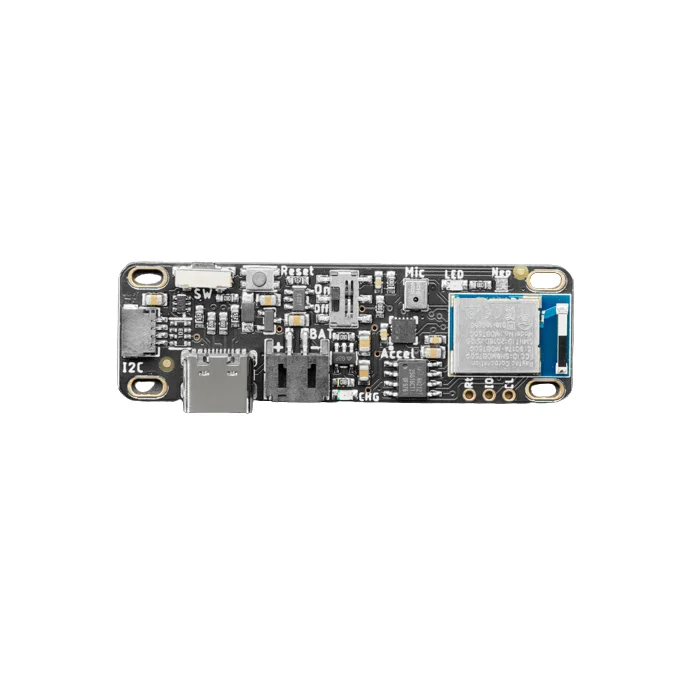
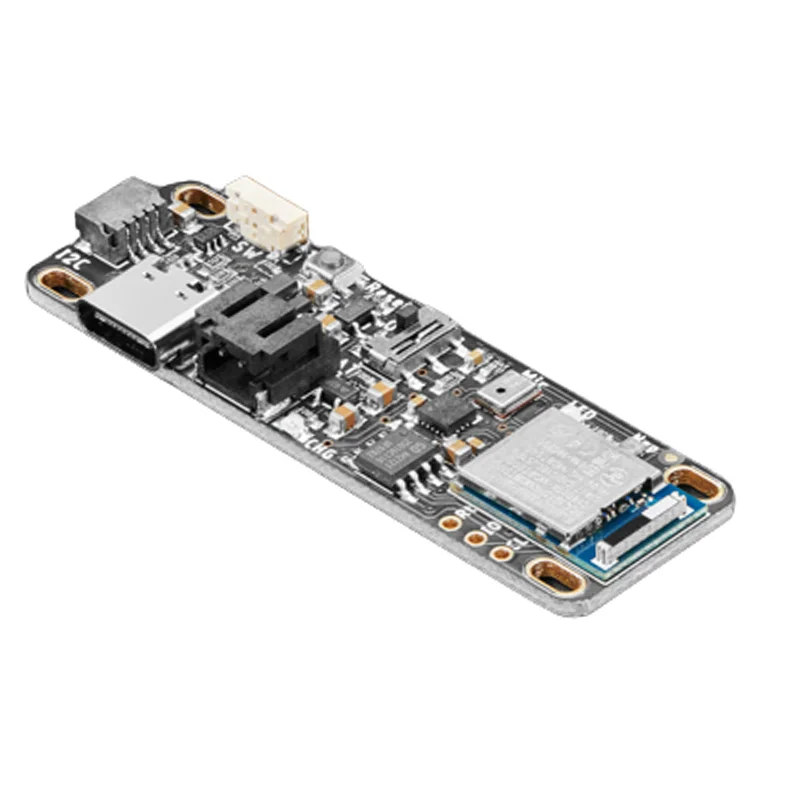
The Adafruit nRF52840 Sensor Board is a compact, Bluetooth Low Energy 5.0 development platform featuring an ARM Cortex-M4F processor, built-in LIS3DH accelerometer, PDM microphone, and STEMMA QT connector for rapid I2C sensor integration, ideal for wearable tech and IoT edge nodes.

Features

  • Nordic Semiconductor nRF52840 SoC with ARM Cortex-M4F processor running at 64 MHz, 1 MB Flash, and 256 KB SRAM for robust BLE application development.
  • FCC/IC/TELEC-certified BLE radio with up to +8 dBm output power for extended wireless range and reliable connectivity.
  • Integrated sensors include a LIS3DH 3-axis accelerometer and a PDM microphone for motion and audio sensing applications.
  • Features 2 MB external QSPI flash dedicated for CircuitPython file storage, enabling easy scripting and rapid prototyping.
  • Equipped with a STEMMA QT connector for plug-and-play I2C expansion and a JST PH port for optional LiPo battery support.

Out of stock

Description

Designed as a slim driver for Adafruit LED Glasses, this nRF52840 board doubles as a capable standalone development platform for Bluetooth Low Energy projects. Its architecture centers on the Nordic Semiconductor nRF52840 system-on-chip, combining a 64 MHz ARM Cortex-M4F processor with hardware floating-point acceleration, 1 MB of internal flash, and 256 KB SRAM to handle complex BLE protocols and sensor data processing efficiently.

The board’s compact form factor omits breakout pins to maintain a minimal profile, making it ideal for space-constrained wearable and embedded designs. Power management is facilitated through an integrated JST PH connector supporting single-cell LiPo batteries with optional charging, while the onboard 2 MB QSPI flash provides ample storage for CircuitPython code and file systems. The integrated LIS3DH accelerometer and PDM microphone enable immediate motion and audio sensing without external components.

Wireless connectivity is delivered via a pre-certified BLE module supporting Bluetooth 5.0, ensuring compliance for commercial deployments in regions covered by FCC, IC, and TELEC. The STEMMA QT connector standardizes I2C expansion, allowing rapid daisy-chaining of compatible sensors and actuators to build sophisticated IoT nodes with minimal wiring.

Key Features

  • Nordic Semiconductor nRF52840 SoC with 64 MHz ARM Cortex-M4F core and hardware floating-point unit for efficient signal processing.
  • Pre-certified Bluetooth Low Energy 5.0 radio module with +8 dBm transmit power for robust, long-range wireless links.
  • Onboard LIS3DH triple-axis accelerometer and digital PDM microphone for immediate motion and audio capture.
  • Dedicated 2 MB QSPI flash memory chip for CircuitPython file system storage and over-the-air (OTA) updates.
  • STEMMA QT 4-pin JST SH connector enables plug-and-play I2C expansion with a wide ecosystem of sensors and displays.
  • JST PH 2-pin port for single-cell LiPo battery connection with integrated charging circuitry for portable applications.
  • Compact, feather-compatible form factor optimized for wearable integration and space-constrained embedded enclosures.
  • User-indicator LEDs include a red general-purpose LED and a RGB NeoPixel for system status and colorful feedback.

Applications

  • Wearable technology and smart glasses drivers for LED Matrix displays.
  • Bluetooth Low Energy sensor nodes for environmental monitoring and data logging.
  • Prototyping platform for IoT edge devices using CircuitPython for rapid development.
  • Motion-activated and audio-sensitive gadgets for interactive art installations.
  • Compact BLE beacons for asset tracking, indoor positioning, and proximity sensing.

Technical Specifications

Microcontroller / SoCNordic Semiconductor nRF52840 (ARM Cortex-M4F)
Wireless ProtocolBluetooth Low Energy 5.0 (BLE)
CPU Clock Speed64 MHz
Flash Memory1 MB Internal + 2 MB External QSPI
SRAM256 KB
RF Transmit PowerUp to +8 dBm
Supply Voltage3.3V (via USB or LiPo)
Onboard SensorsLIS3DH Accelerometer, PDM Microphone
Expansion InterfaceSTEMMA QT (I2C)
Power ConnectorJST PH for LiPo Battery
CertificationsFCC, IC, TELEC
DimensionsApprox. 56 mm x 23 mm (Feather-compatible)

Frequently Asked Questions

How do I program this Adafruit nRF52840 board?

You can program it using the Arduino IDE with the Adafruit nRF52 board support package, CircuitPython via the built-in UF2 bootloader, or the Nordic Semiconductor SDK (nRF5 SDK/Segger Embedded Studio). For CircuitPython, drag the firmware .uf2 file to the board's BOOT drive that appears when you double-click the reset button. The 2 MB external QSPI flash is automatically used for your code.py file and library storage.

What is the purpose of the STEMMA QT connector?

The STEMMA QT connector is a 4-pin JST SH port providing plug-and-play I2C connectivity. It supplies 3.3V power, ground, SDA, and SCL lines, allowing you to daisy-chain compatible sensors, displays, or actuators without soldering. This accelerates prototyping for IoT projects by enabling quick sensor integration like temperature, humidity, or OLED screens.

Can I power the board with a battery and what is the sleep current?

Yes, you can power it via the JST PH 2-pin connector using a single-cell 3.7V LiPo battery. The onboard charger manages charging when USB is connected. For power efficiency, the nRF52840 supports multiple low-power sleep modes. Using the built-in power management libraries in CircuitPython or the nRF5 SDK, you can achieve sleep currents in the microampere range, making it suitable for long-term battery-operated sensor nodes.

How do I use the onboard LIS3DH accelerometer and microphone?

In CircuitPython, use the adafruit_lis3dh library to read acceleration data from the LIS3DH over I2C. For the PDM microphone, use the adafruit_pdm microphone library to capture digital audio. In Arduino, utilize the Adafruit_LIS3DH and PDM libraries included in the nRF52 BSP. The sensors are pre-wired to the nRF52840's I2C and PDM interfaces, so no external wiring is required.

Is this board compatible with Adafruit LED Glasses and other Feather wings?

This board is specifically designed as a driver for Adafruit LED Glasses, connecting via the 24-pin FPC connector. However, its form factor is similar to a Feather but without breakout pins, so it is not directly pin-compatible with standard Feather wings. For GPIO access, Adafruit recommends using an nRF52840 ItsyBitsy, Feather, or Feather Sense board instead.

Package Includes

  • 1 x Adafruit LED Glasses Driver - nRF52840 Sensor Board

Additional Information

Weight 0.004 kg
Dimensions 14 × 8 × 2 cm