SKU: SBCD-0302
📋 GST Invoice Available

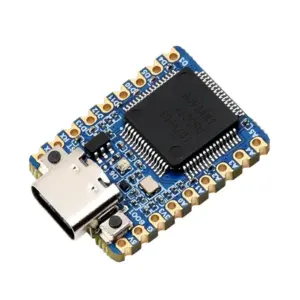
Adafruit QT Py SAMD21 Dev Board w/ STEMMA QT

₹999.00 (Inclusive of all taxes)
Out of Stock

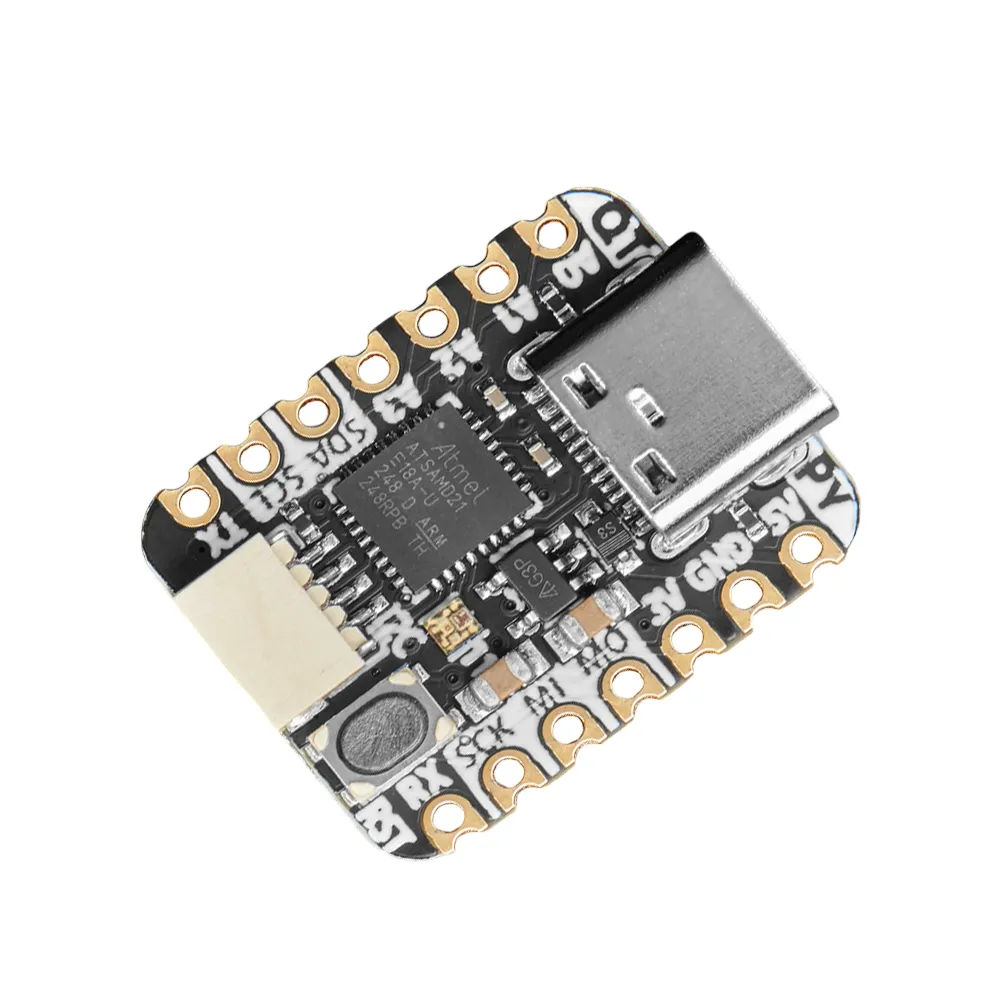
The Adafruit QT Py SAMD21 is a compact development board featuring the ATSAMD21E18 ARM Cortex-M0+ microcontroller, designed for easy prototyping. It integrates a STEMMA QT (Qwiic-compatible) connector for plug-and-play I2C sensor integration and supports both Arduino and CircuitPython programming environments.

Features

  • Features the ATSAMD21E18 ARM Cortex-M0+ MCU with 256KB Flash and 32KB RAM.
  • Integrated STEMMA QT (Qwiic-compatible) I2C connector for solderless peripheral expansion.
  • USB Type-C port supports native USB functions including serial console, MIDI, and HID.
  • Fully compatible with Arduino IDE and CircuitPython for flexible development.
  • Compact, Seeed Studio Xiao-compatible form factor with castellated pads for versatile mounting.

Out of stock

Description

The Adafruit QT Py SAMD21 is a versatile and compact development board built around the powerful ATSAMD21E18 32-bit ARM Cortex-M0+ microcontroller, operating at 48 MHz. This board simplifies embedded development with its innovative STEMMA QT connector, offering a plug-and-play I2C interface that is fully compatible with SparkFun Qwiic sensors and accessories. This feature dramatically reduces prototyping time by eliminating the need for soldering when integrating I2C peripherals.

Designed for flexibility, the QT Py SAMD21 is compatible with both the Arduino IDE, leveraging its extensive library ecosystem, and CircuitPython, providing an accessible MicroPython-based environment for rapid script deployment. Its native USB support allows the board to act as a USB serial console, MIDI device, keyboard/mouse HID, or even a small disk drive for storing Python scripts, enhancing its utility across various projects. The board’s form factor is identical to the Seeed Studio Studio XIAO series, including castellated pads for surface mounting onto custom PCBs.

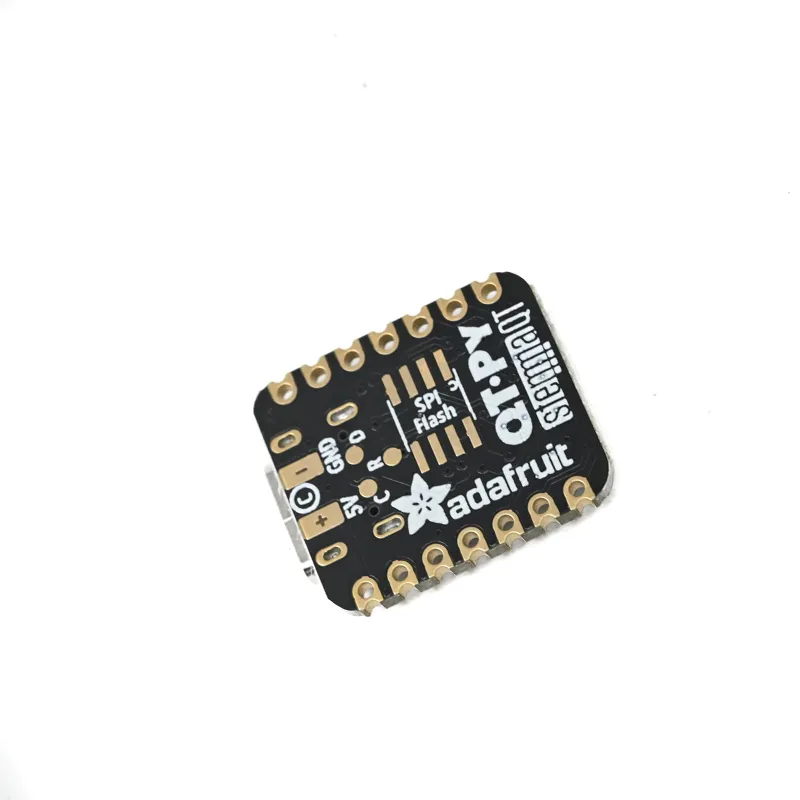
Beyond its core processing capabilities and connectivity, the QT Py includes an onboard RGB NeoPixel LED with controllable power for low-power applications and a convenient reset button. It offers 11 GPIO pins, including true analog output, multiple 12-bit analog inputs, and PWM outputs. An optional SOIC SPI flash chip can be added to the bottom pads for expanded data logging or file storage needs, making it a robust platform for everything from IoT sensor nodes to compact automation systems.

Key Features

  • Same compact size, form-factor, and pin-out as Seeed Studio Studio XIAO boards.
  • USB Type-C connector for power and data communication.
  • Integrated ATSAMD21E18 32-bit ARM Cortex M0+ processor running at 48 MHz.
  • 256KB Flash memory and 32KB RAM for program and data storage.
  • Native USB support enables USB serial, MIDI, HID, and disk drive functionalities.
  • Compatible with Arduino IDE for C/C++ programming and CircuitPython for Python-based development.
  • Built-in RGB NeoPixel LED with a controllable power pin for ultra-low-power usage.
  • 11 versatile GPIO pins, including one true analog output and nine 12-bit analog inputs.
  • Multiple hardware interfaces: I2C (with STEMMA QT connector), UART, SPI, and I2S.
  • Support for up to 6 capacitive touch inputs without additional external components.
  • Onboard 3.3V regulator providing a 600mA peak output for powering peripherals.
  • Pads available for an optional SOIC-8 SPI Flash chip on the bottom for extended storage.
  • Reset switch simplifies program restarts and entering bootloader mode.

Applications

  • Compact IoT sensor nodes and data loggers.
  • Wearable electronics and low-power devices.
  • HID (Human Interface Device) projects like custom keyboards or mice.
  • Basic automation and robotics control.
  • Embedded audio playback with true analog output.
  • Rapid prototyping with I2C peripherals via STEMMA QT.

Technical Specifications

Core ProcessorARM Cortex-M0+
Utilized IC / PartATSAMD21E18
Clock Speed48 MHz
Flash Memory256 KB (internal)
RAM32 KB
USB InterfaceUSB Type-C
GPIO Pins11
Analog Inputs9 x 12-bit
Analog Outputs1 x True 10-bit DAC
PWM Outputs9
Wireless ProtocolsNone (external modules required)
Supply Voltage3.3V (regulated output)
Mounting TypeFixed / Castellated Pads
Platform CompatibilityArduino, CircuitPython

Frequently Asked Questions

What is the core microcontroller on the Adafruit QT Py SAMD21?

It features the ATSAMD21E18, an ARM Cortex-M0+ processor operating at 48 MHz. This MCU includes 256KB of flash memory and 32KB of RAM, providing ample resources for various embedded projects requiring efficient processing and storage within a compact form factor for makers and developers.

How does the STEMMA QT connector enhance prototyping with this board?

The STEMMA QT connector provides a plug-and-play I2C interface, compatible with SparkFun Qwiic ecosystems. This eliminates the need for soldering when connecting compatible sensors and accessories, significantly speeding up development and enabling quick experimentation with various I2C modules for rapid prototyping and project iteration.

What programming environments are supported by the Adafruit QT Py SAMD21?

The board is fully compatible with both the Arduino IDE and CircuitPython. Arduino offers a vast library ecosystem for C/C++ development, while CircuitPython provides an accessible MicroPython-based environment for rapid prototyping, making it versatile for both beginners and experienced developers in embedded systems. It streamlines software deployment.

Can the Adafruit QT Py SAMD21 be used for data logging?

Yes, while the internal flash is limited, the Adafruit QT Py SAMD21 includes pads for an optional SOIC-8 SPI flash chip on the bottom. Soldering an external SPI flash chip allows for significantly expanded storage capacity, making the board suitable for more extensive data logging or storing larger CircuitPython scripts and files.

Package Includes

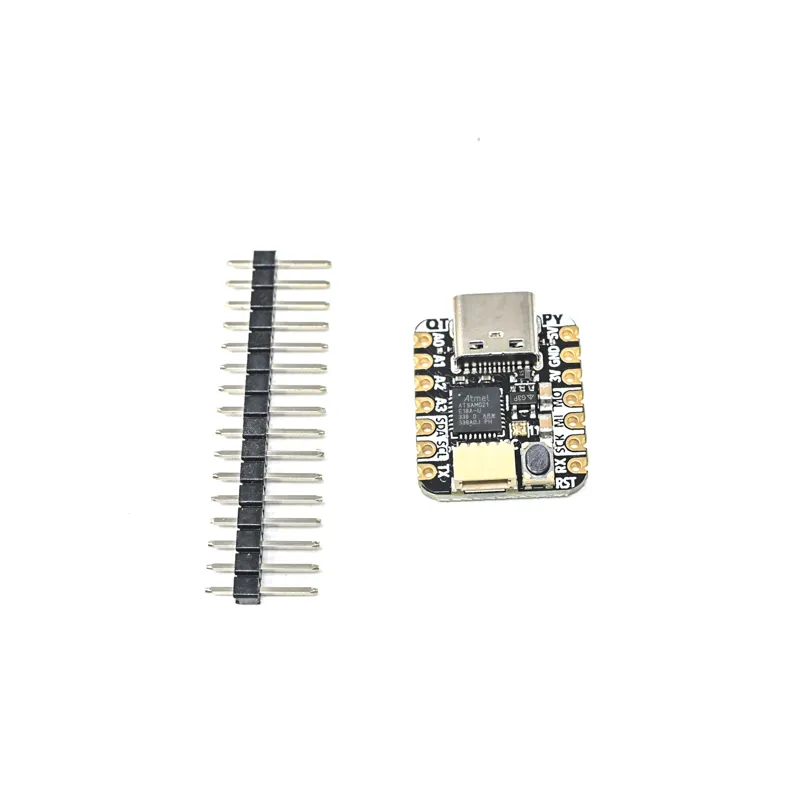
  • 1 x Adafruit QT Py - SAMD21 Dev Board with STEMMA QT

Additional Information

Weight 0.004 kg
Dimensions 10 × 7.5 × 1 cm