SKU: SBCD-0095
📋 GST Invoice Available

SparkFun QuickLogic Thing Plus - EOS S3 Development Board

₹3,959.00 (Inclusive of all taxes)
Out of Stock

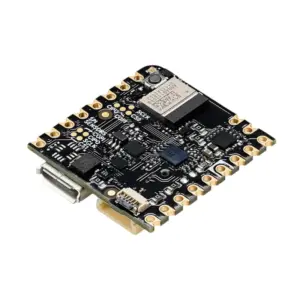
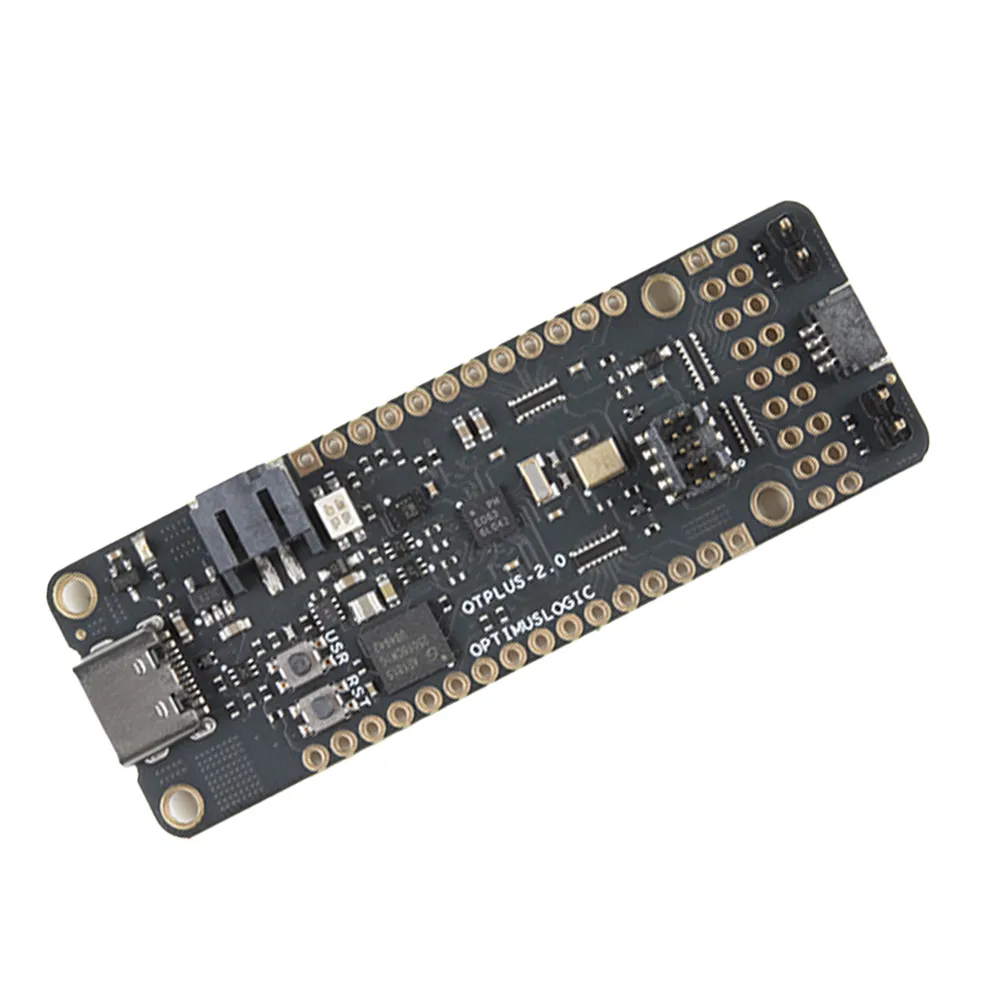
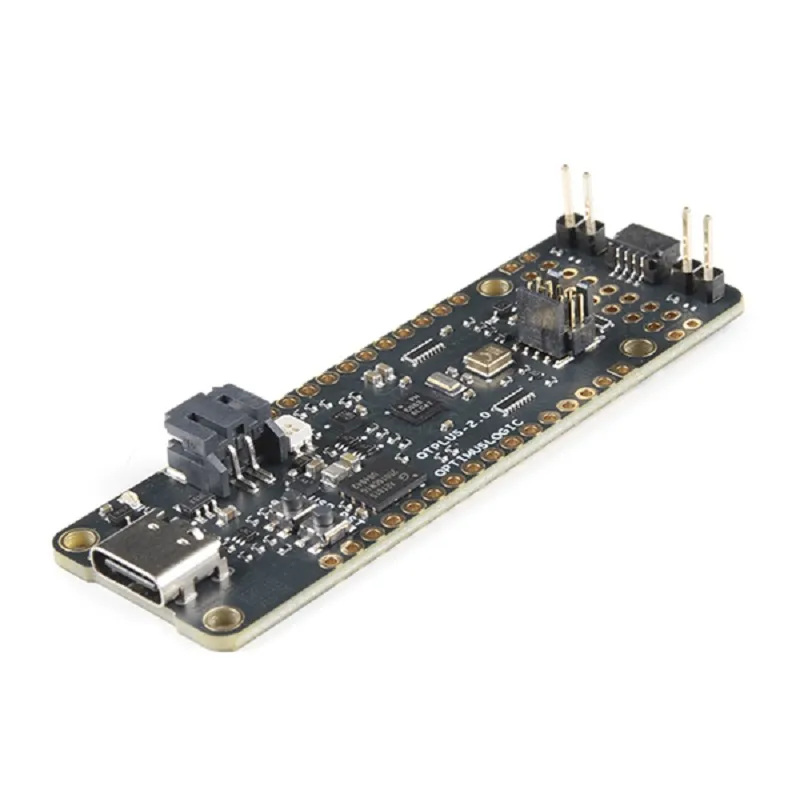
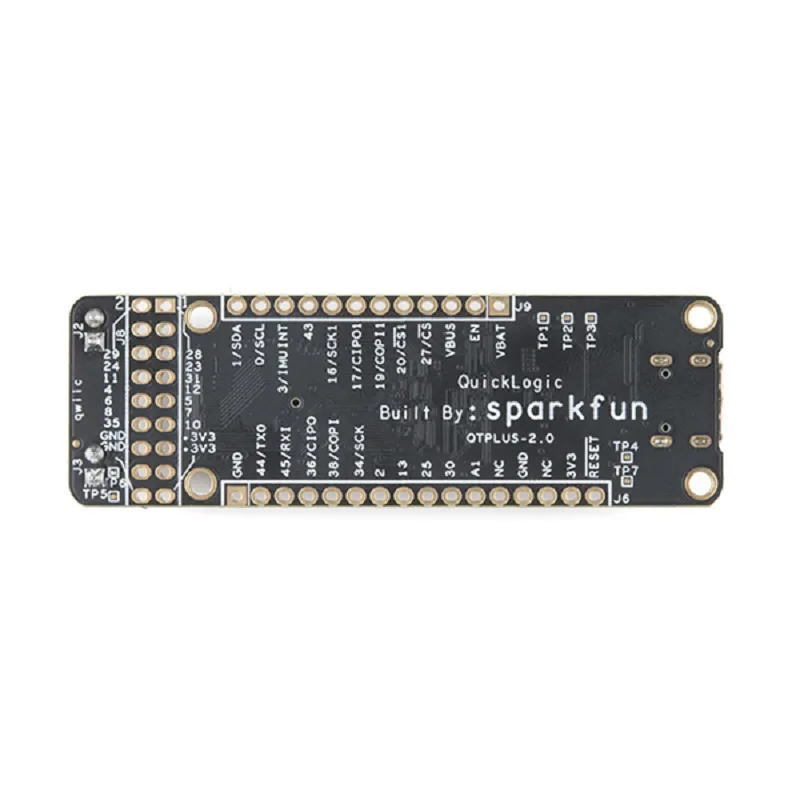
The SparkFun QuickLogic Thing Plus – EOS S3 is a compact Feather-compatible development board featuring QuickLogic’s EOS S3, an Arm Cortex-M4F MCU integrated with an embedded FPGA. Designed for low-power machine learning and edge AI applications, it offers robust support for Zephyr RTOS and FreeRTOS within a 100% open-source ecosystem.

Features

  • Features QuickLogic’s EOS S3: Arm Cortex-M4F MCU with integrated embedded FPGA.
  • Designed for low-power machine learning and edge AI applications with on-device inference.
  • 100% open-source hardware (Feather-compatible) and software stack including Zephyr RTOS and FreeRTOS.
  • Includes onboard LiPo charging, PDM microphone, and 3-axis accelerometer for sensing applications.
  • Equipped with a Qwiic connector for easy expansion with I2C peripherals.

Out of stock

Description

The SparkFun QuickLogic Thing Plus is a compact development platform based on QuickLogic’s EOS S3, an innovative SoC combining an Arm Cortex-M4F microcontroller with an embedded FPGA. This powerful combination is specifically engineered for the next generation of low-power Machine Learning (ML) devices, offering seamless integration with widely supported RTOS such as Zephyr and FreeRTOS. Distinguishing itself from proprietary solutions, the QuickLogic Thing Plus is built on a fully open-source hardware design, maintaining compatibility with the Feather form factor, and supports an entirely open-source software toolchain including Minden, Docker, and SymbiFlow.

This Thing Plus board is ideally suited for wearable, voice, and gesture sensing applications, thanks to its onboard LiPo battery connector with charging circuitry, a wake-on-sound PDM microphone, and a low-power, three-axis accelerometer. The robust firmware support simplifies the process of transferring sensor data directly into the embedded FPGA. Developers can then leverage tools like SensiML, TensorFlow Lite, or other frameworks to train and deploy embedded machine learning algorithms tailored to specific application requirements. Further expandability is provided by a convenient Qwiic connector, enabling quick interfacing with an extensive ecosystem of over 150 I2C-compatible boards, ranging from sensors and RFID readers to displays and relays.

Key Features

  • Single-cell LiPo battery support with onboard Microchip Technology MCP73831/2 charging circuitry.
  • Standard LiPo JST connector for battery integration.
  • SWD programming connector facilitates debugging and firmware upload via USB-TTL converter.
  • USB data signals directly tied to the eFPGA programmable logic for flexible peripheral interfacing.
  • UART available via I/O headers for serial communication.
  • Integrated wake-on-sound PDM microphone for audio input.
  • Low-power, three-axis accelerometer for motion sensing.
  • Qwiic connector for plug-and-play I2C peripheral expansion.

Applications

  • Low-power edge AI inference and embedded machine learning applications.
  • Wearable devices requiring voice and gesture sensing.
  • Audio processing and wake-on-sound applications.
  • Industrial sensing and monitoring with integrated acceleration data.
  • Rapid prototyping of Feather-compatible IoT devices.

Technical Specifications

Microcontroller ChipArm® Cortex®-M4F
Max. Clock Frequency80 MHz
SRAM512 KB
Input Voltage3.3 V
Interface TypeI2C, UART, USB
USBUSB Type-C
Length70 mm
Width24 mm
Weight8 g

Frequently Asked Questions

What is the primary advantage of the EOS S3 SoC on this board?

The EOS S3 integrates an Arm Cortex-M4F MCU with an embedded FPGA, offering a unique combination of processing power and hardware configurability. This architecture is ideal for low-power machine learning tasks and custom hardware acceleration at the edge, enhancing efficiency and reducing latency for dedicated functions.

What development environments and RTOS are supported by the QuickLogic Thing Plus?

This board boasts 100% open-source software support, including comprehensive integration with Zephyr RTOS and FreeRTOS. Developers can utilize open-source toolchains like SymbiFlow for FPGA development and leverage frameworks such as SensiML and TensorFlow Lite for embedded machine learning model deployment.

How does the Qwiic connector enhance the board's functionality?

The Qwiic connector provides a solderless, plug-and-play interface for connecting to an extensive ecosystem of I2C-compatible sensors, actuators, and displays from SparkFun and other manufacturers. This significantly simplifies prototyping and expansion, allowing for rapid integration of additional peripherals without complex wiring.

Can this board be powered by a battery?

Yes, the board includes a standard LiPo JST connector and integrated charging circuitry (Microchip Technology MCP73831/2), enabling direct power from a single-cell LiPo battery. This feature makes it highly suitable for portable, wearable, and low-power remote sensing applications where continuous power from a wall adapter is not feasible.

What on-board sensors are included with the SparkFun QuickLogic Thing Plus?

The board comes equipped with a wake-on-sound PDM microphone for audio input and a low-power, three-axis accelerometer for motion and gesture sensing. These integrated sensors are crucial for applications requiring environmental monitoring or user interaction without needing external modules.

Package Includes

  • 1 x SparkFun QuickLogic Thing Plus - EOS S3 Development Board

Additional Information

Weight 0.008 kg
Dimensions 7 × 2.4 cm