SKU: IOWC-1327
📋 GST Invoice Available

Espressif ESP32-S3-BOX-3B AIoT Kit w/ 2.4-Inch Touchscreen

₹5,649.00 (Inclusive of all taxes)
Out of Stock

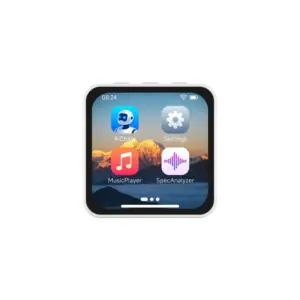
The Espressif ESP32-S3-BOX-3B is a fully open-source AIoT evaluation kit built around the ESP32-S3 SoC, featuring a 2.4-inch capacitive touchscreen, dual microphones, and a speaker for developing edge AI and HMI applications with Wi-Fi, Bluetooth LE 5.0, and offline voice recognition.

Features

  • Powered by the ESP32-S3 dual-core Xtensa LX7 processor (240 MHz) with AI acceleration, 16MB flash, and 8MB PSRAM for demanding edge computing tasks.
  • Integrated 2.4-inch (320×240) SPI capacitive touchscreen and ES8311 audio codec with dual digital mics & speaker for rich human-machine interface (HMI) development.
  • Comprehensive offline voice assistant framework supports far-field interaction, continuous recognition, wake-word interruption, and over 200 customizable command words.
  • Out-of-the-box compatibility with ESP-IDF, Arduino, PlatformIO, and CircuitPython for rapid prototyping of AIoT, smart home, and industrial automation projects.
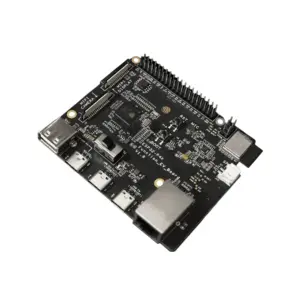
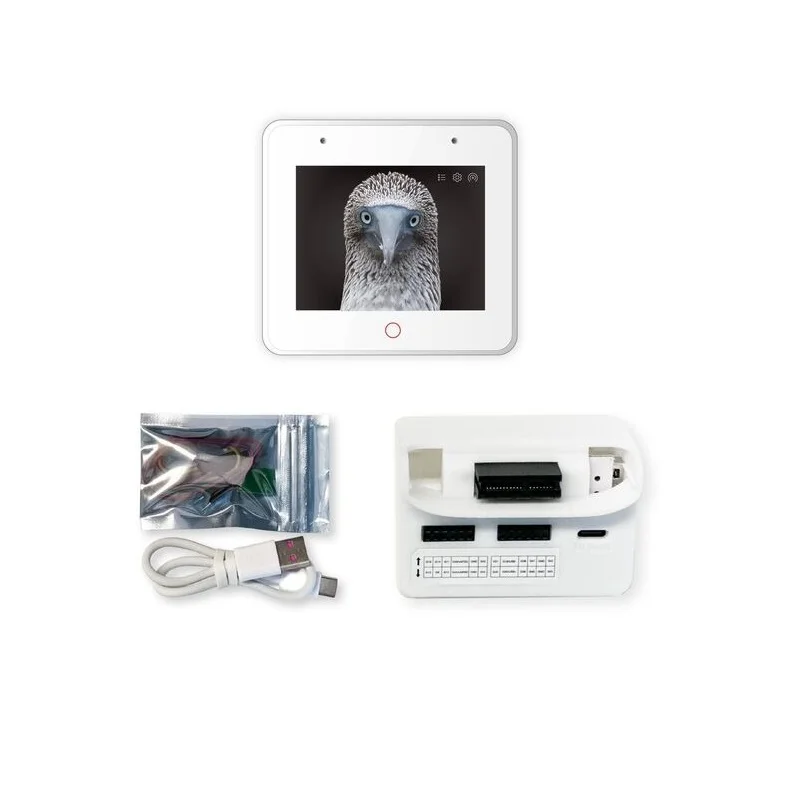
  • Includes expansion dock with high-density PCIe connector and dual Pmod ports for hardware extensibility and peripheral integration.

Out of stock

Description

The ESP32-S3-BOX-3B is a next-generation, production-ready AIoT development platform from Espressif. It integrates the feature-rich ESP32-S3 SoC, which provides dual-core 240 MHz processing, 2.4 GHz Wi-Fi 802.11b/g/n, and Bluetooth 5 LE with mesh support, all enhanced with vector and FFT computing acceleration for neural network and acoustic algorithms. The kit is designed as a complete voice-and-touch interactive panel, enabling developers to build sophisticated edge AI applications with local processing, eliminating cloud dependency for core voice commands.

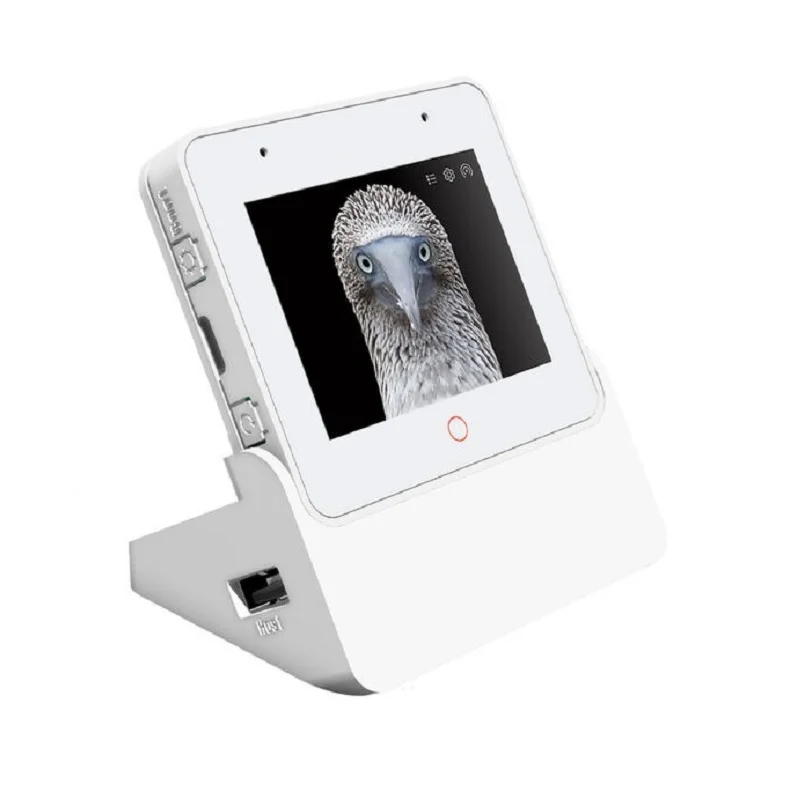
Beyond its core compute and wireless connectivity, the board includes a suite of onboard peripherals: a 2.4-inch ILI9342C-driven LCD with 10-point capacitive touch, an ES7210 ADC for dual digital MEMS microphones, and an ES8311 audio codec paired with an NS4150 power amplifier for high-quality audio playback. This hardware ensemble, combined with Espressif’s ESP-SR (Speech Recognition) framework, facilitates advanced features like far-field voice pickup, offline wake-word detection, and customizable command recognition. The included dock provides a stable base and exposes expansion interfaces, including a PCIe connector and standard Pmod ports, for adding sensors, actuators, or communication modules.

Key Features

  • Open-source AIoT evaluation kit centered on the ESP32-S3 Wi-Fi + Bluetooth 5 LE SoC with hardware AI acceleration.
  • Integrated 2.4-inch capacitive touchscreen display (320x240) provides a visual interface for status monitoring and user interaction.
  • Dual digital microphone array and built-in speaker enable offline voice assistant capabilities with far-field interaction.
  • Supports Espressif's ESP-SR framework for offline wake-word detection, continuous speech recognition, and over 200 customizable commands.
  • High-density PCIe connector and dual Pmod ports on the included dock allow for extensive hardware expansion and prototyping.
  • Compatible with major development frameworks including ESP-IDF, Arduino IDE, PlatformIO, and CircuitPython for flexible firmware development.
  • Onboard sensors include a 6-axis IMU (ICM-42607-P) for motion sensing applications like gesture control.
  • Designed for edge AI applications, smart home controllers (Matter, ESP RainMaker, Home Assistant), and industrial HMI panels.

Applications

  • Offline Voice-Controlled Smart Home Hubs and Matter Controllers.
  • Edge AI and Human-Machine Interface (HMI) Panels for Industrial IoT (IIoT) and Industry 4.0.
  • Prototyping Interactive Consumer Devices (Smart Displays, Handheld Consoles, AI Chatbots).
  • Educational Tool for AI, Machine Learning, and Embedded Systems Development.
  • Rapid Development Platform for ESP-RainMaker and Home Assistant-Based Automation.

Technical Specifications

Microcontroller/SoCEspressif ESP32-S3 (Dual-Core Xtensa LX7, 240 MHz)
Wireless Protocols2.4 GHz Wi-Fi 802.11b/g/n, Bluetooth 5.0 LE & Mesh
Memory16MB Quad SPI Flash, 512KB SRAM, 8MB Octal PSRAM
Display2.4-inch LCD, 320 x 240 pixels, Capacitive Touch (10-point)
AudioDual Digital Microphones (ES7210 ADC), Speaker (ES8311 Codec, NS4150 PA)
Sensor6-Axis IMU (ICM-42607-P: 3-axis Gyro + 3-axis Accel)
Power SupplyUSB Type-C, 5V/2A
Expansion InterfacesHigh-Density PCIe Connector, 2x Pmod Ports, USB-C
Development FrameworksESP-IDF, Arduino, PlatformIO, CircuitPython
Operating SystemFreeRTOS

Frequently Asked Questions

How do I start programming the ESP32-S3-BOX-3B?

Install the ESP-IDF framework via VS Code Extension or download it directly. Connect the board via USB-C, select the COM port, and open the example projects from esp-box repository. You can also use Arduino IDE by adding the ESP32-S3 board URL in preferences and selecting the appropriate board variant. For PlatformIO, create a new project and choose Espressif ESP32-S3-Box-3 as the target.

Can the onboard voice recognition work without an internet connection?

Yes, the ESP-SR (Speech Recognition) framework provides fully offline wake-word detection and command recognition. You can train the model with custom wake words and define over 200 command phrases locally on the device's flash memory. This makes it ideal for privacy-focused or latency-sensitive applications where cloud connectivity is unreliable or undesired.

What is the purpose of the included DOCK accessory?

The DOCK provides a stable physical base, a USB-C power/data port, and exposes the board's high-density PCIe connector and two standard Pmod ports. This allows you to securely mount the unit and easily connect expansion peripherals like sensor modules, actuators, or additional communication interfaces without directly soldering to the main board's delicate connectors.

Which development frameworks are officially supported?

Espressif officially supports development with ESP-IDF, which offers the deepest hardware access and latest features. The board is also compatible with the Arduino Core for ESP32, PlatformIO, and CircuitPython. Extensive documentation and example code are provided for ESP-IDF and Arduino, covering the display, touch, audio, and voice recognition functionalities.

What power supply is required for the ESP32-S3-BOX-3B?

The board is powered via the USB Type-C port on the main unit or the dock, requiring a standard 5V/2A (10W) supply. Ensure your USB charger or host port can deliver sufficient current, especially when driving the speaker at high volume or using power-hungry peripherals connected via the expansion ports to avoid instability or brownouts.

Package Includes

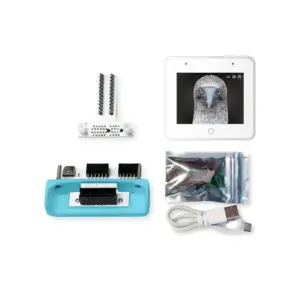
  • 1 x ESP32-S3-BOX-3 Main Board
  • 1 x ESP32-S3-BOX-3-DOCK Expansion Base
  • 1 x USB-C Power Cable

Additional Information

Weight 0.343 kg
Dimensions 18 × 11 × 8 cm