SKU: IOWC-0966
📋 GST Invoice Available

Amotech Labs 8051 Development Board w/ USB-C & ISP Programmer

₹1,375.00 (Inclusive of all taxes)
Out of Stock

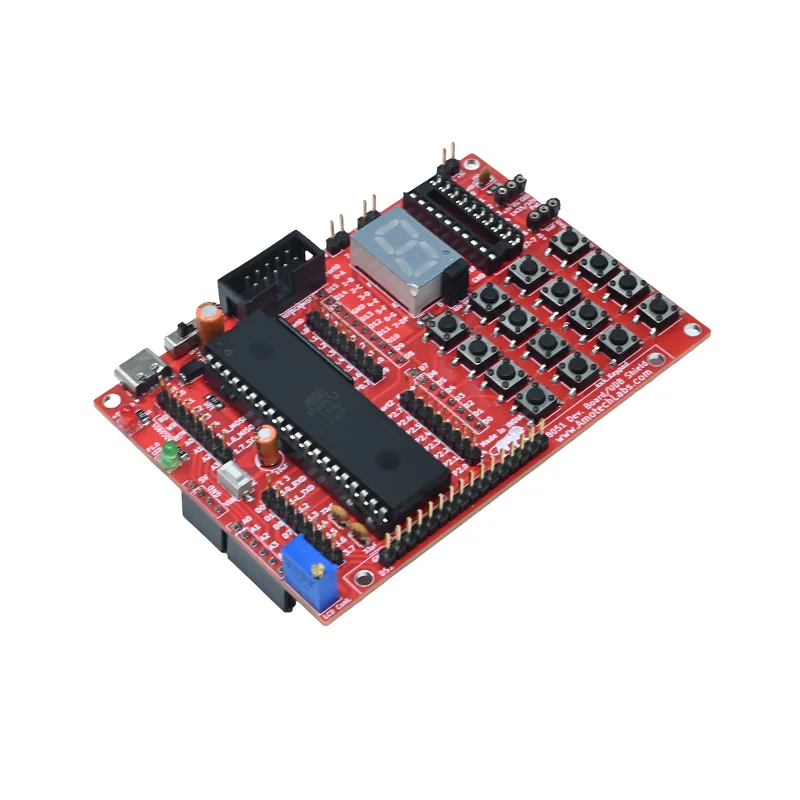
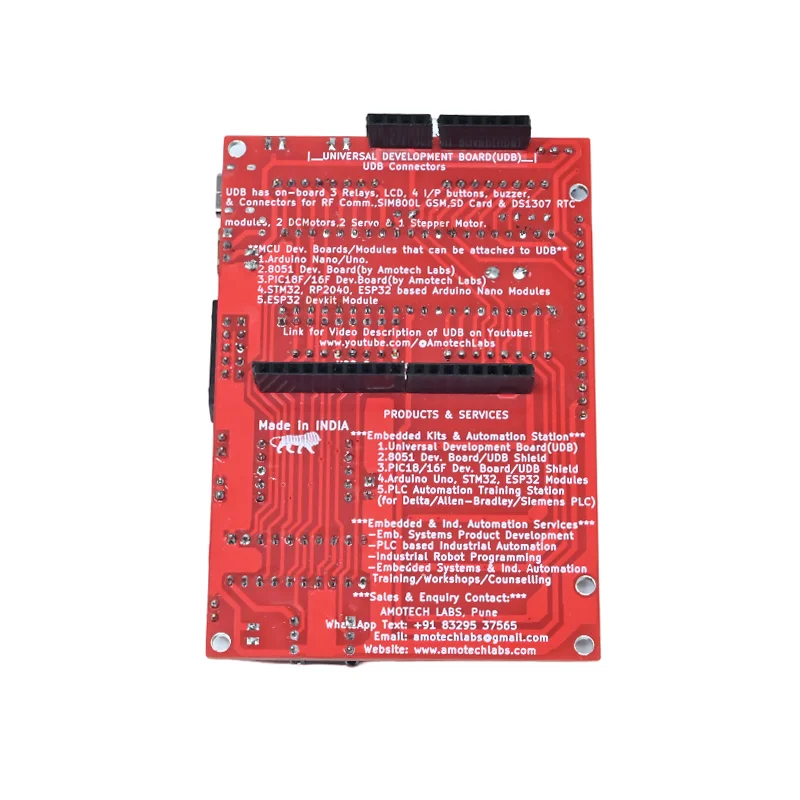
The Amotech Labs 8051 Development Board is a USB-C powered platform for prototyping and learning with classic 8051-family 40-pin DIP microcontrollers like AT89S52, featuring integrated keypad, seven-segment display, LEDs, and an ADC0804 analog interface.

Features

  • Supports all 8051-family 40-pin DIP microcontrollers (AT89S52, AT89C51) for classic embedded development.
  • Integrated 4×4 Matrix keypad, seven-segment display, and output LEDs for hands-on I/O experiments without external wiring.
  • On-board ADC0804 interface with LM35/potentiometer support for analog sensor and signal input projects.
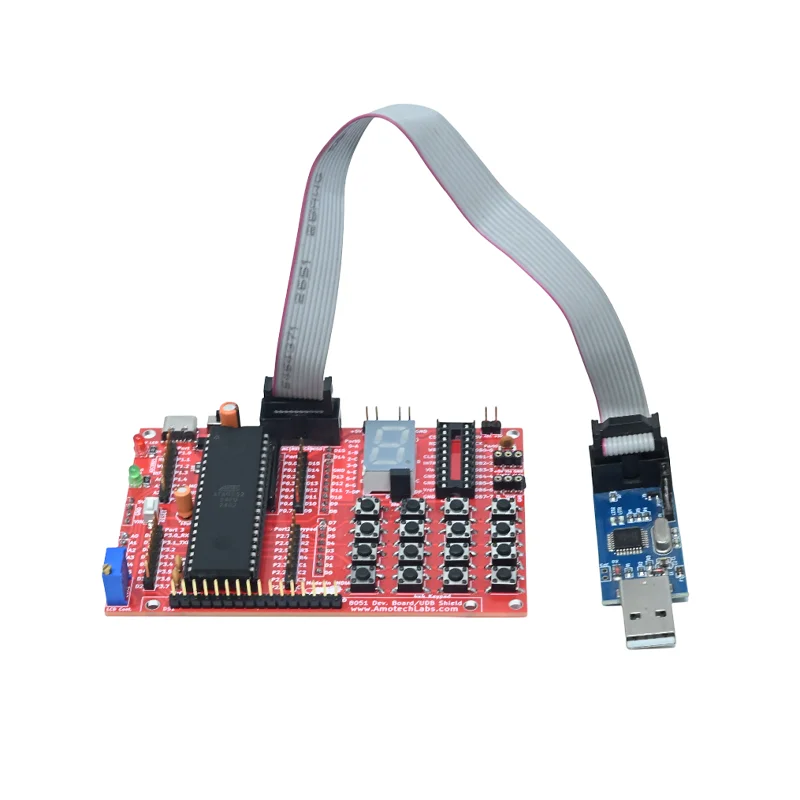
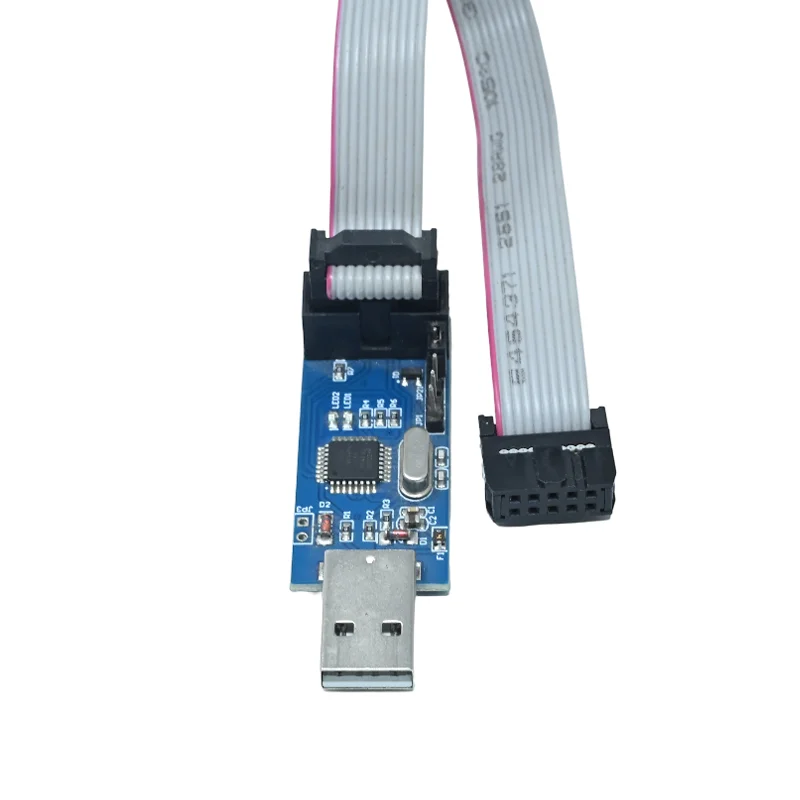
  • USB-C powered (5V DC) and includes USBasp ISP programmer for convenient in-system programming and power delivery.
  • Dedicated port I/O pin connectors and LCD header (16×2/20×4) for easy peripheral expansion and project scaling.

Out of stock

Description

The Amotech Labs 8051 Development Board provides a comprehensive, all-in-one prototyping environment for the classic 8-bit 8051 microcontroller architecture. Designed for students, educators, and embedded engineers, it consolidates essential peripherals—including a 4×4 keypad, seven-segment display, LEDs, and an ADC0804 analog-to-digital converter—onto a single board to eliminate breadboarding clutter and accelerate learning.

Powered via a modern USB-C port, the board accepts standard 5V mobile chargers or USB hosts, simplifying power management. Its ISP programming interface, compatible with the included USBasp adapter, allows direct firmware flashing to supported 8051 MCUs like the AT89S52, streamlining the code-test-debug cycle. The robust pinout connectors provide direct access to all microcontroller I/O ports for interfacing with external sensors, actuators, or expansion shields.

Key Features

  • Complete learning platform for 8051 microcontroller architecture and embedded C programming.
  • Integrated human-machine interface (HMI) components: keypad, seven-segment display, and LEDs for immediate feedback.
  • On-board ADC0804 8-bit analog-to-digital converter for reading sensors like LM35 temperature sensors or potentiometers.
  • USB-C 5V power input ensures broad compatibility with modern chargers, power banks, and computer ports.
  • Includes USBasp-based ISP programmer adapter for direct, in-system firmware uploading without external hardware.
  • Pre-installed pin headers and LCD connector (supports 16x2 and 20x4 character displays) for rapid project expansion.
  • Compact, solderless design ideal for classroom labs, hobbyist projects, and industrial control prototyping.

Applications

  • Embedded systems education and university microcontroller labs for 8051 architecture.
  • Prototyping industrial control systems, sensor interfaces, and basic automation logic.
  • Developing human-machine interfaces (HMI) with keypad input and alphanumeric/segment display output.
  • Building data acquisition nodes for analog sensors (temperature, light, voltage) using the onboard ADC.
  • Creating custom test fixtures and development platforms for legacy 8051-based product maintenance.

Technical Specifications

Microcontroller/SoC8051-family 40-pin DIP (e.g., AT89S52, AT89C51)
Core Architecture8-bit
Power SupplyUSB-C, 5V DC
Programming InterfaceISP via USBasp Adapter
On-board Peripherals4x4 Keypad, Seven-Segment Display, LEDs, ADC0804 Interface
Display Support16x2 & 20x4 Character LCD Connector
Analog InputADC0804 8-bit ADC
Dimensions (LxW)100mm x 70mm
Weight50g

Frequently Asked Questions

How do I program the 8051 microcontroller on this board?

The board supports In-System Programming (ISP) via the included USBasp adapter. Connect the 10-pin IDC cable from the programmer to the board's ISP header. Use a compatible IDE like Keil µVision or SDCC with a dedicated ISP flashing tool (e.g., ProgISP) to compile your code and upload the HEX file to the target MCU, such as an AT89S52. Ensure the board is powered via USB-C during the process.

What power supply is required, and can I use a battery?

The board is designed for a standard 5V DC input via its USB-C port. You can use any USB-C charger, power bank, or computer USB port. For battery operation, connect a 5V regulated output source (like a LiPo with a 5V boost converter) to the USB-C port or directly to the 5V and GND pins on the board's power header, ensuring not to exceed the 5V limit.

How do I connect an analog sensor like an LM35 to the ADC0804?

The onboard ADC0804 provides an 8-bit analog input channel. Locate the ADC interface section with pins for VIN, CLK, and data lines. Connect the LM35's Vout to the ADC input pin (typically marked Analog In). You may need to adjust the onboard potentiometer for voltage reference. Read the converted digital value via the 8051's port connected to the ADC data lines, using code to trigger conversions via the WR and RD control pins.

Can I use this board with microcontrollers other than the AT89S52?

Yes, the board's socket and pinout support any standard 40-pin DIP 8051-family microcontroller, including the AT89C51, AT89C2051 (with adapter), and many others. Ensure the target MCU supports ISP programming if you plan to use the included USBasp programmer; some older models may require a parallel programmer. Always verify the pin compatibility and voltage requirements (5V) before insertion.

Package Includes

  • 1 x Amotech Labs 8051 Development Board
  • 1 x USBasp AVR Programmer Adapter
  • 1 x 10-pin female-to-female IDC Cable

Additional Information

Weight 0.05 kg
Dimensions 10 × 7 cm