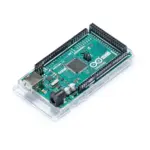
Arduino Mega 2560 Rev3 ATmega2560 Development Board
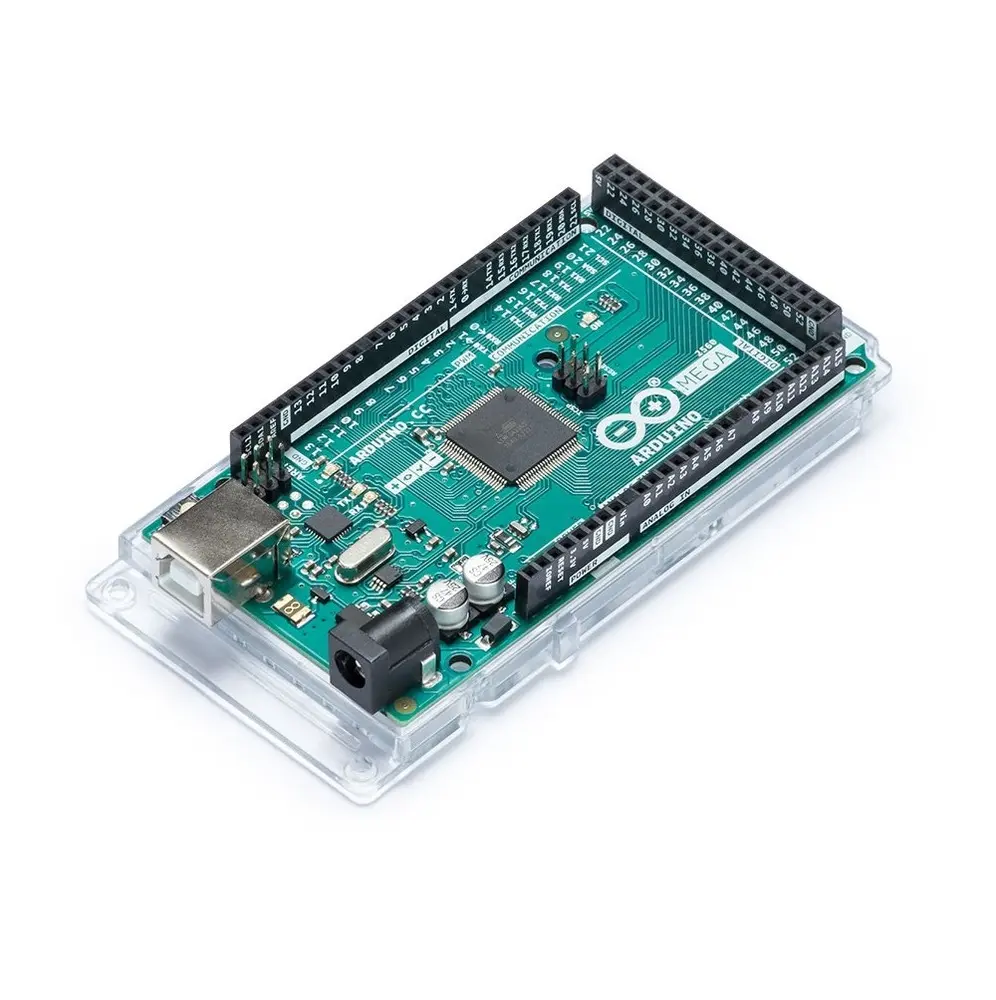
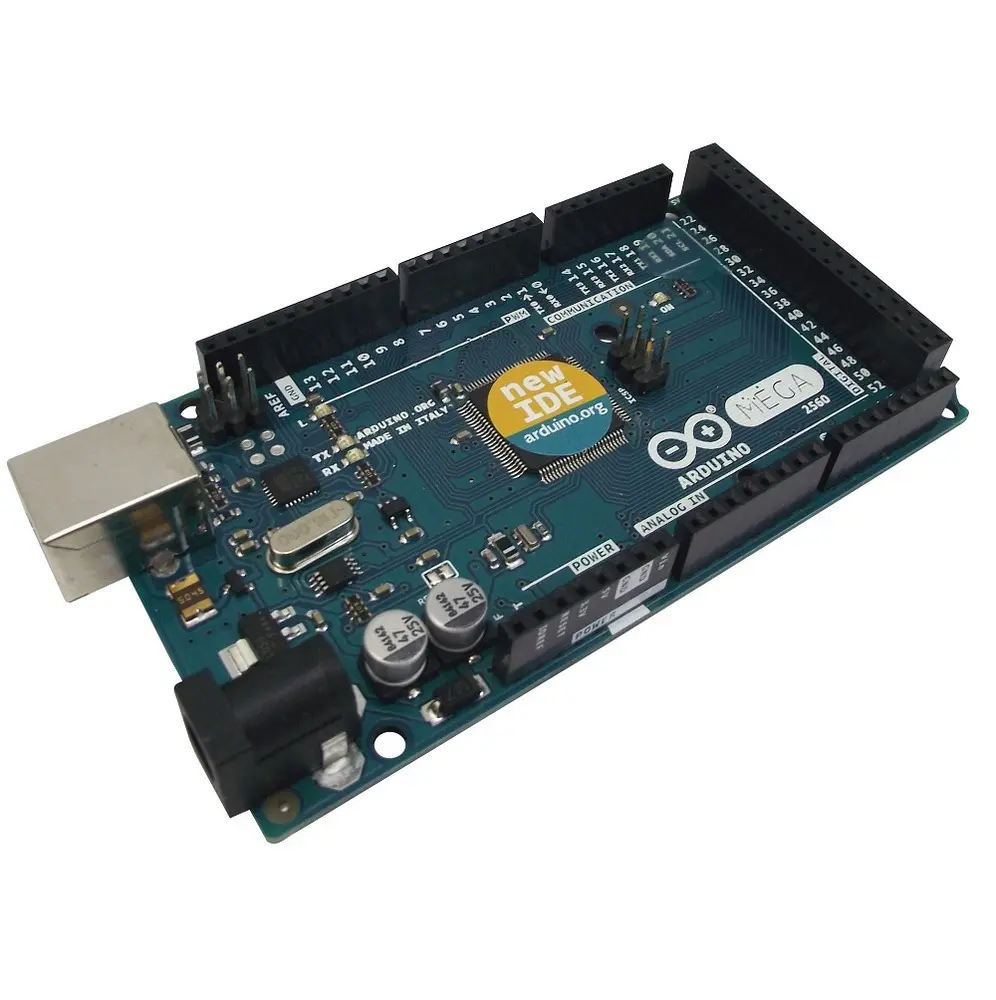
The Official Arduino Mega 2560 Rev3 is a robust development board featuring the ATmega2560 microcontroller, offering an expansive array of digital I/O and analog inputs for complex projects. Its enhanced 1.0 pinout and ATmega16U2 USB-to-serial converter ensure broad shield compatibility and reliable communication.
Features
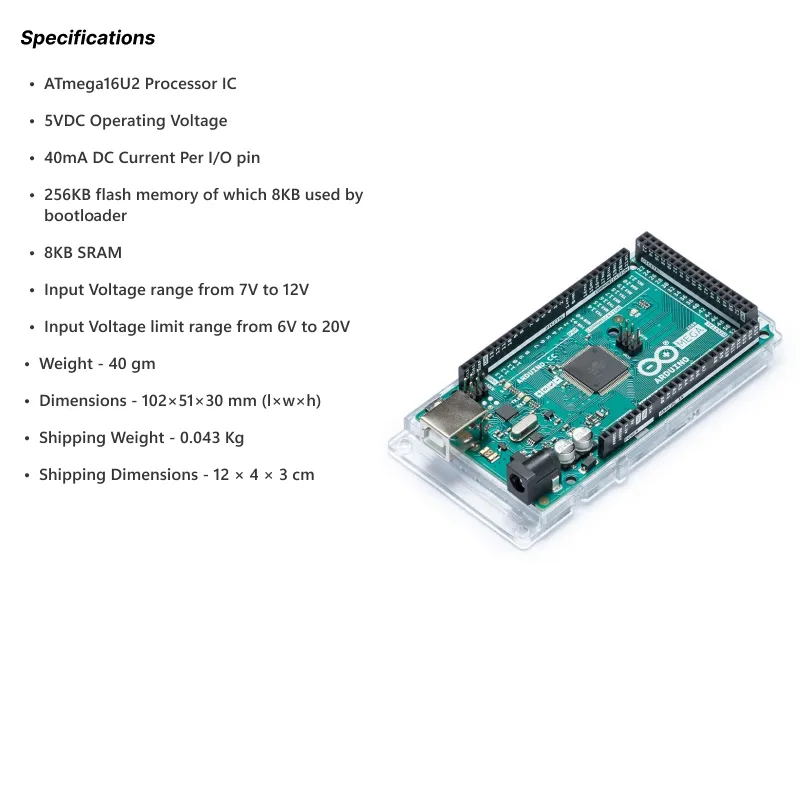
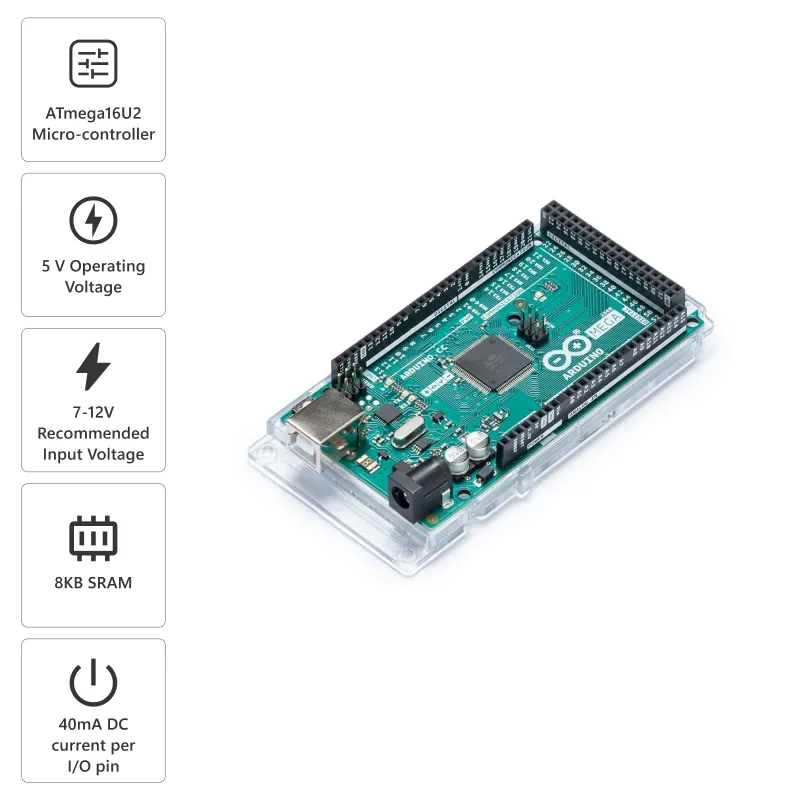
- Features ATmega2560 MCU with 256KB Flash, 8KB SRAM, and 4KB EEPROM.
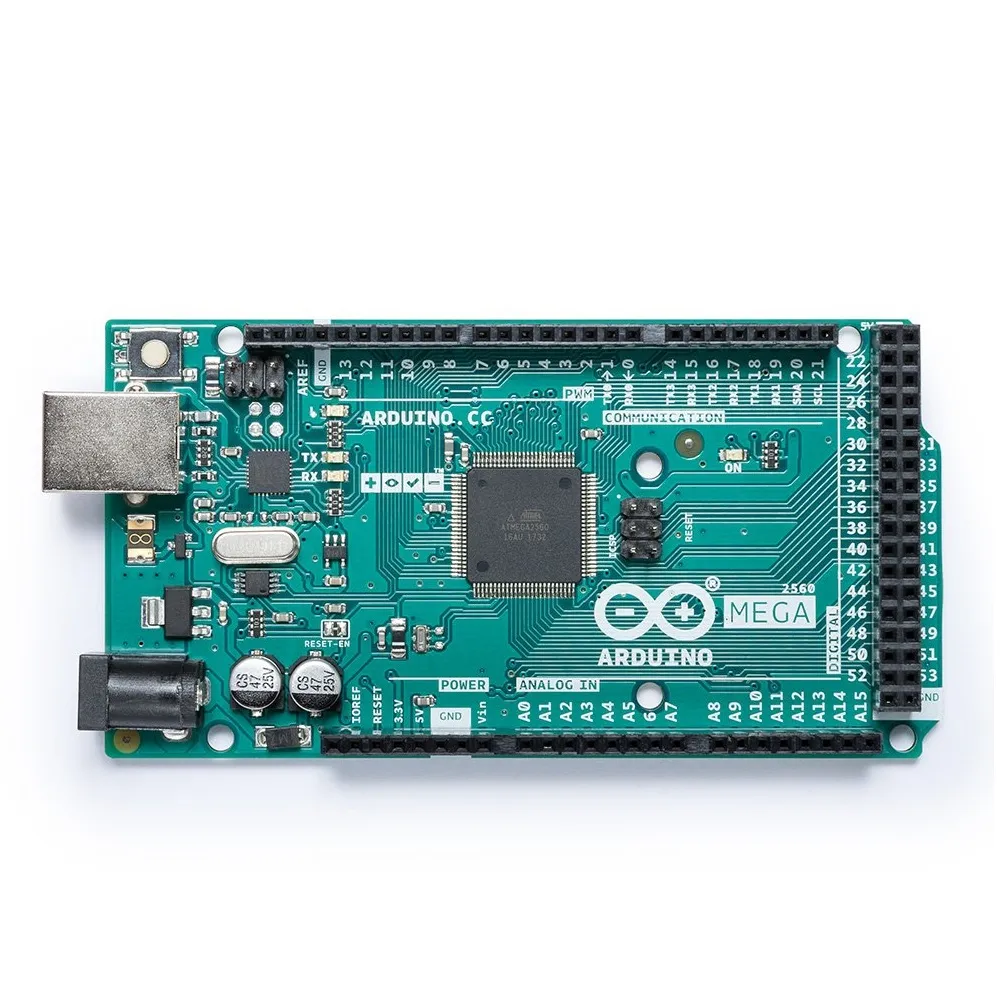
- Equipped with 54 digital I/O pins (14 PWM) and 16 analog inputs for extensive peripheral control.
- Incorporates a 1.0 pinout with SDA/SCL and IOREF pins for enhanced shield compatibility.
- Utilizes ATmega16U2 for robust USB-to-serial conversion.
- Compatible with most Arduino Uno shields, facilitating project migration and expansion.
Out of stock
The Official Arduino Mega 2560 Rev3, identified by model A000067, is a high-performance development board built around the ATmega2560 microcontroller. It provides an extensive set of I/O capabilities, including 54 digital input/output pins—14 of which support PWM—and 16 dedicated analog inputs. Communication is robustly handled by four UARTs, complemented by a 16MHz crystal oscillator for precise timing. The board is designed for ease of use, requiring only a USB connection to a computer or an external power supply to begin development.
Key enhancements in the Revision 3 board include a refined 1.0 pinout that adds dedicated SDA and SCL pins near AREF, alongside new IOREF and a reserved pin near RESET. The IOREF pin is crucial for allowing shields to automatically adapt to the board’s operating voltage, ensuring compatibility with both 5V AVR-based boards and future 3.3V platforms like the Arduino Due. Furthermore, this revision features a stronger RESET circuit and an ATmega16U2 chip for more reliable USB-to-serial communication, replacing the earlier 8U2 converter.
The Arduino Mega 2560 maintains broad compatibility with a wide range of shields originally designed for the Arduino Uno, Duemilanove, or Diecimila, making it a versatile choice for scaling up existing projects or developing new ones that demand more I/O and memory resources. Power can be supplied via the USB connection or an external AC-to-DC adapter or battery, with automatic source selection. Users should note the recommended input voltage range of 7V to 12V to prevent potential overheating of the voltage regulator.
Additional Information
| Weight | 0.04 kg |
|---|---|
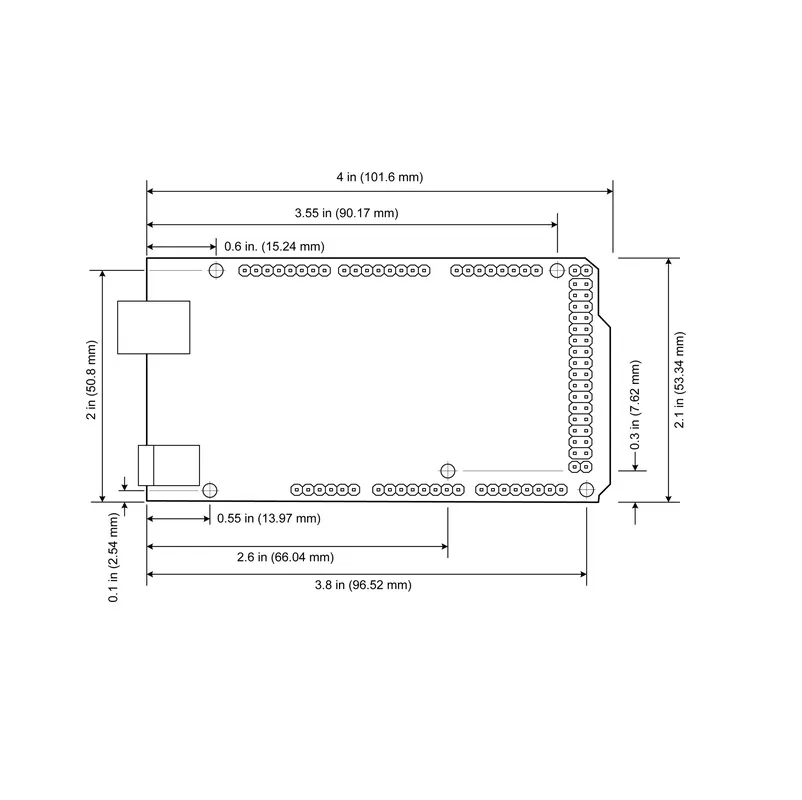
| Dimensions | 10.2 × 5.1 × 3 cm |